Kendujhar — Where a Cow's Nostril Gave Birth to a Sacred River
Introduction
Deep in Odisha's mineral-rich highlands, a river is born through solid rock in the shape of a cow's nostril. This is Gonasika, "Go-Nasika," where the sacred Baitarani River emerges, vanishes underground, and resurfaces again — one of Kendujhar's many small miracles. This is a district of superlatives: Odisha's highest waterfall crashes down in the shape of a horse's tail, ancient fresco paintings on a riverside rock shelter rank among the country's seven wonders, and one of the state's most visited Shakti shrines draws pilgrims by the thousands. Layer on a five-century-old princely dynasty and dense tribal forests rich in iron ore, and Kendujhar (Keonjhar) reveals itself as one of Odisha's most naturally spectacular and culturally layered districts.
History
Kendujhar's very name carries genuine mystery — its origin remains uncertain, with locals pronouncing it "Kenjhar" and medieval Sanskrit inscriptions recording the same form, before the former Durbar government later Sanskritised it to "Kendujhar." The district's royal history stretches back centuries under the Bhanja dynasty, whose rulers governed Kendujhar as a princely state for generations.
King Laxmi Narayan Bhanja, who reigned from 1654 to 1688 AD, left a particularly lasting architectural legacy, constructing the shrine of Lord Shiva at the sacred site of Gonasika during his rule. The district's colonial-era history includes a significant chapter of tribal resistance — the Keonjhar uprising, which unfolded in two phases in the late 19th century, saw tribal communities including the Kols, Bhuyans, and Juangs rise against exploitative state and British policies. Today, Kendujhar remains one of Odisha's fifth Scheduled Areas, reflecting its deep and continuing tribal heritage.
Geography
Kendujhar sits at an elevation of roughly 480 metres in northern Odisha, spanning a substantial 8,303 sq km, making it one of the state's largest districts by area. Remarkably, over one-third of the district is covered by forest, supporting rich biodiversity across its hilly, mineral-laden terrain.
The district's crown natural feature is Gonasika, where the sacred Baitarani River originates through a rock formation shaped like a cow's nostril, before disappearing underground and re-emerging further downstream — a phenomenon so distinctive it has earned the site the nickname "Guptaganga." Kendujhar is also home to Khandadhar Falls, standing at roughly 244 metres and recognized as the highest waterfall in Odisha, alongside the mineral wealth of iron ore and manganese that defines much of the district's economy. The climate follows a typical Odisha inland pattern, with substantial annual rainfall of over 1,535 mm and a pleasant, cooler season ideal for exploring its waterfalls and hills.
Culture and Traditions
Kendujhar's culture is deeply shaped by its tribal communities, including the Ho, Munda, and Juang peoples, whose languages are recognized alongside Odia as important local tongues across the district. This genuine tribal richness places Kendujhar among Odisha's most culturally distinctive districts, with indigenous customs, crafts, and oral traditions still very much alive in daily village life.
Religious devotion runs deep here too, centered on Maa Tarini Temple at Ghatagaon, one of Odisha's most visited Shakti shrines, drawing pilgrims from across the state. The district's blend of tribal heritage and mainstream Hindu devotion creates a genuinely layered cultural fabric, visible in everything from local festivals to the everyday rhythms of forest and mining communities living side by side.
Architecture
Kendujhar's architecture centers on temple construction spanning nearly a millennium, alongside the royal palace of its former princely dynasty. The Kushaleswar Temple at Deogaon, dedicated to Lord Kusheleswar Mahadev, was built around 900 AD, standing as one of the district's oldest surviving religious structures.
At Gonasika, the Brahmeswar Mahadev Temple was constructed by King Laxmi Narayan Bhanja between 1654 and 1688 AD, its riverside setting adding genuine spiritual atmosphere to the sacred site of the Baitarani's origin. The former royal seat is reflected in the Kendujhargarh Palace, the historic residence of the Bhanja rulers, standing today as a landmark of the district's princely heritage in Kendujhar town itself.
Famous Places
Gonasika
A sacred hill roughly 30 km from Kendujhar town, marking the mythical origin point of the Baitarani River, said to emerge through two nostril-shaped openings in a cow-shaped rock formation. The river's disappearance underground and reappearance nearby has earned it the name Guptaganga, making this one of the district's most spiritually and geographically significant sites.
A Rare Confluence of Myth and Geology
The site's unusual hydro-geological feature — a river vanishing and resurfacing — combines with genuine religious tradition to make Gonasika one of Odisha's most fascinating pilgrimage destinations.
Best Time to Visit
The cooler months offer the most comfortable conditions for exploring the surrounding hills and studying the tribal Juang life the region is also known for.
Quick Tip
Combine your visit here with the Brahmeswar Mahadev Temple, built directly beside the river's source, for a fuller spiritual and scenic experience.
Khandadhar Waterfall
Recognized as the highest waterfall in Odisha at roughly 244 metres, Khandadhar descends dramatically in the shape of a horse's tail, fed by the Korapani Nala stream. Considered one of the top waterfalls in the country and sacred among local tribes, it remains Kendujhar's most visually spectacular natural attraction.
Sitabinji
Home to ancient fresco paintings carved into a rock shelter on the banks of the Sita River, located about 30 km from Kendujhar town. Regarded as one of the seven wonders of India, this site offers visitors genuine insight into ancient Indian rock art and historical heritage.
Maa Tarini Temple, Ghatagaon
One of Odisha's most visited Shakti shrines, this temple draws enormous pilgrim crowds throughout the year, standing as the spiritual heart of Kendujhar district's religious life.
Badaghagra and Sanaghagara Waterfalls
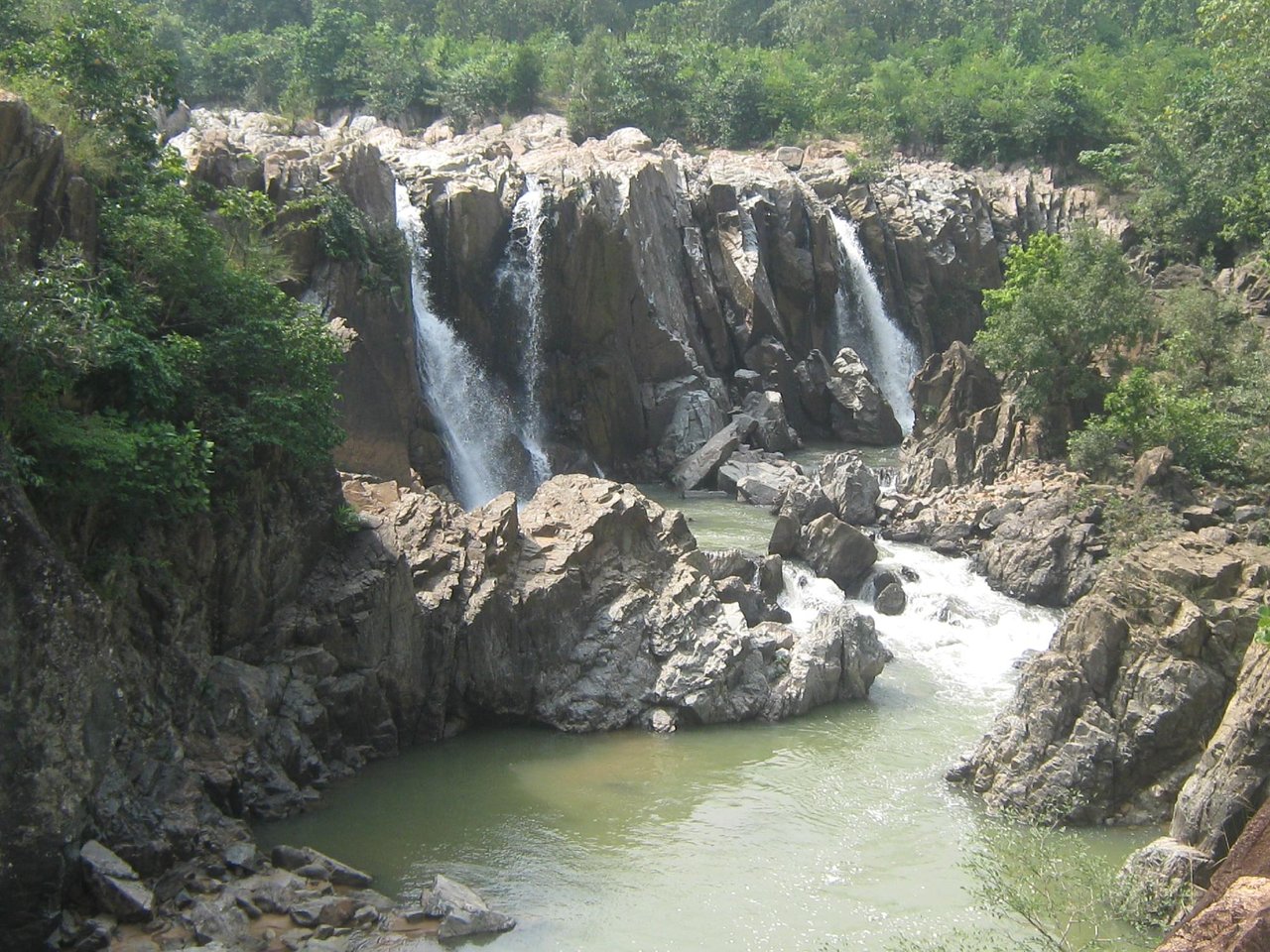
Located adjacent to Kendujhar town and roughly 8 km away respectively, these two spectacular waterfalls sit amid lush green forest, offering visitors accessible natural beauty without requiring extensive travel from the district headquarters.
Kushaleswar Temple, Deogaon
Built around 900 AD and dedicated to Lord Kusheleswar Mahadev, this ancient temple stands as one of Kendujhar's most historically significant religious structures.
Famous Dishes
Pakhala
A fermented rice dish eaten with vegetables and curd, cherished across Kendujhar and the wider Odisha region for its cooling effect during the district's warmer months.
Dalma
A hearty lentil and vegetable stew, forming a comforting staple of everyday Odia meals found throughout Kendujhar's local eateries.
Tribal Forest Specialties
Given Kendujhar's significant Ho, Munda, and Juang tribal population, indigenous forest-based ingredients and traditional preparations offer visitors a genuinely distinct culinary experience compared to coastal Odisha cuisine.
Local Rice and Millet Dishes
Reflecting the district's forested, hilly terrain, traditional rice and millet-based preparations remain a staple of everyday Kendujhar cuisine, found across local households and small eateries.
Famous Personalities
Dharanidhar Naik
Born on 5th May 1864, Dharanidhar Naik was a tribal leader of Keonjhar who led a significant uprising against Dhanurjay Bhanja and British colonial authorities. Educated at the Cuttack Survey School and initially employed as a state surveyor for the King of Keonjhar, he went on to lead the second phase of the Keonjhar uprising from 1891 to 1893, mobilizing the Kol, Bhuyan, and Juang tribal communities against forced labor and exploitation.
A Young Leader of Uncommon Courage
Despite his relatively young age at the time, Naik's rebellion achieved early successes, including looting the state's grain stores and armory and capturing the state's dewan, Fakir Mohan Senapati, before the king fled to Cuttack.
Connection to Kendujhar
His leadership of the Keonjhar uprising remains one of the most significant chapters in the district's colonial-era history, directly tying Kendujhar to Odisha's broader tribal resistance movement against British rule.
Fast Fact
After British forces ultimately crushed the rebellion, Naik was imprisoned in Cuttack jail until 1897, having served the Raja of Keonjhar for more than a year prior to leading the revolt against colonial exploitation.
King Laxmi Narayan Bhanja
Ruling Kendujhar from 1654 to 1688 AD, King Laxmi Narayan Bhanja is remembered for constructing the historic Brahmeswar Mahadev Temple at Gonasika, a lasting architectural and spiritual contribution that continues to draw pilgrims to the district today.
Festivals
Ghatagaon Tarini Yatra
A major religious festival celebrated at Maa Tarini Temple in Ghatagaon, drawing large pilgrim crowds for a display of devotion at one of Odisha's most significant Shakti shrines.
Nuakhai
An important harvest festival celebrated across Kendujhar district, marking the arrival of the new rice crop with community feasting and traditional rituals tied to the region's agricultural identity.
Tribal Festivals
Given the district's significant Ho, Munda, and Juang population, indigenous tribal festivals rooted in nature worship and community tradition add a genuinely distinct cultural layer to Kendujhar's festival calendar.
Things to Do
- Visit Gonasika, the mythical origin point of the sacred Baitarani River.
- See Khandadhar Waterfall, Odisha's highest cascading waterfall.
- Explore Sitabinji, home to ancient rock-shelter fresco paintings.
- Visit Maa Tarini Temple at Ghatagaon, one of Odisha's most visited Shakti shrines.
- Walk to Badaghagra and Sanaghagara Waterfalls, both easily accessible from town.
- Visit Kushaleswar Temple at Deogaon, dating back to 900 AD.
- Explore tribal villages, learning about Juang and Ho community life.
Where to Eat, Shop, and Stay
Eat: Local eateries across Kendujhar serve authentic Odia staples like Dalma and Pakhala, alongside distinct tribal forest specialties reflecting the district's Ho, Munda, and Juang heritage.
Shop: Kendujhar's local markets offer tribal handicrafts and forest produce, giving visitors a genuine taste of the district's rural and indigenous commerce.
Stay:
- Budget: Simple guesthouses and small hotels in Kendujhar town cover most short-stay needs for travelers passing through.
- Mid-range: A handful of comfortable hotels near the district headquarters offer better amenities for a more relaxed stay.
- Luxury: For upscale stays, travelers often base themselves in nearby Rourkela or Bhubaneswar, both well connected to Kendujhar by road.
What is Kendujhar Famous For?
Kendujhar is best known for Gonasika, the mythical origin point of the Baitarani River, and Khandadhar Falls, Odisha's highest waterfall. It's also recognized for the ancient rock art at Sitabinji, Maa Tarini Temple's Shakti pilgrimage significance, and its rich iron ore and manganese mineral deposits.
Best Time to Visit
October to February is the ideal window to visit Kendujhar, offering pleasant, comfortable weather perfect for exploring waterfalls, temples, and hill terrain. Summers can turn quite hot, and the monsoon brings substantial rainfall, both best avoided for outdoor sightseeing, though waterfalls are often at their fullest just after the monsoon.
How to Reach
By Air: The nearest airport is Biju Patnaik International Airport in Bhubaneswar, the state's only civil airport with regular flights connecting to other parts of the country.
By Rail: The nearest major railway connections are through Bhubaneswar and Rourkela, both accessible by road from Kendujhar.
By Road: Kendujhar sits on National Highway 6, with regular buses and taxis connecting the district to Bhubaneswar, Rourkela, and other major Odisha cities.
Nearby Places
Rourkela
Known for its massive steel plant, Rourkela also attracts visitors with the serene Hanuman Vatika garden complex and the scenic Vedvyas Temple at the confluence of three rivers, offering a natural extension to a Kendujhar-based Northern Odisha trip.
Why It Complements a Kendujhar Trip
Given both districts' shared mineral-rich, industrial character, visiting Rourkela deepens the same regional narrative that Kendujhar's own iron ore heritage begins.
Getting There
Rourkela is well connected to Kendujhar by road, making a same-day or short extension trip easy.
Quick Tip
Combine a Kendujhar morning at Gonasika with a Rourkela afternoon at Vedvyas Temple for a well-rounded regional day trip.
Similipal National Park
Located in neighboring Mayurbhanj district, this dense forest reserve offers a genuine wilderness experience, extending Kendujhar's own tribal and forested character further into Northern Odisha.
Jharsuguda
Jharsuguda is a neighboring industrial district known for its own waterfalls, rock shelters, and freedom-struggle history, offering further depth to a Northern Odisha heritage circuit.
Kendrapara
Kendrapara is a coastal district known for Bhitarkanika National Park's mangroves and crocodiles, along with the world-famous Olive Ridley turtle nesting at Gahirmatha Beach. It lies well to the east on Odisha's coastline, so it's best treated as a separate leg of a longer trip rather than a short side excursion from Kendujhar.
Best Duration for a Trip
1 to 2 days is generally sufficient to comfortably explore Kendujhar's waterfalls, Gonasika, and local markets. Travelers wanting to include Sitabinji and Maa Tarini Temple can extend this into a fuller 3-day regional trip.
Travel Tips
- Visit between October and February for the most comfortable sightseeing weather.
- Waterfalls are often fullest just after the monsoon, so consider timing accordingly for the best views.
- Dress modestly and respect local customs when visiting temples and religious sites.
- Carry cash, as smaller markets and eateries may not accept digital payments.
- Hire a local taxi for easier movement between Kendujhar's scattered waterfalls and natural sites.
- Respect tribal communities and their customs when visiting Kendujhar's forested interior.
Why Visit Kendujhar?
Kendujhar offers a genuinely rare combination of natural spectacle and spiritual depth — Odisha's highest waterfall, a river born through a mythical rock formation, ancient fresco paintings, and one of the state's most visited Shakti shrines, all within a single mineral-rich, forested district. It rewards travelers looking for authentic natural beauty and tribal culture away from Odisha's more crowded destinations.
Conclusion
Kendujhar may be defined industrially by its iron ore reserves, but it holds a genuinely rich blend of mythology, natural beauty, and tribal heritage beneath that identity. From the sacred origins of the Baitarani at Gonasika to the thundering drop of Khandadhar Falls, and from its ancient rock art at Sitabinji to its history of tribal resistance under Dharanidhar Naik, this northern Odisha district rewards travelers willing to venture into its forested hills. A short visit here, paired with a plate of warm Dalma and a walk beside its cascading waterfalls, offers a genuinely soulful glimpse into one of Odisha's most naturally spectacular corners.
"Travel is the only thing you buy that makes you richer."