Gajapati — Where Odisha's Founding Statesman Built His Mountain Kingdom
Introduction
Tucked into the southernmost corner of Odisha, where the Eastern Ghats begin rising in earnest, Gajapati is a district that carries the very name of the man who helped bring modern Odisha into existence. This is the ancestral kingdom of Krushna Chandra Gajapati Narayan Deo, Odisha's first Prime Minister, whose royal family ruled from Paralakhemundi for over seven centuries. Between an Indo-Saracenic palace, one of South Asia's highest Buddhist monasteries, sacred mountain peaks tied to the Ramayana, and a genuinely unique handicraft tradition carved from cattle horn, Gajapati remains one of Odisha's best-kept secrets.
History
Gajapati's story is inseparable from the Gajapati dynasty, whose rulers held supreme authority over Odisha for more than seven centuries, with the kingdom's boundaries once stretching from the Ganga in the north to Udayagiri in Nellore District in the south, encompassing the entire district of Ganjam. In the later half of the 15th century, Kolahomee, one of the sons of Gajapati King Kapilendra Deo, conquered this southern tract of Odisha and installed the royal family of Paralakhemundi, establishing what began as a zamindari estate at the western edge of the southernmost part of Ganjam district.
During the 12th century, Paralakhemundi formed part of the older Khemundi state, which was later trifurcated during the reign of Mukunda Deba into three separate states — Bada Khemundi, Sana Khemundi, and Paralakhemundi. The modern district itself was carved out of Ganjam district on 2nd October 1992, named directly after Maharaja Krushna Chandra Gajapati Narayan Deo, remembered for his pivotal role in forming a separate Odisha state and ensuring the Paralakhemundi estate's inclusion within it. He served as the first Prime Minister of the newly formed Odisha state, cementing his legacy as one of the district's most consequential historical figures.
Geography
Gajapati sits in the southernmost corner of Odisha, bordering Andhra Pradesh, at an elevation reaching up to 1,501 metres — among the highest average elevations of any Odisha district. The Mahendratanaya River flows prominently through the district, dividing Paralakhemundi from the neighboring town of Pathpatnam, and forming a defining feature of the district's landscape.
The district is dominated by the Eastern Ghats, most notably Mahendragiri, a mountain peak in Rayagada block rising to 4,976 feet above sea level, roughly 56 km from Paralakhemundi town. This mountainous terrain, backed by dense forest cover, gives Gajapati a genuinely different character from Odisha's coastal and plains districts, with cooler temperatures and a misty, tribal-influenced highland atmosphere that visitors often describe as feeling like stepping back in time.
Culture and Traditions
Gajapati's culture reflects a genuine blend of royal Odia heritage and tribal highland tradition, shaped by centuries of Gajapati dynasty rule alongside the customs of the indigenous communities inhabiting its hills and forests. Odia is the primary spoken language across the town and surrounding villages.
Paralakhemundi is recognized as an ancient cultural center of Odisha, having produced a genuinely notable roster of literary and historical figures over the centuries. The town's identity as a former princely capital continues to shape local pride, with century-old temples, monasteries, and heritage buildings forming a visible backdrop to everyday life. The district's tribal highland communities also contribute distinct cultural threads, adding further depth to Gajapati's overall identity as a district balancing courtly heritage with indigenous tradition.
Architecture
Gajapati's architecture is anchored by the Gajapati Palace, also known as Paralakhemundi Palace, built in the 18th century in a striking Indo-Saracenic style that blends Indian, Islamic, and European architectural elements into a genuinely grand structure. Its intricate brickwork, towering arches, and breathtaking Durbar Hall remain the district's architectural centerpiece, still deeply connected to the local community rather than functioning as a cold, abandoned monument.
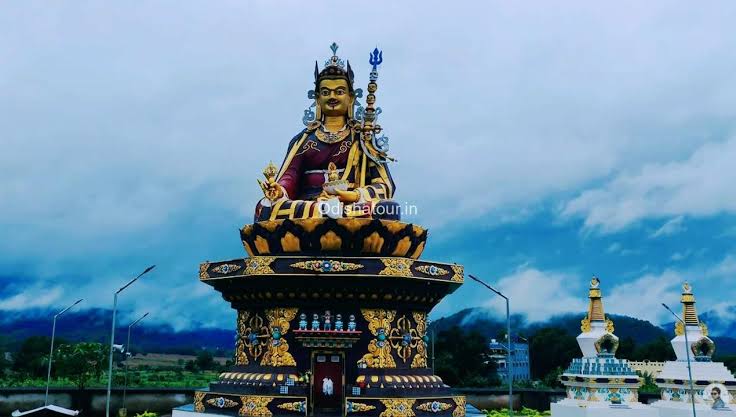
The Brundaban Palace, also called B.N. Palace, offers a different architectural experience entirely — a three-storied summer retreat built by Maharaja Krishna Chandra Gajapati on the banks of the Mahendratanaya River, complete with a distinctive underground floor and an underground connection to the main palace. Religious architecture reaches a rare regional milestone at Chandragiri, home to the highest Buddhist monastery in South Asia, established in 2010 and dedicated to Padmasambhava.
Famous Places
Gajapati Palace (Paralakhemundi Palace)
Built in the 18th century, this Indo-Saracenic masterpiece remains the crown jewel of the district, blending Indian, Islamic, and European architectural styles into one grand structure. Its Durbar Hall, with its high ceilings and old-world charm, offers a vivid sense of the royal gatherings once held here.
An Architecture Rooted in Community
Unlike many royal monuments that feel distant from everyday life, the Gajapati Palace remains genuinely woven into the fabric of the town, continuing to feel like the heart of Paralakhemundi rather than a relic sealed off from public life.
Best Time to Visit
Early mornings offer the most pleasant light and cooler temperatures for exploring the palace grounds and its intricate brickwork.
Quick Tip
Combine your visit here with a walk along Palace Road, where showrooms sell the district's famous horn-craft handicrafts.
Brundaban Palace (B.N. Palace)
A three-storied summer retreat built by Maharaja Krishna Chandra Gajapati on the banks of the Mahendratanaya River, surrounded by thick teak trees. Now under the control of the Department of Tourism, Government of Odisha, its underground floor and engraved artwork remain genuinely worth exploring, alongside a nearby orchard popular for winter picnics.
Mahendragiri
A mountain peak in the Eastern Ghats standing at 4,976 feet, roughly 56 km from Paralakhemundi town, steeped in mythological significance drawn from stories in the Puranas. It remains one of the district's most scenic and spiritually resonant natural landmarks.
Chandragiri Buddhist Monastery
Home to the highest Buddhist temple in South Asia, established in 2010 in Lobarsing Gram Panchayat, Mohana Block. This monastery offers a genuinely unique spiritual and architectural experience, drawing visitors interested in Buddhist heritage to this otherwise Hindu-majority region.
Gandahati Waterfall
Located roughly 30 km from Paralakhemundi and 153 km from Berhampur, this waterfall on the banks of a forest stream attracts large numbers of winter visitors, requiring a walk through dense forest and small villages, crossed via a wooden bridge, to reach the falls.
Khasada Waterfall
Located near Chandragiri town, roughly 100 km from the district center, this is one of Gajapati's most amazing and crowded waterfalls, drawing steady visitor numbers for its scenic natural beauty.
Famous Dishes
Pakhala
A fermented rice dish eaten with vegetables and curd, cherished across Gajapati and the wider Odisha region for its cooling effect during the district's hot months.
Dalma
A hearty lentil and vegetable stew, forming a comforting staple of everyday Odia meals found throughout Gajapati's local eateries.
Tribal Highland Specialties
Given Gajapati's significant tribal population inhabiting its hills and forests, indigenous forest-based ingredients and traditional preparations offer visitors a genuinely distinct culinary experience compared to coastal Odisha cuisine.
Local Sweets and Snacks
Paralakhemundi's traditional sweet shops and local eateries offer a range of Odia snacks and desserts, best sampled fresh while exploring the town's heritage lanes.
Famous Personalities
Krushna Chandra Gajapati Narayan Deo
The Maharaja of Paralakhemundi and the district's namesake, Krushna Chandra Gajapati Narayan Deo became the first Prime Minister of Odisha, playing a pivotal role in the formation of a separate Odisha state and ensuring the Paralakhemundi estate's inclusion within it. His legacy as both a royal ruler and a founding statesman makes him one of the most consequential figures in the district's — and the state's — modern history.
A Statesman Who Shaped Modern Odisha
Beyond his royal lineage, Gajapati Narayan Deo's political efforts were instrumental in securing Odisha's identity as a distinct, unified state, a legacy still honored through the district that carries his family name.
Connection to Gajapati
The district itself, carved out of Ganjam in 1992, was directly named in his honor, and the Brundaban Palace he built continues to stand as a tangible link to his royal and political legacy.
Fast Fact
He is remembered as the Raja Sahib of the Paralakhemundi estate and served as Odisha's very first Prime Minister following the state's formation.
Gopalakrusna Pattanayaka
A noted Odia poet born in Paralakhemundi, Gopalakrusna Pattanayaka is remembered as one of the town's celebrated literary figures, contributing to Paralakhemundi's reputation as an ancient cultural and literary center of Odisha.
Festivals
Rath Yatra
Celebrated with genuine community fervor across Gajapati district, this chariot festival, centered around the ancient Jagannatha deity of Paralakhemundi, forms an important part of the town's religious calendar.
Dussehra
Celebrated with vibrant community festivities across the district, Dussehra brings decorated pandals and cultural performances to towns throughout Gajapati.
Local Tribal Festivals
Given the district's significant tribal population, indigenous highland festivals add a genuinely distinct cultural layer to Gajapati's festival calendar, reflecting the traditions of the communities inhabiting its forested hills.
Things to Do
- Tour the Gajapati Palace, admiring its Indo-Saracenic architecture and Durbar Hall.
- Visit Brundaban Palace, exploring its unique underground floor and riverside setting.
- Trek toward Mahendragiri, tracing mythological stories from the Puranas.
- Visit the Chandragiri Buddhist Monastery, South Asia's highest Buddhist temple.
- Explore Gandahati or Khasada Waterfalls, both popular winter picnic destinations.
- Shop for horn-craft handicrafts along Palace Road, Paralakhemundi's signature local craft.
- Wander the town's century-old temples and heritage buildings, tracing its literary and royal past.
Where to Eat, Shop, and Stay
Eat: Local eateries across Paralakhemundi serve authentic Odia staples like Dalma and Pakhala, alongside distinct tribal highland specialties reflecting the district's forested interior.
Shop: Paralakhemundi is genuinely renowned for its horn-craft handicrafts, originally shaped into horned bird figures and now expanded into human and animal forms, with numerous showrooms along Palace Road. The town is also known for Jae Khadi, a craft exclusive to this area.
Stay:
- Budget: Simple guesthouses and small hotels cover most short-stay needs for travelers passing through.
- Mid-range: A handful of comfortable hotels near the town center offer better amenities for a more relaxed stay.
- Luxury: For a genuinely memorable stay, local guest houses near Mahendragiri offer dawn views over the misty Eastern Ghats peaks.
What is Gajapati Famous For?
Gajapati is best known as the ancestral seat of the Gajapati dynasty and the birthplace of Odisha's first Prime Minister, Krushna Chandra Gajapati Narayan Deo. It's also recognized for its Indo-Saracenic palace architecture, Mahendragiri's mythological significance, South Asia's highest Buddhist monastery, and its distinctive horn-craft handicraft tradition.
Best Time to Visit
Winter months (October to February) are the ideal window to visit Gajapati, offering the most comfortable temperatures for exploring palaces, waterfalls, and mountain trails. This period also aligns with peak visitation to Gandahati and Khasada Waterfalls, both especially popular during the cooler season.
How to Reach
By Air: The nearest airport is Biju Patnaik International Airport in Bhubaneswar, roughly 300 km away.
By Rail: The nearest railway station is Palasa in Andhra Pradesh, about 40 km from Paralakhemundi.
By Road: Gajapati is well connected by road, bordering Andhra Pradesh, with regular buses and taxis linking Paralakhemundi to nearby towns and cities.
Nearby Places
Berhampur
Located roughly 153 km from Paralakhemundi, Berhampur offers a larger city experience with additional shopping, dining, and connectivity options for travelers extending their trip.
Why It Complements a Gajapati Trip
Given the distance and connectivity between the two, Berhampur serves as a practical base or transit point for travelers combining a Gajapati visit with the wider southern Odisha region.
Getting There
Berhampur is accessible from Paralakhemundi by road, making it a reasonable extension for a multi-day southern Odisha itinerary.
Quick Tip
Plan your Gandahati Waterfall visit with Berhampur connectivity in mind, since the falls sit roughly midway between the two towns.
Andhra Pradesh Border Towns
Given Gajapati's direct border with Andhra Pradesh, nearby towns across the state line offer an easy cross-state extension for travelers exploring the wider Eastern Ghats region.
Ganjam
The district from which Gajapati was carved in 1992, Ganjam shares close historical and cultural ties, offering a natural extension for travelers interested in the region's shared Gajapati dynasty heritage.
Dhenkanal
A central Odisha district known for the revered Kapilash Temple and Dhenkanal Palace, now a working royal homestay. It lies well north of Gajapati and is better suited to a separate Central Odisha itinerary than a short side trip, but it's a worthwhile addition for travelers planning a longer, multi-region Odisha journey.
Best Duration for a Trip
1 to 2 days is generally sufficient to comfortably explore Paralakhemundi's palaces and markets. Travelers wanting to include Mahendragiri, Chandragiri Monastery, or the district's waterfalls can extend this into a fuller 3-day highland trip.
Travel Tips
- Visit during winter (October to February) for the most comfortable weather across the district's hills and waterfalls.
- Carry warm clothing if traveling toward Mahendragiri or other higher-elevation areas, given the cooler mountain climate.
- Dress modestly and respect local customs when visiting temples and the Buddhist monastery.
- Carry cash, as smaller markets and eateries may not accept digital payments.
- Hire a local taxi or vehicle for reaching remote sites like Gandahati and Khasada Waterfalls.
- Set aside proper time for horn-craft shopping along Palace Road, given the intricate detail of the local handicrafts.
Why Visit Gajapati?
Gajapati offers a genuinely rare highland escape within Odisha — a district where a seven-century royal dynasty's legacy, South Asia's highest Buddhist monastery, and mythological Eastern Ghats peaks all sit within a single, uncrowded corner of the state. It rewards travelers looking for authentic royal heritage and genuine mountain scenery, far from Odisha's more heavily visited beaches and temple circuits.
Conclusion
Gajapati may remain one of Odisha's best-kept secrets, but it holds a genuinely rich blend of royal legacy, mountain mystique, and craft tradition. From the Indo-Saracenic halls of Gajapati Palace to the misty heights of Mahendragiri, and from its connection to Odisha's founding Prime Minister to its centuries-old horn-craft artistry, this southern highland district rewards travelers willing to venture beyond the state's more familiar destinations. A short visit here, paired with a plate of warm Dalma and a walk along Palace Road, offers a genuinely soulful glimpse into one of Odisha's most historically significant and scenically striking corners.
"Travel is the only thing you buy that makes you richer."