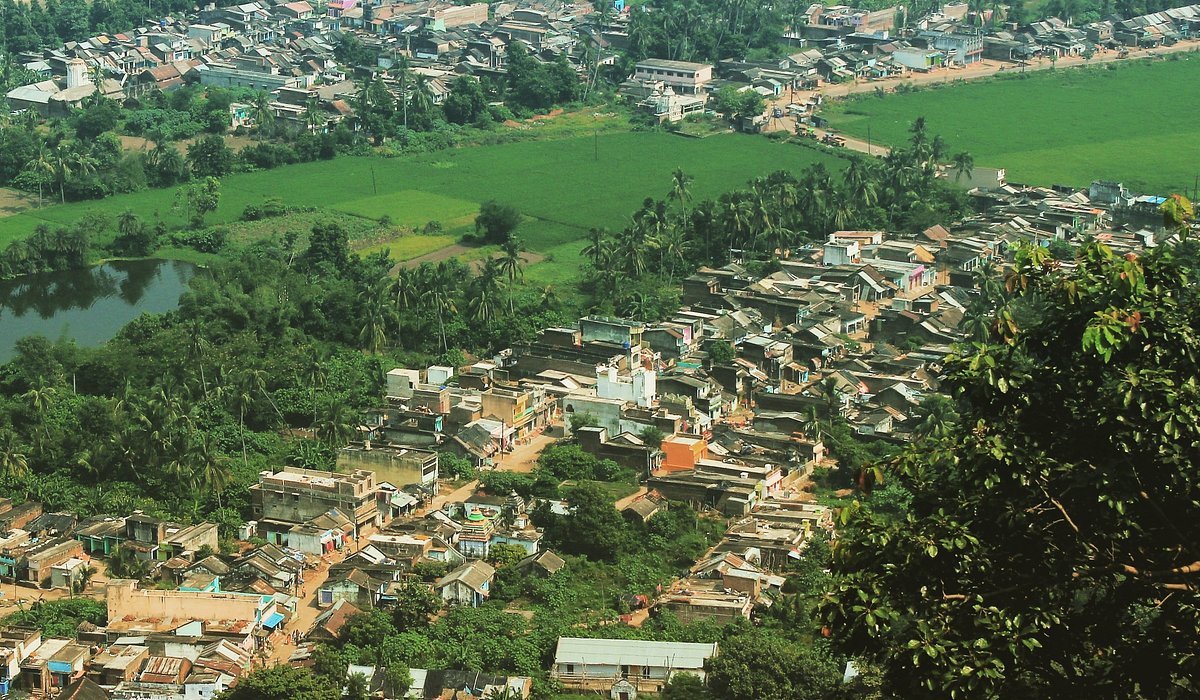
Ganjam — Odisha's Silk Coast, Where Turtles Nest and Poets Were Crowned
Introduction
Ganjam stretches along Odisha's southern coastline like a district that can't decide which of its identities to lead with — and thankfully, it doesn't have to choose. This is home to Berhampur, the "Silk City" and Odisha's fourth-largest city; the Rushikulya river mouth, where lakhs of endangered Olive Ridley turtles arrive each year for one of the world's great mass-nesting spectacles; and Kulada, the small village that gave Odia literature its self-proclaimed "Emperor of Poets." Between hot sulphur springs, golden beaches, ancient rock edicts, and a saree tradition woven into the district's very identity, Ganjam offers one of southern Odisha's richest and most varied travel experiences.
History
Ganjam's recorded history stretches back to the era of Emperor Ashoka, whose presence in the region is documented through the celebrated Ashokan Rock Edicts at Jaugada, a site that places this coastal district firmly within the story of the Mauryan Empire's expansion into ancient Kalinga. Centuries later, Ganjam came under the influence of the Bhanja dynasty, whose Ghumusara branch ruled the Kulada-Bhanjanagar region as a princely zamindari, producing rulers who were themselves celebrated poets.
The district's identity as "Silk City" developed around Berhampur, which grew into Odisha's fourth-largest city and a major center of handloom silk production. Ganjam's coastal geography also gave it strategic and commercial importance over the centuries, with towns like Gopalpur developing as port settlements connecting the region to wider maritime trade routes. Today, Ganjam remains one of the most culturally rich and vibrant districts in Odisha, with a literacy rate higher than the national average reflecting its progressive, educated character.
Geography
Ganjam sits along Odisha's southern coastline, roughly 169 km from Bhubaneswar, bordered by the Bay of Bengal to the east and the Eastern Ghats rising inland to the west. The Rushikulya River, often called the "Ganga of Ganjam," flows through the heart of the district, carrying deep historical and cultural significance for local communities.
The district's coastal stretch is punctuated by beaches like Gopalpur-on-Sea and Aryapalli, while inland, the terrain rises into the hills surrounding Taptapani, home to a natural hot sulphur spring surrounded by dense forest. Ganjam also touches the southern edge of Chilika Lake, Asia's largest brackish water lagoon, near Rambha. The district's climate is tropical and coastal, with October to June generally offering the most comfortable conditions for beach visits, temple tours, and hill excursions.
Culture and Traditions
Ganjam's culture is deeply tied to its identity as a center of silk weaving and classical Odia literature. Odia is the primary language, and Berhampur's reputation as the Silk City reflects generations of skilled weavers producing the district's signature textiles.
The region's literary heritage runs remarkably deep, tracing back to the Bhanja dynasty's princely court at Kulada, where poetry and courtly patronage flourished for generations. Tribal communities including the Kutia Kondh, Bonda, Dingara Kondh, and Mali tribes inhabit the district's forested highland areas around Taptapani, contributing distinct cultural traditions of dance, music, and craft that add further depth to Ganjam's overall identity. Religious devotion also runs strong here, centered around shrines to various forms of the Goddess across the district's temple towns.
Architecture
Ganjam's architecture reflects a genuine span from ancient Mauryan-era rock inscriptions to riverside temple complexes and coastal colonial-era structures. The Ashokan Rock Edicts at Jaugada represent the district's oldest architectural and epigraphic heritage, carved directly into rock during Emperor Ashoka's reign and standing today as tangible evidence of the Mauryan Empire's presence in ancient Kalinga.
Temple architecture is richly represented through the Tara Tarini Temple, perched on twin hills overlooking the Rushikulya River, alongside the Narayani Devi Temple, dedicated to a six-armed form of Goddess Durga, and the Buddhakhol-Panchu Mahadeva Temple complex near Buguda. Coastal architecture and colonial-era heritage survive in and around Gopalpur-on-Sea, once an active port town, while the mysterious pear-shaped Breakfast Island in Rambha Bay, built by the king of Khallikote, now stands in atmospheric ruin.
Famous Places
Tara Tarini Temple
Perched on twin hills overlooking the Rushikulya River, this temple dedicated to the twin goddesses Tara and Tarini is one of Ganjam's most significant Shakti shrines, drawing devotees and picnickers alike for its scenic riverside setting and spiritual significance.
A Riverside Shakti Shrine
The temple's hilltop position offers sweeping views over the Rushikulya River, making it as much a scenic destination as a religious one.
Best Time to Visit
Cooler months between October and February offer the most comfortable conditions for the temple's hillside climb and surrounding views.
Quick Tip
Combine your visit here with a stop at nearby Chhatrapur, the district headquarters, for a fuller day of sightseeing along the Rushikulya.
Rushikulya River Mouth
One of the world's largest mass-nesting sites for the endangered Olive Ridley turtle, where lakhs of turtles arrive between late February and early March each year to lay their eggs — a genuinely spectacular natural phenomenon that draws wildlife enthusiasts from across India and beyond.
Taptapani Hot Spring
A perennial natural hot sulphur spring surrounded by cluster hills and thick forest, believed to hold medicinal properties for skin ailments. Surrounded by tribal villages and a nearby Buddhist monastery, deer park, and Shiva temple, it remains one of Ganjam's most popular weekend getaways.
Gopalpur-on-Sea
A once-thriving port town turned relaxed beach destination, Gopalpur offers golden sands, a historic lighthouse, and a laid-back coastal atmosphere that has made it one of Odisha's most beloved seaside retreats.
Jaugada (Ashokan Rock Edicts)
Home to the celebrated rock edicts inscribed during Emperor Ashoka's reign, Jaugada offers history enthusiasts a direct, tangible connection to the Mauryan Empire's presence in ancient Kalinga, standing as one of the district's most historically significant sites.
Buddhakhol - Panchu Mahadeva Temple
Located about 3 km north of Buguda, this scenic spot combines natural beauty with religious significance, home to a Shiva temple complex frequently visited by both pilgrims and nature lovers.
Famous Dishes
Silk City Sweets and Snacks
Berhampur's traditional sweet shops and local eateries serve a range of Odia snacks and desserts, best sampled fresh while exploring the city's markets and silk saree showrooms.
Machha Jhola (Fish Curry)
Given Ganjam's coastal identity, a well-prepared, spicy Odia-style fish curry is a natural highlight of the local food scene, best enjoyed with steamed rice near the district's beach towns.
Pakhala
A fermented rice dish eaten with vegetables and curd, offering a cooling, refreshing meal especially popular during Ganjam's warm coastal summers.
Dalma
A hearty lentil and vegetable stew, forming a comforting staple of everyday Odia meals found across the district's local eateries.
Famous Personalities
Kabi Samrat Upendra Bhanja
Born around 1670 in Kulagarh (present-day Kulada), Ghumusara zamindari, Ganjam district, Upendra Bhanja is widely regarded as the greatest poet in the history of Odia literature, earning the honorific title "Kabi Samrat" — Emperor of Poets. Born into the royal Bhanja family, he chose a life devoted entirely to poetry over ruling his kingdom, producing celebrated works including Baidehisha Bilasa, Labanyabati, and Koti Brahmanda Sundari.
A Royal Poet Who Chose Verse Over the Throne
Despite his royal birth, Bhanja dedicated his life to poetry rather than kingship, following in the footsteps of his own poet-grandfather, King Dhananjaya Bhanja, who had written Raghunatha Bilasa.
Connection to Ganjam
Kulada, his birthplace, remains a place of literary pilgrimage within Ganjam district, and Odia poet Gopabandhu Dash later paid tribute to Bhanja's legacy in his own writing, cementing his enduring stature in Odia letters.
Fast Fact
He composed poetry using intricate literary constraints, including entire verses where every line begins with the same syllable, showcasing a technical virtuosity rarely matched in classical Odia literature.
Gouri Kumar Brahma
Born on 20th February 1920 in Prataplaxmanpur, Bhanjanagar, Ganjam district, Gouri Kumar Brahma was an academic, literary critic, and writer renowned for his scholarly interpretations of Jagannath culture and the literature of Upendra Bhanja, and was honored with the Sarala Samman and Odisha Sahitya Akademi awards.
Festivals
Olive Ridley Turtle Nesting Season
Though not a traditional festival, the annual arrival of lakhs of Olive Ridley turtles at the Rushikulya river mouth between late February and early March has become a major seasonal event, drawing wildlife enthusiasts and researchers from around the world.
Rath Yatra
Celebrated with genuine community fervor across Ganjam district, this chariot festival brings devotees together in a tradition shared across much of coastal Odisha's temple towns.
Durga Puja
Celebrated with elaborate community festivities across the district, Durga Puja in Ganjam brings decorated pandals, cultural performances, and festive energy to Berhampur and surrounding towns.
Things to Do
- Witness the Olive Ridley turtle nesting at Rushikulya river mouth, if your visit timing allows.
- Soak in the sulphur springs at Taptapani, surrounded by hills and forest.
- Relax at Gopalpur-on-Sea, one of Odisha's most beloved beach towns.
- Visit Tara Tarini Temple, perched scenically above the Rushikulya River.
- Explore the Ashokan Rock Edicts at Jaugada, tracing Mauryan-era history.
- Shop for authentic silk sarees in Berhampur, the district's Silk City.
- Take a boat ride on Chilika Lake from the Rambha side, exploring its many islands.
Where to Eat, Shop, and Stay
Eat: Berhampur's markets and local eateries serve authentic Odia staples like Dalma and fresh fish curry, with the city's traditional sweet shops offering genuine local treats alongside its famous silk saree showrooms.
Shop: Berhampur is genuinely renowned across India as the "Silk City of Odisha," with its silk sarees remaining the district's signature product, best sourced directly from the city's established weaving houses and markets.
Stay:
- Budget: Simple guesthouses and small hotels across Berhampur and Gopalpur cover most short-stay needs.
- Mid-range: Comfortable hotels near Gopalpur Beach and Berhampur city center offer better amenities for a relaxed stay.
- Luxury: For a genuinely memorable stay, Taptapani's tourist bungalow offers rooms piped with the natural spring's medicinal hot water.
What is Ganjam Famous For?
Ganjam is best known as the home of Berhampur, Odisha's Silk City, and the Rushikulya river mouth's mass Olive Ridley turtle nesting, one of the largest in the world. It's also recognized for its beaches at Gopalpur and Aryapalli, its Ashokan-era rock edicts at Jaugada, and as the birthplace of Kabi Samrat Upendra Bhanja, Odia literature's greatest classical poet.
Best Time to Visit
October to June is generally the ideal window to visit Ganjam, offering suitable weather for beach visits, temple tours, and hill excursions. For a truly unique experience, plan a visit between late February and early March to witness the spectacular Olive Ridley turtle nesting at Rushikulya.
How to Reach
By Air: The nearest airport is Biju Patnaik International Airport in Bhubaneswar, roughly 169 km away.
By Rail: Berhampur and Chhatrapur both have well-connected railway stations linking the district to major cities across India.
By Road: Ganjam is well connected by road to Bhubaneswar and other major Odisha cities, with regular buses and taxis serving Berhampur, Gopalpur, and Taptapani.
Nearby Places
Chilika Lake (Rambha)
Asia's largest brackish water lagoon touches Ganjam's northern edge near Rambha, offering boat rides to Kalijai Temple and numerous islands, making it a natural extension to a Ganjam-based coastal trip.
Why It Complements a Ganjam Trip
Given Ganjam's own coastal and wetland geography, visiting Chilika Lake from the Rambha side deepens the same natural and scenic narrative the district begins.
Getting There
Rambha is well connected to Berhampur by road, making a same-day visit to Chilika Lake easy.
Quick Tip
Combine a Ganjam morning at Tara Tarini Temple with a Rambha afternoon boat ride on Chilika Lake for a well-rounded regional day trip.
Gajapati
Bordering Ganjam to the southwest, Gajapati district offers its own royal heritage at Paralakhemundi and highland scenery at Mahendragiri, extending Ganjam's own Eastern Ghats geography further inland.
Puri
Located north along the coast, Puri is home to the iconic Jagannath Temple and its own famous beach, offering an easy extension for travelers exploring Odisha's broader coastal pilgrimage circuit.
Cuttack
Odisha's historic "Millennium City," Cuttack offers the ruins of Barabati Fort, world-famous silver filigree markets, and a lively riverfront, making it a rewarding stop for travelers extending their trip further up the coast.
Jagatsinghpur
Jagatsinghpur is a coastal district near Paradeep known for its beaches, mangrove forests, and the Mahanadi delta region, adding a further coastal dimension to a longer Odisha itinerary beyond Ganjam.
Best Duration for a Trip
2 to 3 days is generally sufficient to comfortably explore Ganjam's beaches, temples, hot springs, and Berhampur's silk markets. Travelers timing their visit around the turtle nesting season or combining it with Chilika Lake can extend this into a fuller 4-day coastal Odisha trip.
Travel Tips
- Visit between October and June for the most comfortable weather, or time your trip for late February to witness the turtle nesting.
- Carry swimwear and sun protection for beach visits at Gopalpur and Aryapalli.
- Dress modestly and respect local customs when visiting temples like Tara Tarini and Narayani Devi.
- Carry cash, as smaller markets and eateries may not accept digital payments.
- Set aside proper time and budget for silk saree shopping in Berhampur.
- Hire a local taxi for easier movement between Ganjam's scattered beaches, temples, and hill stations.
Why Visit Ganjam?
Ganjam offers a genuinely rare combination on India's eastern coast — golden beaches, a world-class wildlife nesting spectacle, ancient Mauryan-era inscriptions, and a literary legacy tracing back to Odia literature's greatest poet, all within a single, well-connected coastal district. It rewards travelers looking for natural beauty, history, and craft tradition in equal measure.
Conclusion
Ganjam may stretch across a long, varied coastline, but it holds together as one of Odisha's most rewarding travel destinations. From the turtle-crowded shores of Rushikulya to the silk looms of Berhampur, and from the ancient rock edicts of Jaugada to the poetic legacy of Kabi Samrat Upendra Bhanja, this southern Odisha district offers genuine depth well beyond its beaches. A short visit here, paired with a plate of fresh fish curry and a dip in Taptapani's healing waters, offers a truly memorable glimpse into one of Odisha's richest and most diverse corners.
"Travel is the only thing you buy that makes you richer."