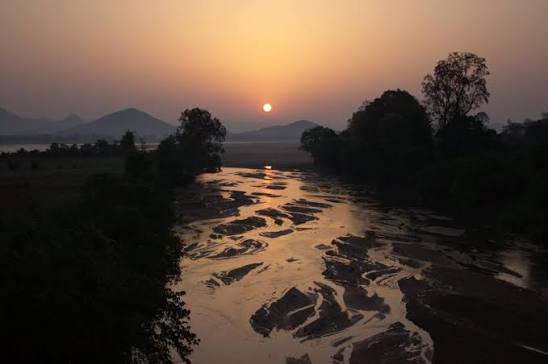
Nayagarh – The Hill-Fort Land Where the Mahanadi Carves Through Satkosia
Introduction
Tucked into the forested hills west of Bhubaneswar, Nayagarh is one of Odisha's quietest yet most rewarding districts. It was once the seat of a princely state ruled by the Baghela dynasty, and today it's known for the roaring Mahanadi as it slices through the Satkosia Gorge, the ancient hilltop shrine of Lord Nilamadhaba at Kantilo, and forts that once guarded three separate princely estates within one district. Add in a Shakti Peeth on a hilltop, a poet-king's legacy, and Odisha's beloved Chhena Poda sweet — said to have been born right here — and Nayagarh turns out to be a genuinely rich detour off Odisha's usual tourist trail.
History
Nayagarh's story begins in the 13th century, when Suryamani of the Baghela dynasty, arriving from Rewa in present-day Madhya Pradesh on a pilgrimage to Puri, settled in the region and founded his kingdom after a dramatic tiger encounter near Gunanati that won him local leadership and loyalty. Over generations, his descendants expanded the kingdom, and by the reign of the 12th king, Raghunath Singh (1565–1595), Nayagarh had grown powerful enough to annex territory from Ranpur, Boudh, and Ghumusar during the political chaos that followed the Mughal conquest of coastal Odisha.
The estate later split among royal heirs, giving rise to the separate princely holdings of Khandapada, Ranpur, and Daspalla, all within today's Nayagarh district. The Nayagarh royal family also produced a notable literary connection: King Gadadhar Singh's daughter married the celebrated Odia poet Upendra Bhanja, who settled in Malisahi, Nayagarh, after the marriage. By the time the British controlled Odisha, King Vinayak Singh Mandhata ruled Nayagarh with the poet Jadumani Mahapatra as his court composer. Nayagarh State finally acceded to the Indian Union in 1948, and the modern district was carved out of undivided Puri district on 1 April 1993.
Geography
Nayagarh district covers roughly 3,890 sq km in central Odisha, bordered by Khurda, Cuttack, Angul, Boudh, Kandhamal, and Ganjam districts. The landscape is a mix of forested hills and fertile river valleys, with the town of Nayagarh itself sitting at an average elevation of 178 metres, flanked by the Rukhi hill to the south and Balaram hill to the north — a natural barrier credited with softening the impact of the 1999 super cyclone here.
The district's defining natural feature is the Mahanadi River, which cuts a dramatic 22-km gorge through the Eastern Ghats at Satkosia, right where Nayagarh meets Angul, Cuttack, and Boudh districts. Smaller rivers like the Kusumi and Kuanria join the Mahanadi near Kantilo, forming what locals call Odisha's own Triveni Sangam. The climate is tropical, with hot summers, a monsoon season from June to September, and pleasant, cool winters that make the hills and riverbanks far more comfortable to explore.
Culture and Traditions
Nayagarh's culture blends tribal roots with layered Hindu tradition. The Savaras and Kandhas are considered the original inhabitants of the region, with Aryan and Brahmin communities settling later as temple priests under royal patronage. Odia is the everyday language, and the district's folk dance heritage is unusually rich for its size — including Ghantakalasa, Danda Nrutya, Dhena Koila, Khanjani, Singi Baza, Dhumpa, Ghuduki, Dholamahuri, and traditional Paika Akhada martial dance, each tied to a specific village or community.
Kantilo village is also known for its brass and bell-metal craftsmanship, a skill passed down through generations of artisans who produce ritual items and decorative pieces still sold as souvenirs by temple visitors today.
Architecture
Temple architecture dominates Nayagarh's built heritage. The hilltop Nilamadhaba Temple at Kantilo, built in the 8th century by Gandhamardhan Dev, closely mirrors the design of the Jagannath Temple in Puri, complete with four gateways and twenty-two steps. The Jagannath Temple in Nayagarh town itself, constructed between 1788 and 1808 by King Vinayak Singh Mandhata, remains an important local shrine, while similar Jagannath temples exist in Khandapada and Laxmi Prasad.
Beyond temples, Nayagarh's royal past left behind the palace-forts of its three former princely seats — Ranpur, Daspalla, and Khandapada — along with the district's notable literary institutions, the Banchanidhi Pathagara and Aurobindo Sangrahalaya, which preserve rare manuscripts, coins, and art.
Famous Places
Nilamadhaba Temple, Kantilo
Overview
Perched on the twin hills of Brahmadri and Niladri above the Mahanadi, this temple honors Lord Nilamadhaba, considered the earlier form of Lord Jagannath. A stream of holy water flows perpetually from the deity's feet, and the temple compound also houses shrines to Lakshmi, Siddheswar, and Jagannath.
Best Time to Visit
The temple is at its liveliest during Maghasaptami, when the riverside comes alive with a grand fair.
Quick Tip
Combine your visit with a walk along the Mahanadi's edge and pick up a piece of local brass ware on the way out.
Satkosia Gorge Tiger Reserve
Overview
Where the Mahanadi carves a 22-km gorge through the Eastern Ghats, this reserve shelters tigers, leopards, elephants, and the rare long-nosed gharial. Boating at Tikarpada, elephant tracking, and riverside nature camps make it one of eastern India's most underrated wildlife experiences.
Best Time to Visit
Winter mornings offer the calmest river conditions and the best chances of animal sightings near the water.
Quick Tip
Book boating and nature-camp slots in advance through the forest department, since access points can be limited in the monsoon.
Maninag Temple, Ranpur
Overview
A hilltop shrine regarded as one of Odisha's living Shakti Peeths, offering sweeping views and a short trek that combines pilgrimage with light adventure.
Best Time to Visit
Early morning visits are ideal, both for cooler trekking weather and a quieter darshan.
Quick Tip
Wear comfortable walking shoes, as the final stretch to the hilltop shrine involves an uphill climb.
Ram Mandir, Fatehgarh
Overview
Standing on a hill in Bhapur block, this temple is linked to the legend of poet Upendra Bhanja, who is said to have meditated here.
Best Time to Visit
Rama Navami draws the largest crowds and the most festive atmosphere.
Quick Tip
The hilltop location makes for a good sunset viewpoint outside festival days.
Dutikeswar Temple, Jamupatana
Overview
An old Shiva temple near Odagaon, popular as both a pilgrimage stop and a peaceful picnic spot.
Best Time to Visit
Weekday visits in the cooler months offer the most peaceful experience away from weekend picnic crowds.
Quick Tip
Carry your own snacks and water, as facilities near the temple are limited.
Famous Dishes
Chhena Poda
What It Is
Odisha's beloved baked cheese dessert is widely credited as having originated in Nayagarh district. Made from fresh chhena, sugar, and semolina, slow-baked until caramelized, it remains the state's most iconic sweet.
Where to Try It
Local sweet shops in Nayagarh town sell it fresh, often still warm from the oven.
Fun Fact
Its name literally means "burnt cheese," referring to the caramelized crust that forms during baking.
Dalma
What It Is
A comforting lentil-and-vegetable stew found across everyday Odia kitchens, seasoned simply and served with rice.
Where to Try It
Nearly every local eatery in Nayagarh town serves a home-style version at lunch.
Fun Fact
Dalma is considered a staple comfort food rather than a festive dish, eaten almost daily in most Odia households.
Pakhala
What It Is
Fermented rice soaked in water and eaten with curd, fried vegetables, and pickle — a cooling meal favored through Odisha's hot summer months.
Where to Try It
Best sampled at a local home-style eatery rather than a formal restaurant, where it's made fresh each morning.
Fun Fact
Pakhala is so central to Odia identity that Odisha marks an official "Pakhala Divas" (Pakhala Day) every year.
Famous Personalities
Upendra Bhanja
Legacy
One of the greatest poets in Odia literature, Upendra Bhanja married into the Nayagarh royal family and settled in Malisahi, where he is believed to have composed much of his celebrated work.
Connection to Nayagarh
His marriage to King Gadadhar Singh's daughter tied him permanently to Nayagarh, and local legend places his meditation practice at the Fatehgarh hill temple.
Fast Fact
Bhanja is still studied as a foundational figure of classical Odia poetry.
Jadumani Mahapatra
Legacy
Known as "Utkala Ghanta," this Odia poet-composer served as court poet under King Vinayak Singh Mandhata, blending devotional verse with sharp wit and satire that is still remembered in Odia literary circles.
Connection to Nayagarh
He grew up in Itamati, within present-day Nayagarh district, and composed much of his major work there under royal patronage.
Fast Fact
His devotional compositions on Lord Hayagriba remain part of his most remembered work.
King Suryamani
Legacy
The founder of Nayagarh State, whose 13th-century arrival from Rewa and subsequent rule laid the foundation for the kingdom that would grow into today's district.
Connection to Nayagarh
He built his first fort at Gunanati before establishing the seat of power that evolved into Nayagarh town.
Fast Fact
Local legend credits his rise to leadership to two separate tiger encounters during his journey to Puri.
Festivals
Maghasaptami / Bhaimaekadashi
How It's Celebrated
Celebrated with great fervor at the Nilamadhaba Temple in Kantilo during the month of Magha, drawing large crowds for a grand riverside fair.
What Makes It Special
The combination of temple rituals with a lively riverside fair gives it a festive, community-wide character beyond pure religious observance.
Rama Navami
How It's Celebrated
Celebrated at temples across the district, including Fatehgarh's Ram Mandir, with processions and devotional gatherings marking Lord Rama's birth.
What Makes It Special
The Fatehgarh celebration draws extra significance from its association with poet Upendra Bhanja's legendary meditation at the site.
Rath Yatra
How It's Celebrated
Observed enthusiastically at the Jagannath Temple in Ranpur, echoing the grandeur of Puri's chariot festival on a smaller, more intimate scale.
What Makes It Special
Its smaller scale makes it easier to experience up close compared to the massive crowds at Puri.
Things to Do
- Trek up to Maninag Temple in Ranpur for a hilltop pilgrimage with a view.
- Go wildlife spotting and boating in Satkosia Gorge Tiger Reserve.
- Visit Nilamadhaba Temple in Kantilo and shop for local brass ware afterward.
- Explore the royal-era forts of Ranpur, Daspalla, and Khandapada.
- Picnic at Dutikeswar Temple or Budha Budhiani Dam.
- Browse rare manuscripts at Banchanidhi Pathagara.
Where to Eat, Shop, and Stay
Eat: Local eateries in Nayagarh town serve authentic Dalma and Pakhala, while Chhena Poda from local sweet shops is a must-try before leaving.
Shop: Kantilo's brass and bell-metal handicrafts make for genuine, locally made souvenirs.
Stay:
- Budget: Simple lodges and guesthouses in Nayagarh town.
- Mid-range: A few comfortable hotels near the district headquarters.
- Luxury: Travelers usually base themselves in Bhubaneswar, about 80–100 km away, for upscale options.
What is Nayagarh Famous For?
Nayagarh is best known for the Nilamadhaba Temple at Kantilo, the wildlife-rich Satkosia Gorge on the Mahanadi, its literary connection to poet Upendra Bhanja, and as the birthplace of Odisha's famous Chhena Poda sweet.
Best Time to Visit
October to March offers the most pleasant weather for temple visits, wildlife spotting, and river excursions. Summers turn hot and humid, while the monsoon brings heavy rain that can affect road access to Satkosia.
How to Reach
By Air: Biju Patnaik International Airport in Bhubaneswar, about 80–100 km away, is the nearest airport.
By Rail: Nayagarh Town railway station, connected via the Khurda Road–Balangir line since 2017, serves the district directly.
By Road: Nayagarh is well connected to Bhubaneswar and Cuttack by state highways.
Nearby Places
Bhubaneswar
Odisha's temple-filled capital, easily combined with a Nayagarh trip for its own heritage circuit.
Angul
Angul is the main gateway to Satkosia Tiger Reserve's core zone, ideal for extending wildlife exploration.
Boudh
Boudh is the neighboring district that shares the Satkosia landscape, worth a stop for travelers continuing along the Mahanadi.
Best Duration for a Trip
2 to 3 days is ideal — enough time to cover Kantilo, Ranpur, and a wildlife excursion into Satkosia.
Travel Tips
- Visit between October and March for the best overall experience.
- Carry cash, as smaller markets may not accept digital payments.
- Hire a local vehicle for easier movement between scattered temples and forest sites.
- Time your Kantilo visit around Maghasaptami for the fullest festive atmosphere.
- Respect local customs when visiting village shrines and craft workshops.
Why Visit Nayagarh?
Nayagarh rewards travelers who want their pilgrimage paired with genuine wilderness — a hilltop temple echoing Puri's Jagannath cult, a gorge where tigers still roam beside a mighty river, and a literary legacy tied to one of Odisha's finest poets, all without the crowds of the state's better-known circuits.
Conclusion
Nayagarh may not top most Odisha itineraries, but it holds an unusually complete story — royal forts, riverside temples, tiger territory, and a sweet dish that's now loved across the state. A quiet couple of days here, tracing the Mahanadi from Kantilo to Satkosia, offers a genuinely well-rounded slice of Odisha's heritage and wilderness.
"Travel is the only thing you buy that makes you richer."