Nuapada — Where the Sunabeda Plateau Guards Odisha's Last Wild Frontier
Introduction
Tucked into the far western corner of Odisha, right where the state's soil quietly gives way to Chhattisgarh, Nuapada is a district most travelers have never heard of — and that is exactly its appeal. This is a land shaped by the Sunabeda plateau, a wild, waterfall-laced tableland that is home to tigers, leopards and the Chukutia Bhunjia, one of India's most distinct tribal communities, who still worship the plateau's presiding deity, Sunadei. Once the seat of the Khariar zamindari, a proud princely estate that sheltered the legendary rebel Veer Surendra Sai in its hills during the 1857 uprising, Nuapada today blends ancient temples, forgotten forts and dense sal forest into one of western Odisha's most authentic, unhurried travel experiences.
History
Nuapada's story is woven into the older history of the Kalahandi region, once part of the ancient Mahakantara territory. Records suggest that as early as the 4th century A.D., during Samudra Gupta's campaigns, a king named Vyaghraraja ruled this land, followed by the Nala dynasty kings — Bhavadatta Varman, Arthapati and Skanda Varman — who governed the area up to around 500 A.D.
The region's more defining chapter began in the 14th century, when the Chauhan dynasty of Patnagarh, founded by Ramai Deva, extended its rule westward. In 1600 CE, Raja Gopal Rai of this Chauhan lineage was crowned the first king of Khariar, establishing the Khariar zamindari that would govern the area for over three centuries. Khariar passed through Maratha hands in the mid-18th century before coming under British control in 1818, later becoming part of the Central Provinces.
The estate's proudest moment came between 1852 and 1867, when Raja Krushna Chandra Singh Deo of Khariar openly supported the cause of Veer Surendra Sai, the fearless Chauhan rebel of Sambalpur who resisted British rule for decades. When Sambalpur grew unsafe for Surendra Sai in 1858, he retreated into the hills of Khariar, using the fort of Manikgarh as a stronghold for safe mobility against colonial forces. Khariar remained under Central Provinces administration until 1936, when it was transferred to Odisha and attached to Sambalpur district. After independence, it became part of Kalahandi district, before Nuapada was finally carved out as a separate district on 1st April 1993.
Geography
Nuapada sits in the far west of Odisha, bordering Kalahandi to the east and sharing a long frontier with Chhattisgarh's Raipur district to the west, placing it firmly within the Mahanadi river basin and the fringes of the Eastern Ghats. The district's defining natural feature is the Sunabeda plateau, a vast, precipitous grazing tableland rising to points like Birbusi (3,056 ft) and Kotpadar (3,235 ft), and forming the catchment area of the Jonk, Sundar and Indra rivers.
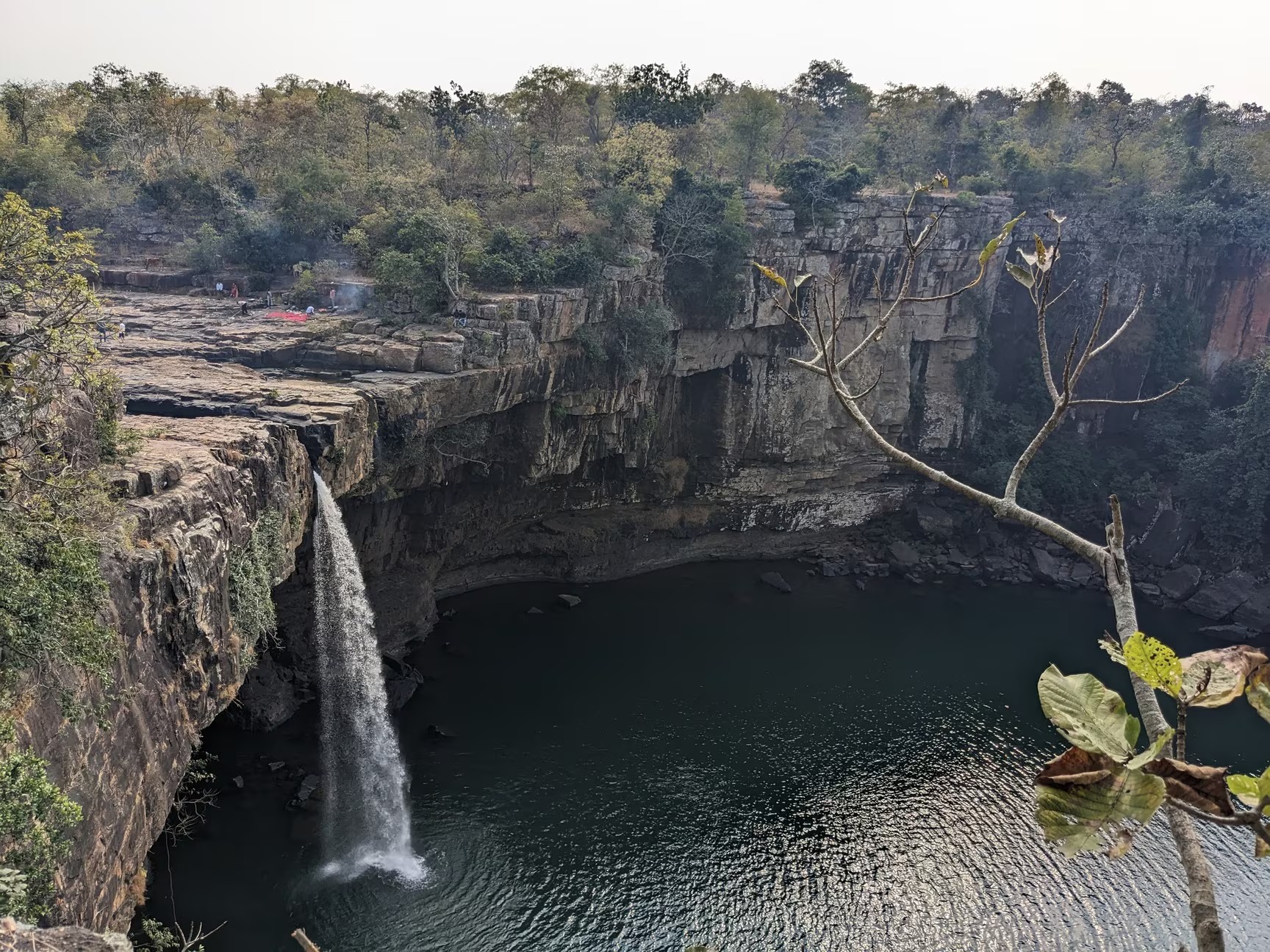
The terrain is a dramatic mix of canyons, hills and dense dry-deciduous forest, cut through by roughly a dozen seasonal waterfalls, including the striking 63-metre Godhosh Falls. Winters here are pleasantly cool, summers turn dry and hot, and the monsoon transforms the plateau and its many streams into a lush, roaring landscape — making the district's climate and geography central to almost everything a visitor comes to see.
Culture and Traditions
Nuapada's culture is rooted in its position as the historic homeland of the Bhunjia tribe, particularly the Chukutia Bhunjia, who live along the upper reaches of the Sunabeda plateau and share deep cultural ties with the neighboring Gond community. Together with Kandha and Paharia communities, they maintain traditions of forest worship, clan-based sacred groves, and devotion to local deities like Budharaja and Sunadei, the presiding goddess of the plateau, honored especially on Dussehra.
As part of western Odisha, Nuapada shares deeply in the region's signature harvest festival culture, its language a blend of Odia and Sambalpuri influences. Traditional folk performance, oral storytelling and community feasting remain central to rural life here, while Khariar town — once the seat of the royal Darbar — still carries traces of the literary and theatrical culture patronized by its former rulers, including the historic Birbikram Theatre tradition.
Architecture
Architecturally, Nuapada is defined less by grand monuments and more by ancient temples, forest forts and quiet royal remnants. The most significant is the Dadhibaman Temple in Khariar, built in the 9th–10th century A.D. and recognized as a State Protected Monument, standing as the spiritual centre of the historic Dadhibaman cult that once flourished under royal patronage.
Nearby, within the campus of present-day Khariar College, a centuries-old stepwell (Bawli) survives as a reminder of the town's older water architecture. In the hills, the ruins of Manikgarh Fort, the traditional Chauhan bastion that sheltered Veer Surendra Sai, and Jumlagarh Fort within Sunabeda sanctuary, reflect a rougher, forest-based military architecture built for defence rather than display.
Famous Places
Sunabeda Wildlife Sanctuary
Spread across roughly 600 sq km of plateau, canyons and forest, Sunabeda is Nuapada's undisputed centerpiece — a proposed tiger reserve home to tigers, leopards, sloth bears and gaur, along with archaeological sites, cave shelters and around a dozen waterfalls that make it a genuine wilderness escape.
A Sanctuary of Layers
What makes Sunabeda remarkable is how it layers wildlife, geology and living tribal culture into a single landscape, with the Chukutia Bhunjia still protecting patches of sacred forest within its boundaries.
Quick Tip
Visit the watchtowers at Jalki and Raital Bandh in the Maraguda valley for the best chance at birdwatching and wide plateau views.
Patora Dam and Rajiv Udyan
A scenic reservoir near Nuapada town, Patora is best known for its dam, the adjoining Rajiv Udyan garden, and the ancient Jogeswar (Patalganga) Temple, home to a Shivalinga believed to date back to the 6th century, sitting beside a spring locally considered as sacred as the Ganga.
Dadhibaman Temple, Khariar
This 9th–10th century temple, a declared State Protected Monument, remains the spiritual heart of Khariar town and a fascinating stop for anyone interested in the region's older temple architecture and living ritual traditions.
Maraguda Valley
Scattered with archaeological ruins, cave shelters and bird-watching points, Maraguda sits within the Sunabeda landscape and rewards travelers willing to explore a little deeper into the plateau's less-visited corners.
Godhosh Waterfall
A dramatic 63-metre waterfall set amid dense forest close to Sunabeda, Godhosh is one of the district's most photogenic natural spots, particularly powerful during and just after the monsoon.
Manikgarh Fort
Hidden in the forested hills of old Khariar, this fort is remembered as the stronghold that gave Veer Surendra Sai safe refuge during his resistance against British forces, making it a site of genuine historical weight rather than architectural grandeur.
Famous Dishes
Pakhala Bhata
Fermented rice served with vegetables, curd and dried fish, pakhala is the everyday cooling staple across Nuapada's hot summer months, eaten in almost every household.
Dalma
A wholesome stew of lentils and vegetables, Dalma is a comforting daily dish found across western Odisha's kitchens, including throughout Nuapada's towns and villages.
Forest and Tribal Foods
Given the district's strong Bhunjia and Gond presence, foraged greens, mahua-based preparations and other forest-sourced ingredients remain a genuine and distinctive part of local tribal cuisine.
Arisa Pitha
A traditional rice-flour sweet prepared especially during festivals like Nuakhai, Arisa Pitha reflects the district's deep agricultural roots and its connection to the region's most important harvest celebration.
Famous Personalities
Raja Krushna Chandra Singh Deo
Ruler of Khariar from 1852 to 1867, this Chauhan king is remembered for openly supporting Veer Surendra Sai's resistance against British rule, a decision that placed Khariar at the heart of one of western Odisha's most significant anti-colonial struggles.
Veer Surendra Sai
Though born in Sambalpur, this legendary freedom fighter's connection to Nuapada runs deep — he took refuge in the hills of Khariar and used Manikgarh fort as a base in 1861, permanently tying his resistance movement to this landscape.
Ghasiram Majhi
A four-time member of the Odisha Legislative Assembly from the Nuapada constituency, Ghasiram Majhi remains one of the district's most recognized modern political figures, closely associated with local public life and representation.
Festivals
Nuakhai
The most important festival of the district and of western Odisha as a whole, Nuakhai celebrates the arrival of the new rice harvest with family gatherings, offerings to household deities and the exchange of blessings between elders and youngsters, usually falling in August or September.
Dussehra at Sunabeda
Celebrated with special significance on the plateau, this festival honors Sunadei, the presiding goddess of Sunabeda, worshipped by local tribal communities as protector of the land and its people.
Shivaratri
Observed with particular devotion at temples like Jogeswar near Patora, Shivaratri draws devotees for night-long prayer and rituals centered around the district's ancient Shiva shrines.
Things to Do
- Explore Sunabeda Wildlife Sanctuary, spotting wildlife and waterfalls across its vast plateau
- Visit the Dadhibaman Temple in Khariar for a glimpse of 9th-century temple architecture
- Picnic at Patora Dam and Rajiv Udyan, combined with a visit to the Jogeswar Temple
- Trek to Godhosh Waterfall, especially rewarding just after the monsoon
- Discover Maraguda Valley's archaeological remains and birdwatching points
- Trace the story of Veer Surendra Sai at Manikgarh fort in the Khariar hills
- Experience Nuakhai, if your visit timing allows, for a genuine western Odisha harvest celebration
Where to Eat, Shop, and Stay
Eat: Local eateries in Nuapada town and Khariar serve authentic western Odisha staples like Dalma, pakhala and seasonal vegetable curries, with festival sweets such as Arisa Pitha widely available during Nuakhai.
Shop: Nuapada's weekly markets, including Khariar's well-known Friday bazaar, are the best places to pick up local produce, everyday tribal handicrafts and forest-based products brought in from surrounding villages.
Stay:
- Budget: Simple lodges and guesthouses in Nuapada town and Khariar cover most short-stay needs
- Mid-range: A limited number of comfortable hotels near the district headquarters offer better amenities
- Luxury: For upscale stays, travelers usually base themselves in Raipur, about 150 km away, or plan a day trip from larger towns in western Odisha
What is Nuapada Famous For?
Nuapada is best known for the Sunabeda plateau and its wildlife sanctuary, its role as the ancestral homeland of the Chukutia Bhunjia tribe, and its deep historical ties to freedom fighter Veer Surendra Sai through the fort of Manikgarh. The district is equally recognized for the ancient Dadhibaman Temple in Khariar and its enthusiastic celebration of Nuakhai, western Odisha's most important harvest festival.
Best Time to Visit
The best time to visit Nuapada is between October and February, when the weather is cool and comfortable, ideal for wildlife spotting at Sunabeda and temple visits around Khariar. Summers (March to June) turn hot and dry, while the monsoon (July to September) fills the plateau's waterfalls and rivers, offering dramatic scenery for travelers willing to navigate wetter roads.
Quick Note
Try to time a visit around Nuakhai in late August or September for a genuinely immersive taste of western Odisha's harvest culture.
How to Reach
By Air: The nearest airport is at Raipur, roughly 150 km away, connected to major Indian cities including Delhi, Mumbai, Kolkata and Bengaluru.
By Rail: The nearest railway station is Nuapada Road, on the Raipur–Vizianagaram line of the East Coast Railway.
By Road: Nuapada is well connected by state highways to Kalahandi, Balangir and neighboring Chhattisgarh, making road travel the most practical way to reach and move around the district.
Nearby Places
Kalahandi
The district from which Nuapada was carved in 1993, Kalahandi shares much of the same historical and cultural fabric, with its own archaeological and heritage sites offering a natural extension to a Nuapada trip.
Balangir
Home to the historic Patnagarh, ancestral seat of the Chauhan dynasty that once ruled Khariar, Balangir adds valuable context to Nuapada's own royal and historical narrative.
Raipur (Chhattisgarh)
Just across the state border, Raipur serves as the nearest major transport hub and offers its own attractions, making it a convenient gateway for travelers combining Nuapada with a wider Chhattisgarh–Odisha itinerary.
Best Duration for a Trip
1 to 2 days is generally enough to comfortably cover Nuapada town, Khariar's temples and Patora Dam. Travelers wanting to properly explore Sunabeda Wildlife Sanctuary and its waterfalls should plan for a fuller 3-day trip.
Travel Tips
- Visit between October and February for the most comfortable sightseeing weather
- Hire a local vehicle for reaching Sunabeda's interior, as public transport within the sanctuary is limited
- Respect tribal customs and sacred sites when visiting Bhunjia villages on the plateau
- Carry cash, as smaller markets and rural eateries may not accept digital payments
- Carry sun protection and water if traveling during the summer months
- Check forest department permissions in advance before entering the wildlife sanctuary
Why Visit Nuapada?
Nuapada offers a rare kind of travel experience — a wild, largely untouched plateau landscape paired with genuine tribal culture and a history tied directly to one of Odisha's most celebrated freedom fighters. For travelers tired of crowded circuits, Nuapada offers real solitude, real forest, and real stories, far from Odisha's more familiar tourist trail.
Conclusion
From the tiger-roamed heights of the Sunabeda plateau to the centuries-old Dadhibaman Temple and the forested fort where Veer Surendra Sai once found refuge, Nuapada tells a story of wilderness, resistance and living tribal tradition. It may be one of Odisha's least-visited districts, but for travelers seeking authenticity over spectacle, a trip here — paired with a warm plate of Dalma and the sound of the Jonk river cutting through the hills — offers a genuinely memorable window into western Odisha's wilder, quieter side.
"Travel is the only thing you buy that makes you richer."