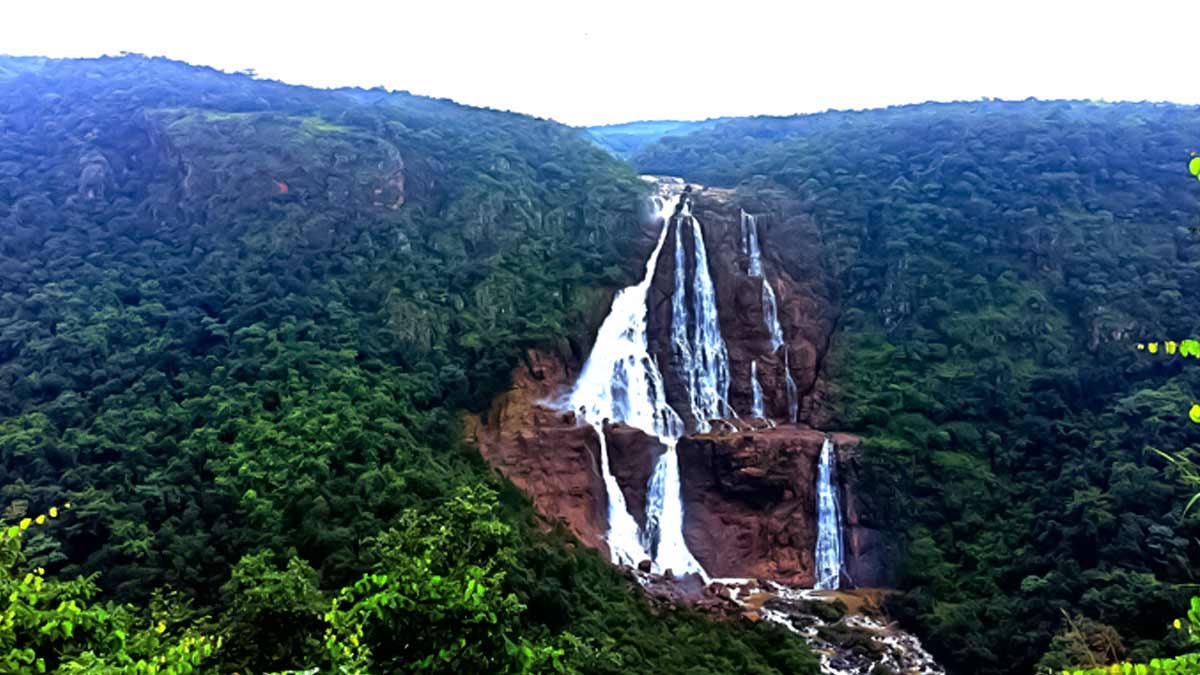
Mayurbhanj — Odisha's Largest District, Where Tigers Roam and Warriors Dance
Introduction
Mayurbhanj is Odisha's giant — its largest district by area, nearly the size of Tripura, sprawling across forested hills in the state's far north. At its heart lies Similipal, a UNESCO Biosphere Reserve and tiger reserve so vast it contains its own waterfalls, elephant corridors, and hidden tribal settlements. But Mayurbhanj's proudest export isn't wildlife — it's Chhau, the unmasked, martial-arts-inspired dance form born here and now recognized by UNESCO as a piece of humanity's intangible cultural heritage. Between an ancient royal capital, a second Jagannath temple, and forests thick enough to still hide tigers, Mayurbhanj offers one of Odisha's most complete travel experiences.
History
Mayurbhanj's earliest known capital was Khiching, founded by the Bhanja dynasty, whose rule over this region stretches back centuries. The dynasty later relocated its seat to Haripurgarh, built in the 14th century by Maharaja Harihar Bhanj on the banks of the Budhabalanga River — a fortified residence spread across 25 acres that served as the kingdom's capital before power eventually shifted to Baripada, which became both the second and third capital of the erstwhile princely state.
The dynasty's most transformative ruler was Maharaja Sriram Chandra Bhanj Deo, who constituted Baripada Municipality in 1905, established an English High School with boarding facilities, a government press, a fully equipped hospital, and a leper asylum — genuinely modernizing his kingdom well ahead of many of its neighbors. He was also a great patron of Odia art and culture, presiding over the first meeting of the Utkal Samilani in 1903, a movement central to the eventual formation of Odisha as a separate linguistic state. Mayurbhanj was formally established as a district on 1st January 1949, following the merger of the princely state into independent India.
Geography
Mayurbhanj is the largest district in Odisha by area, spanning 10,418 sq km in the state's northeastern reaches, with its headquarters at Baripada and other major towns including Rairangpur, Karanjia, and Udala. The district's defining geographical feature is unquestionably Similipal, a vast biosphere reserve covering 2,750 sq km, its core area alone spanning 303 sq km of dense sal forest.
Named after the Simuli (silk cotton) tree, Similipal reaches a maximum elevation of 1,178 metres and houses some of Odisha's most spectacular waterfalls, including Barehipani and Joranda, both cascading dramatically within the reserve's forested interior. The district is also home to significant mining activity around Gorumahisani, Badampahar, and Suleipat, alongside the Kharkhai Dam near Rairangpur. Mayurbhanj's climate follows a typical Odisha inland pattern, with the cooler months offering the most comfortable conditions for wildlife safaris and waterfall treks.
Culture and Traditions
Mayurbhanj's culture is inseparable from Chhau, the semi-classical dance form that reached its full sophistication here under generations of royal patronage. Unlike its counterparts in Seraikella (Jharkhand) and Purulia (West Bengal), Mayurbhanj Chhau is performed without masks, drawing thematically from the Ramayana, the Mahabharata, and tribal folk traditions, with Lord Bhairab as its presiding deity.
The dance form transformed into full Ramlila-style performance during the reign of Maharaja Jadunath Bhanj Deo (1823-1863) and flourished further under Maharaja Krishna Chandra Bhanj Deo. Dancers historically divided into two troupes — the Uttar Sahi (north colony) and Dakshin Sahi (south colony) — and during the Chaitra Parva festival, the gates of Belgadia Palace would open to the public for grand Chhau performances. Odia is the district's primary language, alongside tribal tongues spoken by its substantial Scheduled Tribe population, which makes up nearly 58% of Mayurbhanj's residents. The traditional folk song Jhumar remains deeply interlinked with the district's everyday cultural life.
Architecture
Mayurbhanj's architecture spans three distinct Orissan temple styles — Rekha, Bhadra, and Gauriya — reflected across the district's many surviving shrines. Among the Rekha temples, the most important are the Kakharua Baidyanath Temple at Manatri and the celebrated Jagannath Temple (Haribaldev Temple) at Baripada, built by Maharaja Baidyanath Bhanj in 1575 CE on the same architectural principles.
The Jagannath Temple at Baripada holds the distinction of being known as the "Second Sree Khetra" after Puri, and legend holds that Baidyanath Bhanj built it after Lord Jagannath appeared to him in a dream, having been denied darshan at Puri due to a dispute over royal ceremony. The district's fortified royal architecture is represented by Haripurgarh, the 14th-century capital residence of the Bhanja dynasty, alongside Belgadia Palace, the more recent royal seat that once hosted grand Chhau performances during Chaitra Parva.
Famous Places
Similipal National Park
A UNESCO Biosphere Reserve and tiger reserve spanning 2,750 sq km, home to sal forests, elephant corridors, and the magnificent Barehipani and Joranda waterfalls. Part of the wider Similipal-Kuldiha-Hadgarh Elephant Reserve, it remains one of eastern India's most significant wildlife destinations.
A Biosphere of Genuine Scale
Named after the Simuli tree, Similipal's core area alone spans 303 sq km, with tiger sightings having increased in recent years following the relocation of villages like Jamunagarh from the reserve's core zone.
Best Time to Visit
The park typically opens for tourism in the cooler, drier months, offering the best conditions for jeep safaris and spotting the reserve's tiger population, elephants, and diverse birdlife.
Quick Tip
Plan your Joranda Falls visit as part of the day-long Simlipal safari route, and view the falls from a distance as recommended for the best panoramic experience.
Haribaldev Temple (Jagannath Temple), Baripada
Built in 1575 CE by Maharaja Baidyanath Bhanj, this temple is known as the Second Sree Khetra after Puri and hosts one of Odisha's grandest Rath Yatra celebrations, second only to Puri's own festival, with a unique tradition giving female devotees priority to pull Goddess Subhadra's chariot.
Khiching
The ancient first capital of the Bhanja dynasty, located roughly 205 km from Balasore and 150 km from Baripada, home to the historic Kichakeshwari Temple and offering visitors a genuine window into Mayurbhanj's earliest royal history.
Haripurgarh
A 14th-century fort built by Maharaja Harihar Bhanj as the residence and capital of the Bhanja dynasty, spread across 25 acres on the banks of the Budhabalanga River and now recognized as a Monument of National Importance.
Devkund Waterfall
A beautiful religious and tourist site whose name translates to "the pond of God," created at the base of a waterfall with an accompanying temple, drawing devotees and nature lovers throughout the year.
Baripada Museum
One of Odisha's oldest museums, showcasing beautifully preserved sculptures, royal artefacts, and narratives that trace the depth, history, and artistry of Mayurbhanj, offering essential context before exploring the district's palaces and temples.
Famous Dishes
Pakhala
A fermented rice dish eaten with vegetables and curd, cherished across Mayurbhanj for its cooling effect during the district's warmer months.
Dalma
A hearty lentil and vegetable stew, forming a comforting staple of everyday Odia meals found throughout Mayurbhanj's local eateries.
Tribal Forest Specialties
Given Mayurbhanj's substantial Ho and Santhal tribal population inhabiting areas near Similipal, indigenous forest-based ingredients and traditional preparations offer visitors a genuinely distinct culinary experience.
Local Sweets and Snacks
Baripada's traditional sweet shops and local eateries offer a range of Odia snacks and desserts, best sampled fresh while exploring the town's temple lanes and markets.
Famous Personalities
Maharaja Sriram Chandra Bhanj Deo
One of the most consequential rulers in Mayurbhanj's history, Sriram Chandra Bhanj Deo constituted Baripada Municipality in 1905 and established an English High School, a government press, a hospital, and a leper asylum, genuinely modernizing his princely state. A great patron of Odia art and culture, he presided over the first meeting of the Utkal Samilani in 1903 and famously presented Mayurbhanj Chhau, the "war-dance," to a stunned audience in Calcutta in 1912 in honour of British emperor George V.
A Builder of Modern Odisha
Beyond his cultural patronage, Sriram Chandra Bhanj Deo is remembered as one of the builders of modern Orissa, reflecting his broader influence on the region's political and administrative development.
Connection to Mayurbhanj
His administrative reforms and cultural patronage remain deeply woven into Baripada's civic institutions and Mayurbhanj's identity as the home of Chhau dance to this day.
Fast Fact
The 1912 Calcutta performance of Mayurbhanj Chhau under his patronage so impressed George V and the press that it helped establish the dance form's reputation well beyond Odisha's borders.
Ananta Charan Sai Babu
Born in 1915 into a family of Chhau performers in Mayurbhanj, Ananta Charan Sai Babu became a celebrated practitioner of Mayurbhanj Chhau, studying under his father Radhamohan Sai and other gurus before going on to teach generations of disciples as Head Ustad at Nritya Pratisthan, Baripada's premier Chhau training institute.
Festivals
Chaitra Parva
Mayurbhanj's grandest cultural celebration, during which Chhau dance performances take center stage, historically hosted at Belgadia Palace with its gates opened to the public for the occasion.
Rath Yatra
Celebrated at Baripada's Haribaldev Temple with a scale second only to Puri's own Rath Yatra, this festival features a unique tradition giving female devotees priority to pull Goddess Subhadra's chariot.
Makar Parva and Karama Parva
Two well-known festivals celebrated across Mayurbhanj district with great pomp and show, reflecting the region's deep tribal and agricultural traditions.
Things to Do
- Go on a jeep safari through Similipal National Park, spotting tigers, elephants, and waterfalls.
- Visit Haribaldev Temple, Baripada's own "Second Sree Khetra."
- Explore Khiching, the ancient first capital of the Bhanja dynasty.
- Tour Haripurgarh, the 14th-century fortified royal residence.
- Trek to Devkund Waterfall, combining natural beauty with religious devotion.
- Visit Baripada Museum, for deep historical context on Mayurbhanj's royal legacy.
- Watch a Mayurbhanj Chhau performance, especially during Chaitra Parva.
Where to Eat, Shop, and Stay
Eat: Local eateries across Baripada serve authentic Odia staples like Dalma and Pakhala, alongside distinct tribal forest specialties reflecting the district's Ho and Santhal heritage near Similipal.
Shop: Baripada's local markets offer tribal handicrafts and forest produce, giving visitors a genuine taste of the district's rural and indigenous commerce.
Stay:
- Budget: Simple guesthouses and small hotels in Baripada cover most short-stay needs for travelers passing through.
- Mid-range: A handful of comfortable hotels near the district headquarters offer better amenities for a more relaxed stay.
- Luxury: For a genuinely memorable stay, The Belgadia Palace offers heritage accommodation within the former royal residence itself, blending history with hospitality.
What is Mayurbhanj Famous For?
Mayurbhanj is best known as the birthplace of UNESCO-recognized Mayurbhanj Chhau dance and home to Similipal National Park, a major tiger reserve and biosphere. It's also recognized for the Haribaldev Temple's grand Rath Yatra, its ancient Bhanja dynasty capitals at Khiching and Haripurgarh, and its status as Odisha's largest district.
Best Time to Visit
October to March is the ideal window to visit Mayurbhanj, offering pleasant, comfortable weather perfect for wildlife safaris, temple visits, and exploring the district's waterfalls. Summers can turn hot, and the monsoon brings substantial rainfall that closes parts of Similipal to tourism, both best avoided for a full district experience.
How to Reach
By Air: The nearest airport is Biju Patnaik International Airport in Bhubaneswar, connected to Mayurbhanj by road.
By Rail: Baripada Railway Station, established in 1905 as part of the former Mayurbhanj State Railway, connects the district on the Rupsa-Bangriposi line, well linked to major Odisha cities.
By Road: Mayurbhanj is well connected by road, with Rairangpur just 73 km from Jamshedpur, making the district accessible from both Odisha and neighboring Jharkhand.
Nearby Places
Balasore
Balasore is a neighboring coastal district known for Chandipur Beach's famous receding-sea phenomenon, offering a natural extension to a Mayurbhanj-based Northern Odisha trip.
Why It Complements a Mayurbhanj Trip
Given both districts' shared northern Odisha geography, combining Mayurbhanj's forests and temples with Balasore's coastline offers a well-rounded regional itinerary.
Getting There
Balasore is well connected to Baripada by road, making a same-day or short extension trip easy.
Quick Tip
Combine a Mayurbhanj morning at Similipal with a Balasore afternoon at Chandipur Beach for a well-rounded nature-and-coast day trip.
Kendujhar (Keonjhar)
Kendujhar is a neighboring district known for Khandadhar Falls, Odisha's highest waterfall, and the sacred site of Gonasika, extending Mayurbhanj's own forested and waterfall-rich character.
Jamshedpur (Jharkhand)
Just across the state border, Jamshedpur offers a modern industrial city experience, easily reached from Rairangpur, making it a convenient cross-state extension for travelers exploring the wider region.
Best Duration for a Trip
2 to 3 days is generally sufficient to comfortably explore Baripada's temples, Similipal's key attractions, and the district's royal heritage sites. Travelers wanting a deeper wildlife safari experience across Similipal can extend this into a fuller 4-day trip.
Travel Tips
- Visit between October and March for the most comfortable weather and open access to Similipal National Park.
- Book Similipal safaris in advance, especially during peak winter season.
- Dress modestly and respect local customs when visiting Haribaldev Temple and other religious sites.
- Carry cash, as smaller markets and eateries may not accept digital payments.
- Respect tribal communities and their customs when visiting villages near Similipal.
- Time your visit around Chaitra Parva for a genuine Mayurbhanj Chhau performance experience.
Why Visit Mayurbhanj?
Mayurbhanj offers a genuinely rare combination within Odisha — a UNESCO-recognized dance tradition born from royal patronage, one of eastern India's most significant tiger reserves, and centuries of Bhanja dynasty history spanning multiple ancient capitals. It rewards travelers looking for substantial wildlife, culture, and heritage within Odisha's largest and most naturally diverse district.
Conclusion
Mayurbhanj may be Odisha's biggest district by size, but it holds an equally outsized cultural and natural legacy. From the tiger-roamed forests of Similipal to the unmasked warriors of Mayurbhanj Chhau, and from the ancient ruins of Haripurgarh to the grand Rath Yatra at Haribaldev Temple, this northern Odisha district rewards travelers willing to explore beyond the state's more familiar circuits. A short visit here, paired with a jeep safari through Similipal and an evening watching Chhau dancers move without masks, offers a genuinely unforgettable glimpse into one of Odisha's richest and most expansive corners.
"Travel is the only thing you buy that makes you richer."