Subarnapur (Sonepur) – The City of a Hundred Temples on the Banks of the Mahanadi
Introduction
In western Odisha, where the Mahanadi and Tel rivers meet in a quiet confluence, sits Subarnapur — better known to most as Sonepur. Often called the "Second Varanasi of India" for its dense cluster of ancient temples, and the "Second Allahabad" for its sacred river sangam, this small district town packs an extraordinary amount of spiritual and cultural heritage into its riverside streets. Add the mystic legacy of poet-saint Bhima Bhoi, a proud handloom tradition, and one of Odisha's most spectacular swing festivals, and Sonepur emerges as a genuinely rewarding stop for travelers drawn to history, devotion, and quiet river towns.
History
Subarnapur's story stretches back to prehistoric times, with stone tools and rock art discovered at nearby Puja Dunguri near Adakasa, and archaeological excavations at Asurgarh pointing to human settlement dating from the 3rd century B.C. The region's chronological history properly begins in the 8th century A.D., when it was known as Swarnapura, ruled as a feudatory of the Bhaumakaras of Tosali by the Bhanja dynasty.
Over the following centuries, Sonepur passed through the hands of the Somavamsis — who made it one of their two capitals — the Telugu-Chodas, the Kalachuris, the Gangas, and finally the Chauhans, who arrived under Ramai Deva in the mid-14th century. Sonepur became a separate princely state in the early 17th century under Madana Gopala Deva, and most of the temples still standing in the town today were built during this long Chauhan rule. Around the 10th and 11th centuries, the region was also referred to as Paschima Lanka, or Western Lanka, a name still remembered through the town's Lankeswari Temple. The modern district of Subarnapur was formally carved out on 1 April 1993.
Geography
Subarnapur district lies in western Odisha, bordered by Sambalpur to the north, Boudh to the south and southeast, and Balangir district to the west. The town of Sonepur sits at the sacred confluence of the Mahanadi and Tel rivers, a meeting point that has shaped both its geography and its spiritual reputation.
The district's terrain is a mix of river plains and low forested stretches, with a moderate climate marked by hot, oppressive summers and cooler, clearer winters. Average annual rainfall runs high, feeding the rivers that define the region's landscape and agriculture.
Culture and Traditions
Sonepur's culture is deeply layered with devotion, craft, and classical performance. The town is often called Mandiramalini — the city of temples — home to more than a hundred shrines, and locals here are known as Sonepuria. Odia is the everyday language, with the Sambalpuri dialect widely spoken across the district.
The region carries a strong artistic tradition, particularly in silk and handloom weaving, along with terracotta craft and delicate work in prawns and fish farming along the rivers. Classical dance forms like Odissi and the folk tradition of Gotipua are performed during festivals, while the philosophical legacy of the Mahima Dharma movement, closely tied to poet-saint Bhima Bhoi, continues to shape the region's spiritual identity to this day.
Architecture
Sonepur's architectural identity rests almost entirely on its extraordinary temple density. The Pancharatha Temple, built to resemble a chariot in miniature, echoes the design language of Odisha's famous Sun Temple, while the Subarnameru Temple, dedicated to Lord Jagannath, is believed to have given the town its very name.
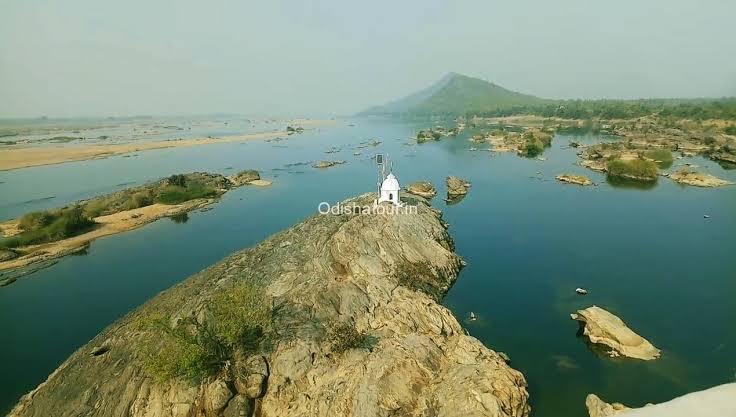
Unusually, the Lankeswari Temple stands within the Mahanadi River itself, a striking piece of riverine temple architecture tied to the region's old identity as Paschima Lanka. The Rameswar Temple, situated exactly at the Mahanadi-Tel confluence, adds further architectural and spiritual weight to the town's riverside landscape, while the 17th-century Chauhan-era construction across Sonepur reflects a consistent building tradition spanning Saiva, Vaishnava, and Shakta temple types.
Famous Places
Rameswar Temple
Overview
Standing exactly at the sacred confluence of the Mahanadi and Tel rivers, this ancient temple houses a very old Shiva lingam and is linked by legend to Lord Rama himself.
Best Time to Visit
Early mornings offer the most peaceful darshan, with the river confluence especially striking at sunrise.
Quick Tip
Combine your visit with a walk along the riverbank to fully appreciate the sangam setting.
Lankeswari Temple
Overview
Uniquely located inside the Mahanadi River itself, this temple is dedicated to Goddess Lankeswari, once the presiding deity of the old Paschima Lanka region, and is now especially revered by the local fishing community.
Best Time to Visit
Visit during lower water levels in the winter months for the easiest access to the temple.
Quick Tip
Ask locally about boat access, as the river's water level can affect how close you can get.
Subarnameru Temple
Overview
Dedicated to Lord Jagannath, this temple is believed to have given Sonepur its very name and is admired for its golden spire and architectural detail.
Best Time to Visit
Major Jagannath-related festival days bring the fullest devotional atmosphere.
Quick Tip
Look closely at the spire's detailing — it's considered one of the finer architectural highlights in town.
Pancharatha Temple
Overview
Built in the shape of a miniature chariot, this temple's distinctive form draws comparisons to Odisha's famous Sun Temple architecture, making it a favorite stop for heritage enthusiasts.
Best Time to Visit
Daylight hours are best for appreciating the temple's chariot-style carving in full detail.
Quick Tip
Pair this visit with nearby Subarnameru Temple, as both sit close together in town.
Bhima Bhoi Samadhi Pitha, Khaliapali
Overview
Located about 30 km from Sonepur, this memorial marks the final resting place of the mystic poet-saint Bhima Bhoi, founder of the Satya Mahima Dharma tradition, and remains an important pilgrimage site for his followers.
Best Time to Visit
Chaitra Purnima in the January–February period draws the largest gathering of devotees.
Quick Tip
The remote setting rewards the trip with scenic countryside views along the way.
Famous Dishes
Dalma
What It Is
A comforting lentil and vegetable stew, mildly spiced and served with rice, forming a daily staple across Odia households in Subarnapur.
Where to Try It
Local eateries throughout Sonepur town serve home-style versions at lunchtime.
Fun Fact
Despite its simplicity, Dalma is considered an essential part of a proper Odia thali.
Chhena Poda
What It Is
A baked cheese dessert made from fresh chhena, sugar, and semolina, slow-cooked until caramelized — one of Odisha's most beloved sweets and a popular treat across Sonepur.
Where to Try It
Local sweet shops in Sonepur town sell it fresh, often best enjoyed while still warm.
Fun Fact
Its name translates to "burnt cheese," referring to its distinctive caramelized crust.
Sonepur Laddu
What It Is
A regional sweet specialty associated with Sonepur, enjoyed during festivals and as a popular treat for visitors and pilgrims alike.
Where to Try It
Sweet shops near the temple areas in town are the best places to sample it fresh.
Fun Fact
Local sweets like this one are often carried home by pilgrims as prasad after temple visits.
Famous Personalities
Bhima Bhoi
Legacy
A 19th-century mystic poet, philosopher, and social reformer, Bhima Bhoi founded the Satya Mahima Dharma tradition and composed a vast body of devotional Odia poetry, including his celebrated magnum opus, Stuti Chintamani.
Connection to Subarnapur
He established his ashram at Khaliapali near Sonepur, where he lived, taught, and eventually died in 1895, making the town a lasting center of his spiritual legacy.
Fast Fact
A postage stamp honoring Bhima Bhoi was issued by India in 2024 as part of a series on legendary Odia poets.
Chandramani Das
Legacy
A siddha yogi and devotional poet who lived in Sonepur during the reign of Niladhar Sing Deo, best known for his work Sudhasara Gita, composed in eighteen cantos in the style of the Bhagavad Gita.
Connection to Subarnapur
His samadhi pitha in the Sonepur region continues to be visited by devotees throughout the year.
Fast Fact
His writing is noted for conveying complex spiritual philosophy in remarkably simple, accessible language.
Festivals
Dola Purnima (Dolamela)
How It's Celebrated
One of Sonepur's most spectacular festivals, Dola Purnima involves processions of beautifully decorated deities carried through town on ornate swings, drawing large crowds from across the region.
What Makes It Special
The sheer scale and visual grandeur of the swing processions make it one of the most photographed festivals in western Odisha.
Chaitra Purnima
How It's Celebrated
Observed with a major gathering of devotees at the Bhima Bhoi Samadhi Pitha in Khaliapali, honoring the saint-poet's spiritual legacy.
What Makes It Special
Followers of the Satya Mahima Dharma tradition travel from across the region, giving the day deep devotional significance.
Durga Puja
How It's Celebrated
Celebrated across Sonepur's many temples with rituals honoring the goddess in her various forms, including at the riverine Lankeswari Temple.
What Makes It Special
The multiple temple celebrations happening simultaneously across town give Sonepur's Durga Puja a distinctly layered, citywide character.
Things to Do
- Visit the Rameswar Temple at the Mahanadi-Tel confluence for a peaceful riverside darshan.
- Explore the riverine Lankeswari Temple, uniquely set within the Mahanadi itself.
- Walk through Sonepur's temple-dense streets, taking in Pancharatha and Subarnameru temples.
- Make a pilgrimage to Bhima Bhoi Samadhi Pitha in Khaliapali.
- Shop for authentic silk and handloom textiles from local weavers.
- Sample Chhena Poda and Sonepur Laddu from local sweet shops.
Where to Eat, Shop, and Stay
Eat: Local eateries in Sonepur town serve authentic Dalma, while sweet shops near the temple areas offer fresh Chhena Poda and the town's signature Sonepur Laddu.
Shop: Sonepur's silk and handloom weaving centres are the town's biggest draw for shoppers, alongside terracotta crafts and riverside prawn produce.
Stay:
- Budget: Simple lodges and guesthouses in Sonepur town cover most short-stay needs.
- Mid-range: A handful of comfortable hotels near the town centre offer better amenities.
- Luxury: Travelers seeking upscale stays typically base themselves in nearby Sambalpur, about 65 km away.
What is Subarnapur (Sonepur) Famous For?
Subarnapur is best known as the "City of Temples," home to over a hundred shrines, the sacred Mahanadi-Tel river confluence, the spiritual legacy of poet-saint Bhima Bhoi, and its rich silk and handloom weaving tradition.
Best Time to Visit
October to February offers the most pleasant weather for temple visits and sightseeing. Summers turn hot and oppressive, while the monsoon swells the rivers but can make travel to some riverside sites more difficult.
How to Reach
By Air: The nearest airports are in Bhubaneswar and Raipur, both well connected to major Indian cities.
By Rail: Balangir is the nearest major railway station, connected to other parts of Odisha and beyond.
By Road: Sonepur is well connected to Bhubaneswar and Raipur via NH-57, which crosses through the district.
Nearby Places
Sambalpur
Sambalpur is a major western Odisha city known for the Hirakud Dam and Samaleswari Temple, about 65 km from Sonepur.
Khaliapali
Home to the Bhima Bhoi Samadhi Pitha, roughly 30 km from Sonepur and central to the poet-saint's legacy.
Boudh
Boudh is a neighboring district with its own riverside temple heritage, worth combining with a Subarnapur trip.
Best Duration for a Trip
2 days is generally sufficient to explore Sonepur's temples, the river confluence, and a visit to Khaliapali.
Travel Tips
- Visit between October and February for the most comfortable overall weather.
- Carry cash, as smaller shops and eateries may not accept digital payments.
- Time your visit around Dola Purnima for the fullest festive experience.
- Dress modestly when visiting temples and follow local customs during rituals.
- Hire a local guide to help navigate the town's many temples efficiently.
Why Visit Subarnapur (Sonepur)?
Subarnapur offers a rare concentration of living temple heritage, a sacred river confluence, and the deep spiritual legacy of one of Odisha's most celebrated poet-saints — all within a compact, easily explored riverside town.
Conclusion
Subarnapur may be a small town on the map, but its hundred temples, sacred river sangam, and the enduring legacy of Bhima Bhoi give it a spiritual and cultural weight far beyond its size. A couple of quiet days here, tracing the Mahanadi from temple to temple and sampling a warm Chhena Poda along the way, offer a genuinely memorable window into one of western Odisha's most devotional corners.
"Travel is the only thing you buy that makes you richer."