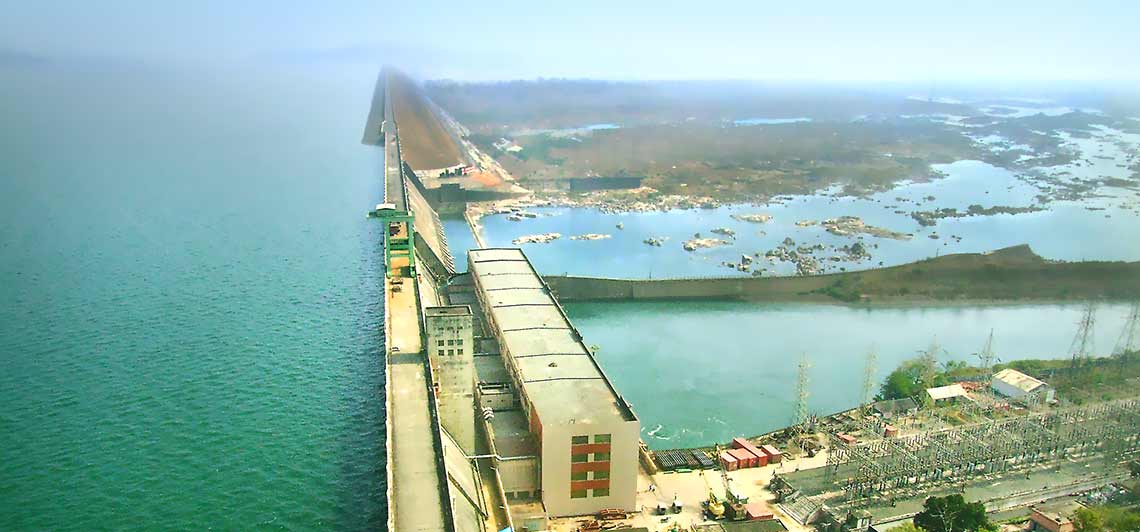
Sambalpur – Where the Mahanadi Meets a Legacy of Silk and Struggle
Introduction
In the heart of western Odisha, Sambalpur sits quietly on the banks of the Mahanadi River, carrying the weight of a rebel king's legacy and the artistry of one of India's most celebrated handloom traditions. This is the land of the Sambalpuri saree, tied and dyed thread by thread, and of the mighty Hirakud Dam, one of the world's longest earthen dams. Add a temple where the deity is worshipped without idol immersion, a leaning shrine that has defied gravity for centuries, and forests thick with wildlife, and Sambalpur reveals itself as a destination that rewards travelers who venture beyond Odisha's coastal circuit.
History
Sambalpur's history is dominated by the Chauhan dynasty, Rajput rulers who governed the kingdom, then also known as Hirakhand, for centuries with Sambalpur as their capital. The Marathas, under the Bhonsles of Nagpur, conquered Sambalpur in 1800, and after the Third Anglo-Maratha War in 1817, the British restored the Chauhan king Jayant Singh to the throne, though stripped of authority over the region's vassal states.
When the last king, Maharaj Sai, died without a direct heir in 1849, the British annexed Sambalpur under the doctrine of lapse — a decision that ignited one of Odisha's fiercest resistance movements. Veer Surendra Sai, a legitimate claimant to the throne from the Khinda branch of the Chauhan family, led a prolonged rebellion against British rule that intensified during the 1857 uprising, making him one of the most celebrated freedom fighters in Odisha's history. In the 20th century, Sambalpur transformed again with the construction of the Hirakud Dam between 1948 and 1957, a massive post-independence project that reshaped the region's economy and landscape.
Geography
Sambalpur sits in western Odisha, nestled in a valley along the banks of the Mahanadi River and surrounded by low hills that give the city a distinct, tranquil character compared to Odisha's flatter coastal belt. The district's defining feature is the Hirakud Reservoir, formed by the dam and stretching over 55 kilometres, ringed by forested hills and home to rich birdlife, especially migratory species in winter.
To the west lies Debrigarh Wildlife Sanctuary, spread across roughly 350 sq km around the reservoir, sheltering elephants, deer, and forest wildlife. The climate is largely dry and tropical, with hot summers, a moderate monsoon, and cool, pleasant winters that make outdoor sightseeing far more comfortable.
Culture and Traditions
Sambalpur is the cultural capital of western Odisha, where the local Sambalpuri dialect and traditions differ noticeably from the state's coastal regions. The city's most famous cultural export is the Sambalpuri saree, woven using the intricate tie-and-dye Bandha technique, where the yarn is dyed before weaving to create the fabric's distinctive patterns.
Folk traditions here include lively Sambalpuri dance and music, often performed during local festivals and weddings, alongside a strong oral storytelling tradition tied to the region's rebel history. The legacy of Veer Surendra Sai remains deeply woven into local pride, referenced in everything from institution names to community memory.
Architecture
Temple architecture defines much of Sambalpur's built heritage, most notably the Samaleswari Temple, built in the 16th century on the banks of the Mahanadi and dedicated to the region's presiding goddess. Its distinctive design and riverside setting make it the spiritual center of the city.
A short distance away, the Leaning Temple of Huma, dedicated to Lord Shiva, tilts at roughly 13 degrees — a rare architectural quirk that makes it the only leaning temple in India. Modern engineering is represented by the Hirakud Dam itself, with its twin observation towers, the Gandhi Minar and Nehru Minar, standing at the northern and southern ends of the structure.
Famous Places
Samaleswari Temple
Overview
Standing on the banks of the Mahanadi, this 16th-century temple is dedicated to Goddess Samaleswari, considered the patron deity of Sambalpur and western Odisha. Its unique architecture and riverside setting draw devotees from across the region, including neighboring Chhattisgarh.
Best Time to Visit
Early morning visits offer the calmest darshan, while festival days bring colorful processions.
Quick Tip
Combine your temple visit with a walk along the Mahanadi ghats just outside.
Hirakud Dam
Overview
One of the longest earthen dams in the world, Hirakud spans the Mahanadi River and holds back a reservoir stretching over 55 kilometres. Visitors can climb the Gandhi Minar and Nehru Minar for panoramic views or take a boat ride across the calm waters.
Best Time to Visit
Winter mornings offer the clearest skies and the best visibility across the reservoir.
Quick Tip
Time your visit for sunset from Gandhi Minar for the best photography light.
Leaning Temple of Huma
Overview
This 17th-century Shiva temple tilts at roughly 13 degrees, making it India's only leaning temple. Set beside the Mahanadi, its riverside location adds to its unusual charm.
Best Time to Visit
Cooler months make the riverside walk to the temple more comfortable.
Quick Tip
Look closely at the base of the structure to appreciate just how pronounced the tilt really is.
Debrigarh Wildlife Sanctuary
Overview
Spread across 350 sq km around the Hirakud reservoir, this sanctuary shelters elephants, deer, and a wide variety of birdlife, with safaris offering close wildlife encounters.
Best Time to Visit
Winter is ideal for spotting migratory birds along the reservoir's edge.
Quick Tip
Book a safari slot in advance through the forest department for the best chance of sightings.
Chiplima Waterfall
Overview
A scenic waterfall on the Mahanadi, harnessed for hydroelectric power as part of the Hirakud project, with a nearby temple to the fisherfolk deity Ghanteshwari, famous for its forest of bell offerings.
Best Time to Visit
Post-monsoon months bring the fullest water flow and the most dramatic views.
Quick Tip
Combine this stop with a visit to Hirakud Dam, since both lie along the same route.
Famous Dishes
Dalma
What It Is
A comforting lentil and vegetable stew, mildly spiced and served with rice, forming a daily staple in most Odia households across Sambalpur.
Where to Try It
Local eateries throughout Sambalpur town serve authentic home-style versions.
Fun Fact
Despite being an everyday dish, Dalma is considered essential to a proper Odia thali.
Pakhala
What It Is
Fermented rice soaked in water, served with curd, fried vegetables, and pickle — a cooling dish especially popular through Sambalpur's hot summer months.
Where to Try It
Best enjoyed at a local home-style kitchen rather than a formal restaurant.
Fun Fact
Pakhala holds such cultural importance that Odisha marks an official Pakhala Day each year.
Chakuli Pitha
What It Is
A soft, fermented rice-and-lentil pancake, typically served for breakfast with chutney or vegetable curry, popular across western Odisha's households.
Where to Try It
Local breakfast stalls and homestays in Sambalpur town serve it fresh each morning.
Fun Fact
Its light, fermented batter makes it a favorite comfort food across generations in the region.
Famous Personalities
Veer Surendra Sai
Legacy
A revolutionary and legitimate claimant to the Sambalpur throne, Surendra Sai led a prolonged and fierce resistance against British rule through the mid-19th century, becoming one of Odisha's most revered freedom fighters.
Connection to Sambalpur
Born in Khinda village near Sambalpur, he organized his resistance from the region's forests, with Debrigarh serving as a key strategic base.
Fast Fact
Sambalpur's leading engineering university and medical college are both named in his honor.
Gangadhar Meher
Legacy
Known as "Swabhaba Kabi," or the Nature Poet, Gangadhar Meher is regarded as one of the most important figures in Odia literature, celebrated for works like "Tapaswini" despite having only a primary education.
Connection to Sambalpur
Meher lived and wrote in the Sambalpur region, drawing deeply on its landscapes and rhythms of rural life for his poetry.
Fast Fact
His poetic depth, achieved without formal higher education, remains a celebrated point of regional pride.
Festivals
Samaleswari Puja
How It's Celebrated
Held at the Samaleswari Temple, this festival draws large crowds of devotees for special rituals honoring the city's patron goddess.
What Makes It Special
The temple's role as western Odisha's spiritual anchor gives this celebration a particularly strong community turnout.
Nuakhai
How It's Celebrated
One of western Odisha's most important agricultural festivals, Nuakhai marks the harvest season with families offering the season's new rice to the gods before eating it themselves.
What Makes It Special
Sambalpur's celebration is considered one of the most authentic expressions of this harvest tradition, uniting communities across the region.
Sitalsasthi
How It's Celebrated
A unique Sambalpur festival marking the celestial marriage of Lord Shiva and Goddess Parvati, celebrated with an elaborate procession through the city streets.
What Makes It Special
The grand public procession, involving decorated floats and large crowds, makes it one of the city's most visually striking annual events.
Things to Do
- Seek blessings at Samaleswari Temple on the banks of the Mahanadi.
- Climb Gandhi Minar for panoramic views of Hirakud Dam and its reservoir.
- Take a boat ride across the Hirakud reservoir.
- Spot wildlife on a safari through Debrigarh Wildlife Sanctuary.
- Visit the Leaning Temple of Huma for its unusual architecture.
- Shop for authentic Sambalpuri sarees directly from local weaving centres.
Where to Eat, Shop, and Stay
Eat: Local eateries across Sambalpur town serve authentic Dalma, Pakhala, and Chakuli Pitha, giving visitors a genuine taste of western Odia cuisine.
Shop: Sambalpuri handloom weaving centres are the city's biggest draw for shoppers, offering sarees, scarves, and cushion covers made using the traditional Bandha tie-dye technique.
Stay:
- Budget: Simple lodges and guesthouses in Sambalpur town cover most short-stay needs.
- Mid-range: Comfortable hotels near the city centre and railway station offer better amenities.
- Luxury: A few upscale hotels near Hirakud Dam cater to travelers wanting reservoir views.
What is Sambalpur Famous For?
Sambalpur is best known for the Hirakud Dam, the Samaleswari Temple, the unique Leaning Temple of Huma, and the world-famous Sambalpuri handloom saree, alongside its deep connection to freedom fighter Veer Surendra Sai.
Best Time to Visit
October to February offers the most pleasant weather for sightseeing, wildlife safaris, and temple visits. Summers turn hot and dry, while the monsoon brings dramatic waterfalls but can affect travel to outlying sites.
How to Reach
By Air: Jharsuguda Airport, around 55 km away, is the nearest airport, connected to major Indian cities.
By Rail: Sambalpur is a major railway junction, well connected to Bhubaneswar, Kolkata, Delhi, and Mumbai.
By Road: Sambalpur is well connected by national highways to Bhubaneswar, Raipur, and other major cities in the region.
Nearby Places
Hirakud
A township built around the dam project, worth visiting for its observation towers and reservoir views.
Debrigarh
Home to the wildlife sanctuary, ideal for a half-day safari extension from Sambalpur.
Huma
The village is home to the Leaning Temple, easily combined with a Hirakud Dam visit along the same route.
Puri
Puri is Odisha's famous coastal pilgrim town, home to the Jagannath Temple and a popular beach, located around 330 km from Sambalpur and well suited as a longer extension trip.
Balasore
Balasore is the coastal town in northern Odisha known for its beaches and proximity to Chandipur's unique receding sea, roughly 400 km from Sambalpur and best combined with a broader Odisha itinerary.
Best Duration for a Trip
2 to 3 days is ideal — enough time to cover the Samaleswari Temple, Hirakud Dam, and a wildlife excursion into Debrigarh.
Travel Tips
- Visit between October and February for the most comfortable overall experience.
- Carry cash, as smaller markets and weaving centres may not accept digital payments.
- Book Debrigarh safari slots in advance through the forest department.
- Support local weavers by buying directly from Sambalpuri saree production centres.
- Dress modestly when visiting temples and respect local customs during festivals.
Why Visit Sambalpur?
Sambalpur offers a rare combination of engineering marvel, spiritual heritage, and living craft tradition — a city where a rebel king's legacy, a leaning temple, and a world-famous handloom saree all share the same riverbank.
Conclusion
Sambalpur may sit off Odisha's usual tourist trail, but it rewards travelers with a genuinely well-rounded experience — from the grandeur of Hirakud Dam to the devotion at Samaleswari Temple, and from the artistry of Sambalpuri weaving to the quiet courage of Veer Surendra Sai's legacy. A few days here, paired with a plate of warm Dalma and a saree fresh off the loom, offer a memorable window into the heart of western Odisha.
"Travel is the only thing you buy that makes you richer."