Deogarh — Odisha's Waterfall Town, Fortress of the Gods
Introduction
The old Sanskrit name for Deogarh says it all: Debadurg, the "Fortress of Gods." Ringed by hills that once made this remote princely capital nearly impregnable, Deogarh earned the epithet "Akhoj Bamanda" — the unconquered land. Today, this quiet corner of northern Odisha is better known simply as the "Waterfall Town" of the state, home to a cluster of cascades tumbling off forested cliffs, a royal palace built by one of Odisha's most progressive 19th-century rulers, and a poetic tradition once so celebrated that the town was nicknamed "the pristine lake where erudite swans frolicked."
History
Deogarh's roots trace back to the ancient princely state of Bamanda, also known as Bamra, whose origins as a "citadel of creative artists" date to the 5th century AD under the Mathara Royal Family. According to local legend, the state's name comes from an old Odia phrase — when the monkey army of Lord Rama, searching for Sita, lost its way in this forested tract before finally finding the correct path by "turning left" (bama), giving the land its name.
By the mid-16th century, a young Chauhan prince from Patna, said to have been abducted as an infant and raised by local Bhuiya and Khond tribes, was crowned the first Raja of Bamra around 1545 AD, beginning a Ganga Vamsi dynasty that would rule for nearly four centuries. The state's capital moved from Purunagarh to Suguda, and finally to Deogarh, which flourished most remarkably under Raja Basudev Sudhal Dev (reign 1869–1903), whose progressive rule brought Bamanda its first postal system, telegraph lines, and even electricity — making it the first princely state in India to introduce all three. Following independence, the last ruler, Raja Bhanuganga Tribhuban Dev, signed the Instrument of Accession on 1st January 1948, and Deogarh eventually became its own separate district, bifurcated from Sambalpur, on 1st January 1994.
Geography
Deogarh sits in the north-western part of Odisha, roughly 90 km east of Sambalpur along National Highway 6, nestled in the basin of the holy Brahmani River. The town is famously surrounded by high mountains that provided natural fortification for the old princely state, a landscape of lofty cliffs and lush green forest that continues to define the district's character today.
This hilly, forested terrain is precisely what earns Deogarh its nickname as the "Waterfall Town of Odisha," with numerous cascades scattered across the district, including the reserved forest area of Kankarkhol near Katasar Ghat. The climate here swings between very hot summers in April and May, reaching up to 43°C, heavy monsoon rains from June to September, and a comfortably cool winter from October to February, with minimum temperatures dropping to around 8°C.
Culture and Traditions
Deogarh's culture carries an unusually strong literary and artistic legacy for a town its size, historically nicknamed "Budha Hamsa Keli Sara" — the pristine lake where erudite swans frolicked — a poetic tribute to the town's tradition of royal poetic gatherings. Odia is the official language, and the region's cultural memory remains closely tied to its former royal court, where celebrated Oriya poets were regular visitors.
That same spirit of poetic celebration continues today through the Utsav Pradhanpat, an annual district-level cultural festival held near the town's famous waterfall, keeping alive a tradition of literary gathering that once defined Bamanda's royal court. Agriculture also shapes daily life across the district, with paddy, pulses, and a range of fruits including mango, litchi, and guava forming the backbone of the local economy.
Architecture
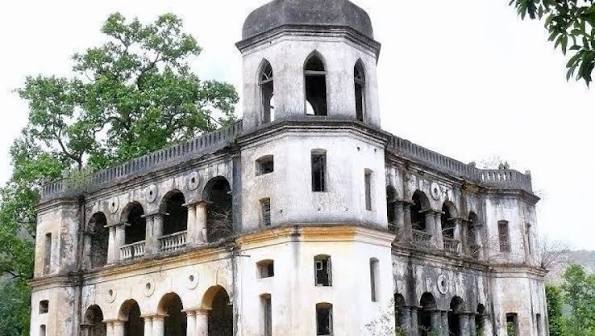
Deogarh's architecture centers on its royal legacy, most visibly in the Kailash Palace, built by King Dibya Sankar Deb in 1919, whose very name evokes the royalty, grandeur, and generational legacy of the Bamanda dynasty. The palace remains one of the finest surviving examples of early 20th-century royal architecture in this part of Odisha.
Temple architecture is represented by the Jagannath Temple at Purunagarh, the old capital of Bamra state, built by Raja Pratap Rudra Deb in 1705 and recognized as the very first Jagannath temple established in Bamanda state — making it one of the oldest temples in the wider Deogarh town area. Educational and civic architecture from the Sudhal Dev era, including the Raja Basu Dev High School founded in 1882, reflects the enlightened administrative legacy the king left across the district.
Famous Places
Pradhanpat Waterfall
Deogarh's most iconic natural attraction, this picturesque waterfall sits at the heart of the town, surrounded by lofty cliffs and lush green forest, supplying clean drinking water to local residents. A true picnickers' paradise across every season, it also hosts the annual Utsav Pradhanpat cultural festival.
A Waterfall with a Cultural Legacy
Beyond its natural beauty, Pradhanpat carries genuine cultural weight as the site of Deogarh's most important annual festival, continuing the town's centuries-old tradition of poetic and artistic gathering.
Best Time to Visit
The waterfall attracts visitors year-round, though the post-monsoon months offer the fullest flow and the most vivid green surroundings.
Quick Tip
Combine your visit here with a walk through the town's Purunagada area to see the ancient "Olata Bata" ficus tree that greets visitors entering Deogarh from the Sambalpur side.
Kailash Palace
Built in 1919 by King Dibya Sankar Deb, this royal palace stands as a striking symbol of Bamanda's regal heritage, reflecting the dynasty's generational legacy through its grand architecture and historical significance.
Kuddukut Waterfall
Also known as Kurudkut Waterfall, this serene and calm cascade remains one of Deogarh's most underrated natural spots, offering nature lovers a peaceful escape away from the town's more visited attractions.
Deojharan Waterfall
Located inside dense forest in Reamal Block, about 16 km from Deogarh town, this scenic and relatively lesser-known waterfall is a popular picnic spot, often discovered through word of mouth rather than formal travel planning.
Gohira Dam
An irrigation project located about 28 km from Deogarh town in Reamal Block, Gohira Dam has become a popular picnic destination thanks to its genuine scenic beauty, despite its primary function as agricultural infrastructure.
Jagannath Temple, Purunagarh
Located at Purunagarh, the old capital of Bamra state, this temple built by Raja Pratap Rudra Deb in 1705 is among the oldest in the Deogarh area and holds the distinction of being the first Jagannath temple established in Bamanda state.
Famous Dishes
Pakhala
A fermented rice dish eaten with vegetables and curd, cherished across Deogarh and the wider Odisha region for its cooling effect during the district's intensely hot summer months.
Dalma
A hearty lentil and vegetable stew, forming a comforting staple of everyday Odia meals found throughout Deogarh's local eateries.
Seasonal Fruit Specialties
Given Deogarh's fertile agricultural land, seasonal fruits like litchi, mango, and sweet orange form a genuine local specialty, best enjoyed fresh during their respective harvest seasons.
Local Rice and Pulse Dishes
Reflecting the district's paddy and pulse cultivation, traditional rice-and-lentil preparations remain a staple of everyday Deogarh cuisine, found in local households and small eateries alike.
Famous Personalities
Raja Basudev Sudhal Dev
Ruling Bamanda from 1869 to 1903, Raja Basudev Sudhal Dev is remembered as one of the most enlightened and progressive rulers in British India, transforming his remote, landlocked princely state into a model of modern governance, science, and cultural excellence. He established a state-run postal system, laid telephone lines connecting Deogarh to the nearest railway station, and introduced electricity — making Bamanda the first princely state in India to have all three.
A Scholar-King's Legacy
Beyond administration, Sudhal Dev was a distinguished poet and patron of the arts, authoring works including Chitrotpala and Janhamamu, and earning the scholarly title Vidvat Kula Kumuda for his literary contributions.
Connection to Deogarh
He founded the Raja Basu Dev High School in 1882 and the Jagannath Ballav Press in 1886, alongside the weekly magazine Sambalpur Hitaishini in 1889, cementing Deogarh's place as a genuine center of Odia literary revival.
Fast Fact
His 78-mile telephone line connecting Bamara and Barkote, laid in 1900, was recorded as the longest telephone line in India at that time.
Bagha Jatin's Associates
Though not a single named figure, Deogarh holds a fascinating footnote in India's freedom struggle — a bomb-making facility connected to revolutionary Bagha Jatin's Indo-German conspiracy was established in Deogarh during the 1910s, tying the town briefly into one of the most dramatic chapters of the independence movement, alongside its parallel connection to Balasore.
Festivals
Utsav Pradhanpat
Deogarh's signature annual cultural festival, held near the celebrated Pradhanpat Waterfall, continues the town's centuries-old royal tradition of poetic and artistic gatherings in a modern community setting.
Rath Yatra
Celebrated with genuine community enthusiasm at the Jagannath Temple in Purunagarh, this chariot festival forms an important part of Deogarh's religious calendar, tracing back to the temple's founding in 1705.
Nuakhai
An important harvest festival is celebrated across Deogarh district, marking the arrival of the new rice crop with community feasting and traditional rituals tied to the region's agricultural identity.
Things to Do
- Visit Pradhanpat Waterfall, Deogarh's most iconic natural and cultural landmark.
- Explore Kailash Palace, tracing the Bamanda dynasty's royal legacy.
- Discover Kuddukut and Deojharan Waterfalls, both peaceful, underrated natural escapes.
- Picnic at Gohira Dam, combining scenic beauty with a working irrigation project.
- Visit the Jagannath Temple at Purunagarh, Bamanda's oldest and most historically significant shrine.
- See the ancient Olata Bata ficus tree, a natural landmark welcoming visitors to the town.
- Attend Utsav Pradhanpat, if your visit timing allows, for the district's flagship cultural festival.
Where to Eat, Shop, and Stay
Eat: Local eateries across Deogarh serve authentic Odia staples like Dalma and Pakhala, alongside fresh seasonal fruit specialties reflecting the district's agricultural abundance.
Shop: Deogarh's local markets offer everyday goods and regional produce, giving visitors a genuine taste of the district's small-town commerce.
Stay:
- Budget: Simple guesthouses and small hotels cover most short-stay needs for travelers passing through.
- Mid-range: A handful of comfortable hotels near the town center offer better amenities for a more relaxed stay.
- Luxury: For upscale stays, travelers often base themselves in nearby Sambalpur or Rourkela, both well connected to Deogarh by road.
What is Deogarh Famous For?
Deogarh is best known as the "Waterfall Town of Odisha," home to a cluster of scenic cascades including Pradhanpat, Kuddukut, and Deojharan. It's also recognized for its royal Bamanda heritage, the historic Kailash Palace, and its connection to enlightened 19th-century ruler Raja Basudev Sudhal Dev, who modernized the princely state well ahead of its time.
Best Time to Visit
February, March, and November offer the most moderate temperatures for visiting Deogarh, making them the ideal months to explore its waterfalls, palace, and temples. Summers turn extremely hot, reaching up to 43°C, while the monsoon from June to September brings heavy rainfall, both best avoided for outdoor sightseeing.
How to Reach
By Air: The nearest major airport is in Bhubaneswar, connected to Deogarh by road.
By Rail: The nearest railway stations are in Sambalpur and Rourkela, both well connected to Deogarh by road.
By Road: Deogarh sits on National Highway 6, roughly 90 km east of Sambalpur, with regular buses and taxis connecting it to Sambalpur, Rourkela, and Angul.
Nearby Places
Sambalpur
About 90 km away, Sambalpur offers its own collection of temples, the Samaleswari Temple, and Sambalpuri handloom heritage, making it a natural extension to a Deogarh-based Western Odisha trip.
Why It Complements a Deogarh Trip
Given both towns' shared Sambalpuri cultural heritage, visiting Sambalpur deepens the same regional narrative that Deogarh begins.
Getting There
Sambalpur is well connected to Deogarh by road via NH-6, making a same-day visit easy.
Quick Tip
Combine a Deogarh morning at Pradhanpat Waterfall with a Sambalpur afternoon exploring its own temple circuit for a well-rounded regional day trip.
Angul
Angul is a neighboring district known for its Jagannath Temple atop Sunasagad Hill and its industrial identity, adding further depth to a Northern Odisha heritage circuit.
Rourkela
An industrial city known for its steel plant and modern infrastructure, offering a contemporary contrast to Deogarh's forested, princely-era character.
Best Duration for a Trip
1 to 2 days is generally sufficient to comfortably explore Deogarh's waterfalls, palace, and temples. Travelers wanting to include Sambalpur or Rourkela can extend this into a fuller 3-day regional trip.
Travel Tips
- Visit between February, March, and November for the most comfortable sightseeing weather.
- Carry sturdy footwear and appropriate clothing for exploring the district's waterfalls.
- Dress modestly and respect local customs when visiting temples and religious sites.
- Carry cash, as smaller markets and eateries may not accept digital payments.
- Hire a local taxi for easier movement between Deogarh's scattered waterfalls and natural sites.
- Time your visit around Utsav Pradhanpat for a richer cultural experience at the town's most iconic landmark.
Why Visit Deogarh?
Deogarh offers a genuinely peaceful retreat into Odisha's forested northern hills — a former princely capital where waterfalls, royal palaces, and a centuries-old poetic tradition combine in a town still living up to its name as the "Fortress of Gods." It rewards travelers looking for uncrowded natural beauty and authentic royal heritage away from Odisha's more mainstream circuits.
Conclusion
Deogarh may be one of Odisha's quieter districts, but it holds a genuinely rich blend of natural beauty, royal legacy, and literary tradition. From the cascading waters of Pradhanpat to the grand halls of Kailash Palace, and from Raja Basudev Sudhal Dev's pioneering modernization to the town's poetic "erudite swans" legacy, this forested corner of northern Odisha rewards travelers willing to look beyond the state's more famous destinations. A short visit here, paired with a plate of warm Dalma and a walk beside its waterfalls, offers a genuinely soulful glimpse into one of Odisha's most underrated corners.
"Travel is the only thing you buy that makes you richer."