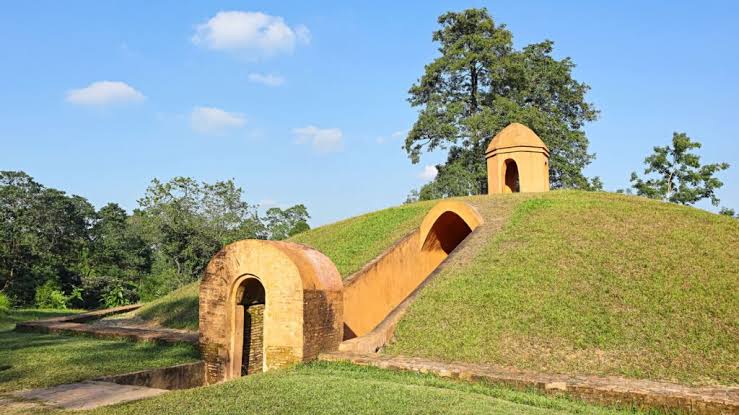
Charaideo – Where the Ahom Legacy Rests Beneath Sacred Mounds
Charaideo is one of Assam's most important historical destinations and the original capital of the Ahom kingdom. Set amid the green landscapes of eastern Assam, the destination is best known for its ancient Moidams—royal burial mounds created for Ahom kings and other members of the royal family.
Today, Charaideo offers a fascinating combination of Ahom history, UNESCO World Heritage, traditional culture, tea gardens, religious sites and natural landscapes. For travellers interested in understanding Assam beyond its wildlife and tea, Charaideo offers a journey into the state's royal and cultural past.
| Quick Fact | Details |
|---|---|
| State | Assam |
| Destination | Charaideo |
| District Headquarters | Sonari |
| Historical Importance | First permanent capital of the Ahom kingdom |
| UNESCO Status | World Heritage Site |
| UNESCO Property | Moidams – the Mound-Burial System of the Ahom Dynasty |
| Approx. Charaideo–Sivasagar Distance | About 28 km |
| Nearest Major Airport | Mohanbari Airport, Dibrugarh |
| Nearest Major Railway Connection | Simaluguri Railway Station |
History
Charaideo holds a special place in the history of Assam because it was the first permanent capital of the Ahom kingdom. The capital was established by Chao Lung Siu-Ka-Pha, the founder of the Ahom dynasty, after the Tai-Ahom people entered the Brahmaputra Valley in the 13th century.
The name Charaideo comes from three Tai Ahom words—Che, meaning city or town, Rai, meaning shine or dazzle, and Doi, meaning hill or mountain. The name is therefore associated with the idea of a shining town situated on a hill.
Although the Ahom capital was moved to different locations over the centuries, Charaideo continued to hold deep religious and symbolic importance. It became the royal necropolis where Ahom kings, queens, princes and princesses were laid to rest.
The Ahom kingdom lasted for around 600 years, making it one of the longest-lasting dynasties in the history of the Indian subcontinent.
Charaideo in Modern Assam
Charaideo district was carved out of Sivasagar district in 2016, with Sonari as its headquarters. The district covers approximately 1,069.15 sq. km and had a population of 4,71,418 according to the 2011 Census.
Geography
Charaideo is located in eastern Assam and forms part of a landscape of hills, forests, rivers and tea plantations. The district is bordered by Dibrugarh district towards the north-east, while Nagaland and Arunachal Pradesh lie towards the south.
The district shares approximately 35 km of boundary with Nagaland and 27 km with Arunachal Pradesh. Important rivers flowing through the region include the Desang, Towkak, Suffry, Timon and Teok.
| Geographical Feature | Details |
|---|---|
| Area | 1,069.15 sq. km |
| Coordinates | 27.0280° N, 95.0312° E |
| Elevation | Approximately 89.6 metres |
| Main Rivers | Desang, Towkak, Suffry, Timon and Teok |
| Forest Reserves | Dilli, Abhoypur, Sapekhati, Diroi and Chala |
| Tea Estates | 54 |
The combination of forests, tea estates, waterways and gentle hills gives Charaideo a distinctly green landscape and makes the surrounding countryside attractive for slow travel and photography.
Culture and Traditions
Charaideo's cultural identity is strongly connected with the Tai-Ahom heritage and the broader cultural traditions of Assam. The area's history can be seen in its royal burial grounds, religious practices, traditional festivals, tea gardens and local communities.
The Charaideo Moidams are more than historical structures. They represent the spiritual beliefs of the Tai-Ahom people and their understanding of death, ancestors and the relationship between the human world and the spiritual world.
Me-Dam-Me-Phi
Me-Dam-Me-Phi is an important Tai-Ahom ancestor-worship tradition. UNESCO notes that ancestor worship and related rituals continue to be associated with the Charaideo necropolis.
Tea Culture
Tea is also an important part of the region's economic and cultural landscape. The district has 54 tea estates, and visitors can experience the peaceful scenery of tea gardens and observe tea workers during the plucking season.
Architecture
Charaideo's most remarkable architecture is represented by its Moidams, the royal mound-burial structures of the Ahom dynasty.
The Charaideo Moidams
A typical Moidam consists of an underground burial chamber covered by a large earthen mound. The structures were carefully constructed using materials such as earth, brick and stone and were integrated with the natural landscape.
The Charaideo necropolis contains 90 Moidams. Their design reflects Tai-Ahom beliefs and creates a distinctive sacred landscape of mounds, trees, water and surrounding hills.
Why the Architecture is Special
- They combine burial architecture with natural landscapes.
- Many structures contain underground or vaulted chambers.
- The mound is traditionally covered by earth and vegetation.
- A shrine-like structure is placed above the mound.
- The overall design reflects Tai-Ahom ideas about the spiritual world.
Famous Places
Charaideo Maidams
The Charaideo Maidams are the main attraction of the destination. These royal burial mounds were created for Ahom rulers and other members of the royal family. The necropolis is considered sacred and is one of the most important surviving examples of Tai-Ahom funerary traditions.
In 2024, the Moidams became a UNESCO World Heritage Site under the title Moidams – the Mound-Burial System of the Ahom Dynasty.
Dilighat
Dilighat is located along the banks of the Dilhi or Disang River near the Namrup and Borhat area. Its riverside setting makes it a pleasant destination for visitors looking for a quieter natural experience.
Sri Sri Haridev Bornamghar
Established in 1662, Sri Sri Haridev Bornamghar is a more than 300-year-old religious institution associated with Mahapurush Haridev. It continues to attract visitors and devotees throughout the year.
Cholapathar Shyam Gaon Buddhist Monastery
The Buddhist monastery at Cholapathar Shyam Gaon is one of the notable Buddhist heritage sites in Assam. The monastery also houses a library containing historical manuscripts and literature in languages including Pali and Tai Ahom.
The site is especially interesting during the Sangken Poi festival in April.
Historical Borhat Bazar
Borhat was historically associated with the trade of mineral salt during Ahom rule. The name is derived from Bor, meaning big, and Hat, meaning market. Although it functions as a regular weekly market today, its historical connection gives it cultural importance.
Borpatra Pukhuri
Borpatra Pukhuri, also known as Raja Pukhuri, is a historic waterbody located about 2.5 km east of Sonari town. Local tradition connects the pond with Ahom King Swargadeo Gadadhar Singha and Borpatra Gohain.
Tea Gardens
The tea gardens of Charaideo are among the region's most attractive landscapes. Visitors can enjoy long stretches of green plantations and observe the traditional process of tea-leaf plucking.
Assam-Arunachal Pradesh Border Area
The Assam-Arunachal Pradesh border area within Charaideo district offers a scenic landscape and an opportunity to experience the natural beauty of eastern Assam.
Famous Dishes
Charaideo does not have a single officially recognised signature dish unique only to the destination. However, visitors can experience the wider culinary traditions of Assam, which are an important part of the region's cultural identity.
Masor Tenga
Masor Tenga is a classic Assamese fish preparation known for its light and tangy flavour. It is traditionally prepared using fish with souring ingredients such as tomato, lemon, elephant apple or other regional ingredients.
Khar
Khar is a distinctive Assamese alkaline preparation traditionally made using filtered water derived from banana ash. It is an important part of a traditional Assamese meal.
Aloo Pitika
Aloo Pitika is a simple comfort food made from mashed potatoes mixed with ingredients such as onion, green chilli and coriander. It is commonly enjoyed with rice and dal.
Patot Diya Maas
Patot Diya Maas is fish marinated with herbs and spices, wrapped in banana leaves and traditionally roasted. The preparation highlights the simple flavours associated with Assamese cooking.
Haah Joha Kumura
Haah Joha Kumura is a traditional Assamese duck preparation made with aromatic ash gourd and simple spices. It is especially associated with colder months.
Til Pitha
Til Pitha is a popular Assamese festive delicacy made from rice flour and filled with roasted sesame seeds and jaggery. It is especially associated with Bihu celebrations.
Assam Tea
No visit to the tea-growing landscape of Assam is complete without trying Assam tea. The tea is known for its strong flavour, rich colour and characteristic malty character.
Famous Personalities
Chao Lung Siu-Ka-Pha
Chao Lung Siu-Ka-Pha, also known as Sukapha, was the founder of the Ahom kingdom. He established Charaideo as the first permanent capital of the Ahom state after entering the Brahmaputra Valley in the 13th century.
His historical connection makes him one of the most important personalities associated with Charaideo.
Swargadeo Gadadhar Singha
Swargadeo Gadadhar Singha was an important Ahom ruler associated with the history of the region. Local tradition connects him with the creation of Borpatra Pukhuri, also known as Raja Pukhuri.
Mahapurush Haridev
Mahapurush Haridev was an important saint of Assam whose name is associated with the more than 300-year-old Sri Sri Haridev Bornamghar in the Charaideo region.
Festivals
Charaideo Festival
The Charaideo Festival celebrates the heritage of the Ahom dynasty. The festival features cultural performances, folk music, traditional crafts and opportunities to explore the heritage of the Charaideo Maidams.
Bihu
Bihu is one of Assam's most important cultural festivals and is celebrated across the state, including the Charaideo region. Music, dance, traditional food and community gatherings form an important part of the celebrations.
Sangken Poi
Sangken Poi is celebrated at the Buddhist monastery in the region, generally during April. It provides an opportunity to experience the Buddhist cultural traditions associated with the local Tai communities.
Me-Dam-Me-Phi
Me-Dam-Me-Phi is an important Tai-Ahom ancestor-worship tradition. Its connection with the Charaideo necropolis highlights the continuing spiritual significance of the royal burial landscape.
Things to Do
- Explore the UNESCO World Heritage Site: Spend time understanding the history and architecture of the Charaideo Moidams.
- Take a heritage walk: Explore the sacred landscape surrounding the royal burial mounds.
- Learn about Ahom history: Discover how Charaideo became the first permanent capital of the Ahom kingdom.
- Visit religious sites: Explore Sri Sri Haridev Bornamghar and the local Buddhist monastery.
- Enjoy tea gardens: Walk through or view the scenic tea plantations and learn about Assam's tea culture.
- Explore historical markets: Visit Borhat and learn about its historical salt trade.
- Visit Borpatra Pukhuri: Explore the historic waterbody near Sonari.
- Enjoy riverside scenery: Spend time at places such as Dilighat.
- Try Assamese cuisine: Sample regional dishes such as Masor Tenga, Khar, Aloo Pitika and Pitha.
- Photography: Capture the Moidams, tea gardens, waterbodies, forests and rural landscapes.
Where to Eat, Shop, and Stay
Where to Eat
For food, visitors can explore local eateries around Sonari and nearby towns. Instead of looking only for tourist restaurants, try local Assamese meals and traditional snacks wherever available.
Good regional choices include:
- Masor Tenga
- Khar
- Aloo Pitika
- Patot Diya Maas
- Assamese Pitha
- Jolpaan
- Assam Tea
Where to Shop
Local markets are best for experiencing everyday life and purchasing regional products. Visitors can look for Assamese tea, traditional handicrafts, bamboo products, textiles and locally produced items, depending on availability.
Where to Stay
Sonari is the practical base for travellers exploring Charaideo and nearby attractions because it serves as the district headquarters. Visitors can also consider accommodation in larger nearby towns such as Sivasagar or Dibrugarh if they want a wider choice of hotels.
| Traveller Type | Recommended Base |
|---|---|
| Budget Traveller | Sonari and nearby local accommodation |
| Heritage Traveller | Sonari for convenient access to Charaideo |
| Comfort Traveller | Sivasagar or Dibrugarh for more accommodation choices |
| Luxury Traveller | Dibrugarh offers a broader range of higher-end accommodation |
What is Charaideo Famous For?
Charaideo is primarily famous for the Moidams of the Ahom Dynasty, the royal burial mounds that form one of Assam's most important cultural heritage sites.
| Known For | Why It Matters |
|---|---|
| Charaideo Moidams | Royal burial grounds of the Ahom dynasty |
| UNESCO World Heritage | Recognised internationally for its cultural significance |
| Ahom History | First permanent capital of the Ahom kingdom |
| Tea Gardens | Important part of the landscape and local economy |
| Traditional Culture | Tai-Ahom, Assamese and regional cultural traditions |
| Religious Heritage | Bornamghar and Buddhist heritage sites |
Best Time to Visit
Charaideo can be visited throughout the year, but the most comfortable period for sightseeing is generally October to March, when the weather is suitable for exploring heritage sites, tea gardens and outdoor attractions.
| Season | Travel Experience |
|---|---|
| October–March | Best overall period for comfortable sightseeing |
| April | Good for cultural experiences and Sangken Poi celebrations |
| May–September | Greener landscapes but wetter weather and possible travel disruptions |
| January | Suitable for experiencing the Charaideo Festival when scheduled |
How to Reach
By Air
The nearest major airport is Mohanbari Airport in Dibrugarh. The Charaideo district administration lists the airport at approximately 83 km by road from Sonari, the district headquarters.
By Train
Simaluguri Railway Station is an important railway connection for the region. The district administration lists it at approximately 32 km by road from Sonari. Bhojo Railway Station is another nearby option, around 6.3 km from Sonari.
By Road
Charaideo is connected by road with Sivasagar, Dibrugarh and Mon district of Nagaland. The historic Dhodar Ali passes through Sonari and connects the region with important destinations in Upper Assam.
| Mode | Recommended Connection |
|---|---|
| Air | Mohanbari Airport, Dibrugarh |
| Rail | Simaluguri Railway Station |
| Road | Sonari via regional road network and historic Dhodar Ali |
Nearby Places
Sivasagar
Sivasagar is one of the most important historical destinations near Charaideo. The city is known for its Ahom-era monuments, temples and historic waterbodies and offers an excellent extension to a Charaideo heritage trip.
Dibrugarh
Dibrugarh is Assam's famous Tea City of India. Its tea gardens, heritage properties and access to the wider Upper Assam region make it a useful destination to combine with Charaideo.
Jorhat
Jorhat is another important cultural destination in Upper Assam and can be combined with a wider heritage and tea-focused journey through the region.
Namrup
Namrup lies close to the Dilighat area and is an interesting addition for travellers exploring the eastern part of Charaideo district and its surrounding landscapes.
Assam–Arunachal Pradesh Border Area
The border region offers scenic landscapes and a different perspective on the geography of eastern Assam.
| Nearby Destination | Travel Interest |
|---|---|
| Sivasagar | Ahom monuments and historical heritage |
| Dibrugarh | Tea gardens and Upper Assam culture |
| Jorhat | Culture, tea and heritage |
| Namrup | Nature and eastern Assam landscapes |
| Assam–Arunachal Border | Scenic landscapes and regional exploration |
Best Duration for a Trip
2 days are recommended for a focused Charaideo heritage trip. Travellers interested mainly in the Moidams can complete the core experience in a shorter visit, while two days allow enough time for nearby cultural and natural attractions.
Suggested 2-Day Itinerary
| Day | Plan |
|---|---|
| Day 1 | Charaideo Moidams, Ahom heritage exploration, photography and nearby historical sites |
| Day 2 | Tea gardens, Borpatra Pukhuri, religious sites and nearby attractions around Sonari |
If Charaideo is combined with Sivasagar and Dibrugarh, a trip of 3–4 days provides a more complete Upper Assam heritage experience.
Travel Tips
- Respect the heritage site: The Moidams are sacred and culturally significant. Follow all site rules.
- Wear comfortable footwear: Heritage exploration may involve walking across uneven ground.
- Carry rain protection: Assam can experience significant rainfall, particularly during the monsoon.
- Start early: Morning visits are comfortable and useful for photography.
- Dress respectfully: Cover appropriately when visiting religious places.
- Do not climb or touch heritage structures: Help protect the Moidams for future generations.
- Carry cash: Smaller markets and rural areas may have limited digital payment options.
- Try local food: Explore Assamese dishes rather than relying only on familiar Indian cuisine.
- Respect local communities: Ask permission before photographing people, religious ceremonies or private spaces.
- Check weather: During the monsoon, check local road and weather conditions before travelling to remote areas.
- Plan transport: Private vehicles or local taxis can be useful when visiting multiple attractions in one day.
Why Visit Charaideo?
Charaideo is worth visiting because it tells a story that is central to Assam's identity. Unlike destinations that focus mainly on palaces or temples, Charaideo presents history through an entire sacred landscape of royal burial mounds, forests, water and hills.
The UNESCO recognition gives Charaideo international importance, but its appeal goes beyond the World Heritage designation. The surrounding tea gardens, religious institutions, traditional communities and quiet countryside make the destination ideal for travellers who enjoy history and authentic cultural experiences.
Top Reasons to Visit
- Explore a UNESCO World Heritage Site.
- Discover the history of the 600-year Ahom dynasty.
- See the unique architecture of the Moidams.
- Experience Assam's Tai-Ahom heritage.
- Visit historic religious institutions.
- Enjoy the scenery of Assam's tea gardens.
- Experience local Assamese food and traditions.
- Combine Charaideo with a wider Upper Assam heritage trip.
Conclusion
Charaideo is more than an archaeological destination—it is a living symbol of Assam's Ahom heritage. As the first permanent capital of the Ahom kingdom and the home of the royal Moidams, the destination offers a rare opportunity to understand the beliefs, architecture and history of a dynasty that shaped Assam for centuries.
With its UNESCO World Heritage Site, tea gardens, religious landmarks, historic waterbodies and peaceful landscapes, Charaideo makes an enriching destination for history lovers, culture enthusiasts, photographers and travellers looking to explore a deeper side of Assam.
A visit to Charaideo is ultimately a journey through time—where ancient royal mounds, green landscapes and living traditions come together to tell one of Assam's most remarkable stories.
"Travel is the only thing you buy that makes you richer."