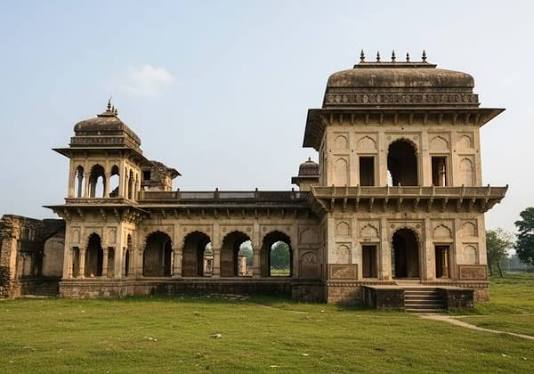
Hailakandi, Assam: A Quiet Corner of Barak Valley Wrapped in Greenery
Hailakandi, Assam, is a peaceful town in the Barak Valley where lush greenery, tea gardens, rivers and cultural traditions come together. Away from the crowds of Assam's better-known destinations, Hailakandi offers travellers a slower and more relaxed way to experience southern Assam.
The town and its surrounding region are known for their verdant tea gardens, religious landmarks, agricultural landscapes and diverse cultural heritage. Places such as Siddyashar Bari Shiv Mandir, Pach Pir Mukam and Serispore Tea Estate give visitors a glimpse into the region's spiritual, natural and plantation heritage.
For travellers looking for a quiet destination in Assam, Hailakandi is a place where you can enjoy greenery, explore local culture, visit historic religious sites and experience the everyday charm of the Barak Valley.
History of Hailakandi
Hailakandi has a long administrative and cultural history in the Barak Valley. It was one of the older subdivisions of Assam and later developed into a separate district.
Early History
Several explanations have been associated with the origin of the name Hailakandi. One interpretation connects it with the Kuki words "halam", meaning a small state, and "kundia", referring to a plot of land used temporarily for cultivation.
Another explanation links the name with the cultivation of sali paddy, an important traditional food crop of the region, with the name evolving from "Sailkandi" to Hailakandi.
Hailakandi as a Subdivision
Hailakandi was constituted as a subdivision on 1 June 1869. During the British period, the area developed gradually as transport, administration and commercial activities expanded.
Tea Gardens and British Influence
The British period brought major changes to the local economy. Several tea gardens were established, and transport networks developed to move tea and other goods.
Waterways were historically important before modern transport systems expanded. Later, railway and road connectivity helped connect Hailakandi with neighbouring parts of Assam and the wider region.
Role in India's Freedom Movement
Hailakandi has an important connection with India's freedom struggle. The district administration records local participation beginning with the Sepoy Mutiny of 1857.
At Ron Tila in Mohanpur, Indian leaders fought British forces, and several people lost their lives in the struggle. Later, local residents also participated in the Civil Disobedience Movement and the Quit India Movement.
Hailakandi Becomes a District
Hailakandi was declared the 24th district of Assam in 1989. Today, it forms part of the Barak Valley region and remains an important administrative and cultural centre of southern Assam.
Several national leaders, including Netaji Subhas Chandra Bose and Jawaharlal Nehru, also visited the region during the pre-independence period.
Geography of Hailakandi
Hailakandi is located in the southernmost part of Assam and forms part of the Barak Valley. Its landscape combines low-lying plains, agricultural land, rivers, forests and tea gardens.
The district is bordered by the Barak River to the north, Cachar to the east, Sribhumi to the west and Mizoram to the south.
Rivers
The Dhaleswari River is one of the most important rivers in the district. It originates in northern Mizoram and flows northward through Hailakandi.
The Katakhal River is another important waterway. Historically, an artificial canal was constructed near Ganjakhouri to divert part of the Dhaleswari's flow and protect the Hailakandi and Lala town areas from seasonal flooding.
Forests and Green Landscapes
Hailakandi has a significant forested area, particularly towards its southern and southeastern parts near Mizoram. According to the district's disaster management plan, approximately 48% of the district's geographical area is forest.
Climate
Hailakandi has a hot and humid climate. Summer extends for much of the year, while the cooler winter period generally begins around late November and continues until February.
The district receives substantial rainfall, with the official disaster management plan recording an average annual rainfall of approximately 2,441.94 mm based on the previous ten years of records.
| Geographical Feature | Details |
|---|---|
| Region | Barak Valley, Assam |
| Area | 1,327 sq. km |
| North | Barak River |
| East | Cachar |
| West | Sribhumi |
| South | Mizoram |
| Main River | Dhaleswari |
| Average Annual Rainfall | Approximately 2,441.94 mm |
Hailakandi at a Glance
| Particular | Details |
|---|---|
| State | Assam |
| Region | Barak Valley |
| District Headquarters | Hailakandi |
| District Formation | 1989 |
| Geographical Area | 1,327 sq. km |
| Population | 659,296 (2011 Census) |
| Literacy Rate | 74.33% |
| Male Population | 337,890 |
| Female Population | 321,406 |
| Sex Ratio | 951 |
| Development Blocks | 5 |
| Revenue Circles | 4 |
| Gaon Panchayats | 62 |
| Tea Estates | 19 |
The population, literacy and demographic figures above are based on the 2011 Census as published by the Hailakandi district administration. :contentReference[oaicite:3]{index=3}
Culture and Traditions of Hailakandi
Hailakandi is a cultural meeting point in the Barak Valley. Assamese and Bengali traditions have a strong presence, while different communities contribute to the region's diverse social and cultural identity.
Language
Assamese and Bengali are the official languages listed for the district. Bengali is particularly prominent across the Barak Valley.
Traditional Lifestyle
Life around Hailakandi remains closely connected with agriculture, tea cultivation, local markets, religious institutions and community celebrations.
Tea Culture
Tea is an important part of the region's economic and cultural landscape. The district administration lists 19 tea estates, making tea gardens an important part of Hailakandi's identity.
Religious Diversity
Hailakandi reflects the diverse religious character of the Barak Valley. Temples, mosques and other religious institutions are part of the everyday landscape of the town and surrounding villages.
Music and Community Celebrations
Festivals and community gatherings bring together traditional music, food, religious rituals and local cultural practices, making the festive calendar an important part of life in Hailakandi.
Architecture of Hailakandi
Hailakandi does not have the large palace or fort complexes associated with some of Assam's better-known heritage destinations. Instead, its architectural character is seen through religious buildings, tea-estate structures, older public buildings and traditional community spaces.
Siddyashar Bari Shiv Mandir
Siddyashar Bari Shiv Mandir, located at Badarpur Ghat, is one of the important religious landmarks associated with Hailakandi. The temple is dedicated to Lord Shiva and is highlighted by the Assam Government's district tourism information.
Tea Estate Architecture
The region's tea estates also contribute to its visual character, with plantation landscapes, workers' settlements and estate infrastructure reflecting the long history of tea cultivation in the Barak Valley.
Religious and Community Structures
Local temples, mosques, namghars and community spaces reflect Hailakandi's multicultural identity and provide an interesting glimpse into everyday life.
Famous Places to Visit in Hailakandi
1. Siddyashar Bari Shiv Mandir
Siddyashar Bari Shiv Mandir, also referred to as Siddheshwar Shiv Mandir, is one of Hailakandi's prominent religious attractions. Located at Badarpur Ghat, the temple is dedicated to Lord Shiva and is an important pilgrimage site in the Barak Valley.
It is a good place to visit if you enjoy combining spirituality with a quiet cultural experience.
2. Pach Pir Mukam
Pach Pir Mukam, also known as Panch Pirar Mukam, is a religious and cultural attraction in South Hailakandi. The site is associated with the region's spiritual traditions and is one of the places specifically highlighted by the district administration and Assam Tourism.
3. Serispore Tea Estate
Serispore Tea Estate offers a chance to experience the lush green plantation landscapes that form an important part of Hailakandi's identity.
A visit here can be especially enjoyable for travellers interested in tea, nature and photography.
4. Hailakandi Town
The town itself is worth exploring at a relaxed pace. Local markets, religious buildings, streets, food outlets and everyday community life provide a more authentic experience than simply checking off tourist attractions.
5. Barak Valley Landscapes
The surrounding countryside is characterised by agricultural fields, rivers, greenery and tea-growing areas. Travelling through these landscapes gives visitors a sense of the quieter side of southern Assam.
Famous Dishes to Try in Hailakandi
Hailakandi's food reflects the culinary traditions of the Barak Valley, with rice, fish, vegetables, lentils, herbs and locally available ingredients forming the foundation of many everyday meals.
Rice and Fish Curry
Rice with a simple fish curry is a staple combination across Assam and the Barak Valley. Local preparations often focus on fresh ingredients and balanced flavours rather than heavy spices.
Masor Tenga
Masor Tenga is a light, tangy fish curry associated with Assamese cuisine. Its refreshing sour flavour makes it a popular dish to try while exploring Assam.
Khar
Khar is a traditional Assamese preparation made using an alkaline ingredient and vegetables or other seasonal foods. It is an important part of traditional Assamese meals.
Shukto and Bengali-Style Vegetables
The strong Bengali cultural influence in the Barak Valley also means travellers may find vegetable preparations and home-style dishes with flavours familiar to Bengali cuisine.
Pitha
Pitha is a traditional rice-based delicacy enjoyed across Assam, particularly during festive occasions. Different varieties can be sweet or savoury.
Tea
No visit to a tea-growing region is complete without trying a fresh cup of Assam tea. The tea gardens around Hailakandi add a distinctive local touch to the experience.
Famous Personalities Connected with Hailakandi
Abdul Matlib Mazumdar
Abdul Matlib Mazumdar was an important public figure and freedom movement participant associated with Hailakandi. The district administration lists him among prominent local participants in India's freedom struggle.
Sanat Das Gupta
Sanat Das Gupta was another prominent name associated with Hailakandi's participation in the Indian freedom movement. He was involved in the political and social activities of the period.
Upendra Dhar
Upendra Dhar was among the local figures remembered for participating in the freedom movement in Hailakandi.
Sunil Chakraborty
Sunil Chakraborty is also mentioned by the district administration among those who participated in the freedom struggle and contributed to the region's history.
Hailakandi's history therefore extends beyond administration and agriculture, with local people playing a role in the wider story of India's independence.
Festivals Celebrated in Hailakandi
Bihu
Bihu is one of Assam's most important festivals. It is celebrated with music, dance, traditional food, new clothes and community gatherings.
Durga Puja
Durga Puja is celebrated with considerable enthusiasm across the Barak Valley. Decorative pandals, cultural programmes, prayers and community gatherings create a lively atmosphere.
Diwali
Diwali is celebrated with lamps, prayers, family gatherings and festive food. Temples and homes are often decorated during the celebration.
Rath Yatra
Rath Yatra is observed by devotees with religious processions and community celebrations. It forms part of the region's diverse religious calendar.
Mahashivratri
Mahashivratri is particularly significant for devotees visiting Shiva temples such as Siddyashar Bari Shiv Mandir.
Local Religious Festivals
Various religious and community festivals are observed across Hailakandi throughout the year. Their celebrations reflect the district's multicultural character and close-knit community life.
Things to Do in Hailakandi
- Visit Siddyashar Bari Shiv Mandir for a peaceful religious and cultural experience.
- Explore Pach Pir Mukam and learn about its spiritual significance.
- Visit Serispore Tea Estate and enjoy the green plantation landscape.
- Explore Hailakandi town at a relaxed pace.
- Try local food and experience Barak Valley flavours.
- Take a tea break and enjoy authentic Assam tea.
- Photograph tea gardens, rivers and rural landscapes.
- Explore local markets to experience everyday life.
- Visit during a festival to experience the area's cultural energy.
- Take a countryside drive through the green landscapes surrounding the town.
- Explore nearby Barak Valley destinations as part of a longer itinerary.
- Enjoy a slow travel experience away from crowded tourist destinations.
Where to Eat, Shop, and Stay in Hailakandi
Where to Eat
Hailakandi town is the most convenient place to find local eateries and everyday restaurants. Travellers should look for simple regional meals rather than expecting a large fine-dining scene.
Try:
- Rice and fish curry
- Assamese-style vegetables
- Masor Tenga
- Khar
- Pitha
- Tea and local snacks
Where to Shop
Local markets are ideal for experiencing everyday life and picking up practical regional products.
- Assamese handloom textiles
- Mekhela chador
- Traditional clothing
- Bamboo and cane products
- Local tea
- Regional snacks
Where to Stay
Hailakandi town offers the most practical accommodation base for travellers exploring the district. Assam Tourism notes that the town has a range of hotels for visitors.
| Accommodation | Best For |
|---|---|
| Budget Hotels | Solo travellers and short stays |
| Mid-range Hotels | Families and couples |
| Local Guesthouses | Budget-conscious travellers |
What is Hailakandi Famous For?
Hailakandi is famous for its tea gardens, peaceful natural surroundings, religious landmarks and multicultural Barak Valley heritage.
- Serispore Tea Estate
- Siddyashar Bari Shiv Mandir
- Pach Pir Mukam
- Tea cultivation
- Barak Valley culture
- Green countryside
- Religious diversity
- Traditional food
- Historical connection with India's freedom movement
The biggest attraction of Hailakandi is not one enormous monument. Instead, it is the combination of green landscapes, tea gardens, spirituality and everyday Barak Valley life.
Best Time to Visit Hailakandi
The best time to visit Hailakandi is generally between October and March, when the weather is more comfortable for sightseeing and outdoor exploration.
| Season | Months | Travel Experience |
|---|---|---|
| Winter | November–February | Cooler and comfortable for sightseeing |
| Spring | March | Pleasant conditions and greener landscapes |
| Summer | April–May | Hot and humid |
| Monsoon | June–September | Very green but heavy rainfall is possible |
| Post-Monsoon | October | Green landscapes and improving weather |
Best overall period: October to March.
Best for comfortable sightseeing: November to February.
Best for greenery: October and the months following the monsoon can offer beautiful landscapes.
Assam Tourism specifically recommends October to March as the best period to visit Hailakandi. :contentReference[oaicite:4]{index=4}
How to Reach Hailakandi
By Air
The nearest airport is Kumbhirgram Airport near Silchar. From the airport, travellers can continue to Hailakandi by road.
By Train
Hailakandi Railway Station provides rail connectivity to the town. Badarpur Junction is another useful railway connection for travellers visiting the Barak Valley.
By Road
Road travel is a convenient way to reach Hailakandi from Silchar, Karimganj and other parts of southern Assam. Direct buses also connect Hailakandi with several nearby destinations.
The district administration states that Hailakandi is approximately 330 km from Dispur/Guwahati and is connected by day and night bus services.
| Mode | Recommended Option |
|---|---|
| Air | Kumbhirgram Airport near Silchar |
| Train | Hailakandi Railway Station / Badarpur |
| Road | Buses and taxis from Silchar and nearby towns |
Hailakandi's official district information confirms connectivity through airways, roadways and railways. :contentReference[oaicite:5]{index=5}
Nearby Places to Visit from Hailakandi
Silchar
Silchar is the major urban centre of the Barak Valley and is a practical addition to a Hailakandi itinerary. Visitors can explore its markets, cultural attractions and nearby natural destinations.
Badarpur
Badarpur is an important nearby destination with historical and religious attractions. It also provides useful transport connections within the Barak Valley.
Badarpur Fort
Badarpur Fort, located in neighbouring Cachar district, is a worthwhile stop for travellers interested in regional history and heritage.
Karimganj
Karimganj, now known as Sribhumi district, lies to the west of Hailakandi and can be included in a longer Barak Valley road trip.
Mizoram
Hailakandi shares its southern boundary with Mizoram, making the district a useful starting point for travellers planning a wider Northeast India itinerary.
Barak Valley Countryside
The countryside around Hailakandi is itself an attraction, with tea gardens, rivers, agricultural fields and green landscapes offering plenty of opportunities for photography and relaxed road trips.
Best Duration for a Hailakandi Trip
1 day is enough to experience the major attractions of Hailakandi town and nearby areas.
2 days is a better option if you want to explore the religious sites, tea gardens and local surroundings without rushing.
3 days or more works well if Hailakandi is part of a larger Barak Valley itinerary covering Silchar, Badarpur and Karimganj.
| Duration | Suggested Experience |
|---|---|
| 1 Day | Town + major religious attraction |
| 2 Days | Temples + tea garden + local sightseeing |
| 3 Days | Hailakandi + nearby Barak Valley destinations |
| 4–5 Days | Relaxed Barak Valley road trip |
Assam Tourism considers one day sufficient to cover Hailakandi town, while a longer stay makes sense if you want to explore the surrounding region. :contentReference[oaicite:6]{index=6}
Travel Tips for Hailakandi
- Visit between October and March for more comfortable weather.
- Carry an umbrella or rain jacket because rainfall can be significant outside the drier months.
- Wear comfortable footwear when visiting temples and exploring outdoor areas.
- Dress respectfully when visiting religious sites.
- Try local food to experience Barak Valley's culinary traditions.
- Keep cash available for smaller shops and rural areas.
- Book accommodation in advance during major festivals or peak travel periods.
- Carry mosquito protection when exploring green and rural areas.
- Start sightseeing early if you want to cover several places in one day.
- Ask before photographing people, particularly during religious or private ceremonies.
- Respect tea-estate property and enter plantation areas only where visitor access is permitted.
- Keep the surroundings clean and avoid littering in natural areas.
- Check local weather conditions before travelling during the monsoon.
- Keep emergency contacts handy during road trips and outdoor travel.
Why Visit Hailakandi?
Hailakandi is ideal for travellers who prefer peaceful destinations over crowded tourist hubs.
- Tea Gardens: Enjoy beautiful plantation landscapes.
- Religious Heritage: Visit Siddyashar Bari Shiv Mandir and Pach Pir Mukam.
- Nature: Explore green countryside, rivers and forests.
- Culture: Experience the diverse traditions of the Barak Valley.
- Food: Discover Assamese and Barak Valley flavours.
- Slow Travel: Enjoy a relaxed trip away from busy tourist circuits.
- Photography: Capture tea gardens, rural landscapes and religious architecture.
- Gateway to the Barak Valley: Combine Hailakandi with Silchar, Badarpur and nearby destinations.
Hailakandi's appeal lies in its simplicity. You can spend the morning visiting a historic temple, enjoy a local meal, drive through tea gardens in the afternoon and finish the day experiencing the peaceful rhythm of a small Barak Valley town.
Conclusion
Hailakandi, Assam, is a destination for travellers who want to discover a quieter and greener side of the state. Its tea gardens, rivers, forests, religious landmarks and multicultural traditions make it an interesting stop in the Barak Valley.
From the spiritual atmosphere of Siddyashar Bari Shiv Mandir to the peaceful setting of Pach Pir Mukam and the green landscapes of Serispore Tea Estate, Hailakandi offers experiences that feel authentic and unhurried.
It may not have the massive tourist infrastructure of Assam's most famous destinations, but that is precisely what gives Hailakandi its charm. For travellers looking for nature, culture, tea gardens, spirituality and slow travel, Hailakandi deserves a place on the Barak Valley itinerary.
If you want to experience Assam beyond the usual tourist trail, Hailakandi is a peaceful place to begin.
"Travel is the only thing you buy that makes you richer."