Sivasagar – Walk Through the Living History of Assam's Ahom Kingdom
Sivasagar is one of the most fascinating heritage destinations in Assam, where centuries-old temples, royal palaces, massive water tanks and historic monuments tell the story of the powerful Ahom Kingdom. Formerly known as Rangpur, Sivasagar served as the capital of the Ahom Kingdom from 1699 to 1788 and remains one of the most important places to understand Assam's history and culture.
At the heart of the city lies the magnificent Sivasagar Tank, surrounded by the iconic Shiva Doul, Vishnu Doul and Devi Doul. Nearby, visitors can explore the grand Rang Ghar, the remarkable Talatal Ghar, historic Joysagar and Rudrasagar tanks, ancient temples, maidams, museums and old bridges.
Beyond its monuments, Sivasagar offers a glimpse into traditional Assamese life through its festivals, tea gardens, Satriya culture, local food and rural landscapes. With more than 350 ancient monuments recorded across the district, Sivasagar is a destination where history is not confined to museums—it remains part of the landscape itself.
History
Sivasagar has a deep connection with the history of Assam and the Ahom dynasty. The city was formerly known as Rangpur and served as the capital of the Ahom Kingdom from 1699 to 1788.
The Ahoms established their rule in Assam in the 13th century under Chao-Lung Sukapha. Over the following six centuries, the Ahom Kingdom developed a powerful political and cultural system that shaped much of Assam's history.
Rangpur became one of the most important capitals of the Ahom rulers. During this period, magnificent palaces, temples, tanks, roads, bridges and other structures were constructed. Many of these monuments can still be seen around present-day Sivasagar.
The city's earlier history is also associated with the name Kalansupar, believed to have been derived from Kalansu Gohain, who lived in a settlement around the location of the present Sivasagar Tank.
During the later Ahom period, the region became known as Shivpur and Rangpur. Following the Treaty of Yandabo in 1826 and the establishment of British control, the name Sibsagar gradually came into official use.
During British rule, the administrative boundaries of the Sibsagar region changed several times. In 1912, the district headquarters was shifted to Jorhat. Later, in 1983, Sivasagar became a separate district after the reorganisation of the former Sibsagar district.
The Ahom legacy remains the defining feature of Sivasagar. The city's temples, tanks, palaces, maidams and engineering structures provide an extraordinary record of the kingdom's architectural and technical achievements.
Geography
Sivasagar is located in Upper Assam, in the eastern part of the Brahmaputra Valley. The district lies within a landscape of fertile plains, rivers, wetlands, tea gardens and rural settlements.
The mighty Brahmaputra River flows along the northern side of the district. Other important rivers include the Dikhow, Desang, Darika and Jhanji. These rivers form an important part of the area's drainage system and rural landscape.
The region is largely an alluvial plain, while areas towards the foothills of the Naga Hills have a more undulating landscape. The combination of rivers, wetlands, ponds and agricultural land gives Sivasagar a distinctly green character.
| Geographical Feature | Details |
|---|---|
| Region | Upper Assam |
| District Headquarters | Sivasagar |
| Geographical Area | Approximately 1,598.85 sq. km |
| Major River | Brahmaputra |
| Other Important Rivers | Dikhow, Desang, Darika and Jhanji |
| Landscape | Alluvial plains, rivers, wetlands, ponds, tea gardens and rural areas |
Sivasagar receives substantial rainfall during the monsoon. Winters are comparatively cool, while spring and autumn generally offer pleasant conditions for sightseeing.
Culture and Traditions
Sivasagar is a meeting point of different communities and cultural traditions. Assamese customs, Tai-Ahom heritage, tribal traditions, Vaishnavite practices and other religious and cultural influences have shaped the social character of the region.
Bihu is one of the most important festivals celebrated across Sivasagar. Rongali Bihu is particularly colourful, with traditional songs, Bihu dance, musical instruments, new clothes and community celebrations.
The cultural landscape also includes communities such as the Missing, Deori and Tai-Ahom people, each with their own traditions, festivals, food habits, clothing and social customs.
The Tai-Ahom community celebrates Me-Dam-Me-Phi, an important ancestral worship festival. The Missing community celebrates Ali-Aye-Ligang, while Deori communities celebrate their traditional festivals and Bihu.
Sivasagar is also associated with Satriya culture, devotional traditions, folk music and traditional Assamese performing arts.
Visitors can experience the region's culture through festivals, temples, Satras, local food, traditional handloom products, tea gardens and village life.
Architecture
Sivasagar is one of the finest places in Assam to experience the architectural achievements of the Ahom period. The region contains temples, royal palaces, tanks, stone bridges, maidams and other structures that demonstrate a distinctive blend of indigenous engineering and artistic traditions.
The city's most famous architectural landmark is the Shiva Doul, standing beside the Sivasagar Tank along with Vishnu Doul and Devi Doul. These temples were built during the reign of Swargadeo Siva Singha and Queen Ambika/Madambika.
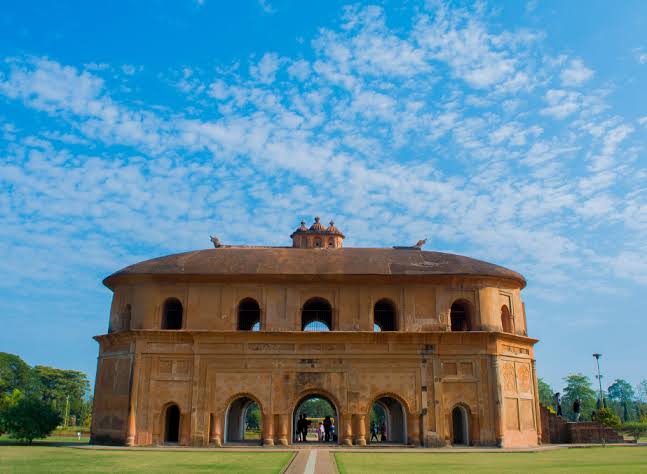
The Rang Ghar is an unusual oval-shaped royal pavilion that was used for entertainment and viewing royal events. Its distinctive design has made it one of Assam's best-known historical structures.
Talatal Ghar is another extraordinary example of Ahom engineering. The palace included underground levels and secret tunnels, reflecting the military and administrative importance of the structure.
The region's architecture also includes the historic Kareng Ghar, ancient temples, pyramid-like maidams and traditional water-management structures.
Famous Places
Sivasagar Tank and Shiva Doul
Sivasagar Tank, also known as Borpukhuri, is located in the heart of Sivasagar town. The massive tank was excavated in 1733 during the Ahom period. On its banks stand the Shiva Doul, Vishnu Doul and Devi Doul. The Shiva Doul is one of the tallest traditional Shiva temples in Assam and remains an active place of worship.
Vishnu Doul
Vishnu Doul stands beside Shiva Doul and Devi Doul on the bank of Sivasagar Tank. Built during the Ahom period, the temple forms part of the city's most important religious and architectural complex.
Devi Doul
Devi Doul is dedicated to Goddess Durga and stands alongside Shiva Doul and Vishnu Doul. The three temples create one of the most recognisable heritage landscapes in Assam.
Rang Ghar
Rang Ghar is one of the most iconic monuments of Sivasagar. Built as a royal pavilion, the two-storeyed oval structure was used for watching traditional games and cultural performances. Its unusual architecture has made it a symbol of the Ahom era and one of Assam's most photographed landmarks.
Talatal Ghar
Talatal Ghar is a remarkable seven-storeyed Ahom palace associated with Swargadeo Rajeswar Singha. The structure included underground levels and secret tunnels that were designed for strategic and military purposes. It served as a royal and administrative centre and remains one of the most impressive surviving Ahom monuments.
Kareng Ghar
Kareng Ghar, also known as the Garhgaon Palace, was one of the principal royal residences of the Ahom rulers. The historic site reflects the grandeur of the Ahom royal court and is an important stop for anyone interested in the region's history.
Joysagar Tank and Temples
Joysagar is one of the most impressive historic tanks in the Sivasagar region. It was excavated during the Ahom period and is surrounded by temples including Joydol. The large water body and surrounding heritage structures create a peaceful and scenic setting.
Ranganath Temple and Fakua Doul
Ranganath Doul is an ancient Shiva temple constructed by Swargadeo Rudra Singha in 1703. Nearby, Fakua Doul was built in memory of Queen Joymati Kunwari. The unusual structure and octagonal design make Fakua Doul an interesting example of Ahom-era architecture.
Ghanashyam House
Ghanashyam House is a historic architectural site associated with the Ahom period. The structure is important for visitors interested in traditional construction techniques and the artistic heritage of Sivasagar.
Rudrasagar Tank and Doul
Rudrasagar Tank is another historic water body created during the Ahom period. The associated Doul and surrounding landscape provide an opportunity to experience the relationship between temples, tanks and royal architecture that characterises Sivasagar.
Gaurisagar Tank and Doul
Gaurisagar is another important historic tank associated with the Ahom rulers. The site combines a large water body with temples and traditional architecture and offers a quieter heritage experience away from the busiest attractions.
Namdang Sila Saku
Namdang Sila Saku is a remarkable stone bridge constructed during the Ahom period. Built from a single massive stone slab, the bridge demonstrates the engineering skills of the Ahom era and remains an important heritage landmark.
Ajan Peer Dargah
Ajan Peer Dargah is a sacred site dedicated to Ajan Fakir, a Sufi saint and reformer who played an important role in the religious and cultural life of Assam. He is remembered for composing spiritual songs known as Zikir in the Assamese language. The Dargah is located around 22 km from Sivasagar town.
Panidehing Bird Sanctuary
Panidehing Bird Sanctuary is an important wetland and birdwatching destination in the Sivasagar region. The sanctuary provides habitat for numerous resident and migratory birds and is a good choice for travellers interested in nature and photography.
Pohu Garh
Pohu Garh is associated with the Ahom period and is believed to have served as an ancient royal or strategic site. The location is part of the wider historical landscape surrounding Sivasagar.
Desang Mukh
Desang Mukh is a scenic riverine destination where the Desang River meets the Brahmaputra. The surrounding landscape provides opportunities to experience rural Assam, riverside scenery and local life.
Tai Museum
The Tai Museum near Sivasagar Tank preserves objects and materials associated with Tai-Ahom history and culture. It is a useful stop for travellers who want to understand the heritage of the community that founded the Ahom Kingdom.
Uttaran Museum
Uttaran Museum, also known as Uttaron Jadughar, is an interesting cultural attraction in Sivasagar. The museum reflects the efforts made to preserve local heritage and provides another perspective on the region's cultural history.
Jorabari Satra
Jorabari Satra is associated with Assam's Vaishnavite cultural traditions. Visitors interested in Satriya culture and devotional practices can include the Satra in a wider cultural tour of Sivasagar.
Central Baptist Church
The Central Baptist Church beside Sivasagar Tank is an important historical religious structure. It is regarded by the district administration as one of the oldest churches in northeastern India and adds another layer to Sivasagar's diverse heritage.
Dikhow Bridge of British Era
The historic Dikhow Bridge reflects the engineering and transport development of the British period. It is an interesting destination for visitors who want to explore the region's colonial-era heritage alongside its older Ahom monuments.
Bakhar Bengena Tree
The Bakhar Bengena tree is an unusual natural heritage attraction in Sivasagar. The tree is estimated by the district administration to be more than 580 years old, making it an interesting example of the region's living natural heritage.
Famous Dishes
Masor Tenga
Masor Tenga is one of Assam's best-known fish preparations. It is a light and tangy fish curry made with souring ingredients and mild spices. The refreshing flavour makes it a popular choice for visitors exploring Assamese cuisine.
Khar
Khar is a traditional Assamese preparation made using an alkaline ingredient and often combined with vegetables or pulses. Its distinctive flavour and traditional preparation make it an important part of an authentic Assamese meal.
Pitika
Pitika refers to simple mashed preparations that are common in Assamese homes. Potato, eggplant and fish are among the ingredients used to make different varieties, often combined with mustard oil, onion and green chilli.
Duck with Ash Gourd
Duck cooked with ash gourd is a traditional Assamese dish known for its rich yet balanced flavour. It is commonly prepared for special meals and festive occasions.
Fish with Ou Tenga
Fish cooked with ou tenga, or elephant apple, combines fresh river fish with a distinctive sour flavour. It is a seasonal preparation that reflects Assam's use of locally available ingredients.
Pitha
Pitha is a traditional rice-based Assamese delicacy prepared in several forms. Sweet and savoury varieties are particularly popular during Bihu and other festivals.
Laru
Laru is a traditional Assamese sweet commonly made using coconut, sesame or rice-based ingredients. It is especially popular during festivals and family celebrations.
Jolpan
Jolpan is a traditional Assamese breakfast or light meal that may include flattened rice, puffed rice, curd, milk and other simple ingredients. It is a good way for visitors to experience everyday Assamese food culture.
Famous Personalities
Swargadeo Rudra Singha
Rudra Singha was one of the most influential Ahom rulers. During his reign, the kingdom expanded its cultural and architectural activities, and several important monuments and temples were constructed. His legacy is closely connected with the heritage landscape of Sivasagar.
Swargadeo Siva Singha
Siva Singha was an important Ahom king whose reign saw the construction of several major religious monuments around present-day Sivasagar. The Sivasagar Tank and its temples are closely associated with his period.
Queen Ambika / Madambika
Queen Ambika, also known as Madambika, was the wife of Siva Singha and played an important role in the creation of the Sivasagar Tank and temple complex. The Shiva Doul, Vishnu Doul and Devi Doul are associated with her patronage.
Queen Joymati Kunwari
Joymati Kunwari is remembered as one of the great heroines of Assamese history. Her courage and sacrifice during the political struggles of the Ahom period have made her a powerful symbol of loyalty and patriotism. Several places in the Sivasagar region are associated with her memory.
Ajan Fakir
Ajan Fakir, also known as Shah Miran, was a Sufi saint who came to Assam from Baghdad in the 17th century. He contributed to social and religious harmony and composed spiritual songs known as Zikir in Assamese. His Dargah near Sivasagar remains an important cultural and religious site.
Festivals
Rongali Bihu
Rongali Bihu, also known as Bohag Bihu, is the most colourful of Assam's three Bihu festivals. It marks the beginning of the agricultural season and the Assamese New Year. Traditional Bihu songs, dances, musical instruments and community gatherings create a lively atmosphere throughout Sivasagar.
Magh Bihu
Magh Bihu, or Bhogali Bihu, celebrates the harvest season. Community feasts, traditional Assamese food and Meji bonfires are important parts of the festival. The area around Rang Ghar also hosts festive celebrations.
Kati Bihu
Kati Bihu is a quieter agricultural festival associated with prayers for a successful harvest. Traditional lamps are lit and prayers are offered for the protection of crops and prosperity.
International Shiva Festival
The International Shiva Festival is organised around the Shiva Doul complex and is an important cultural and religious event in Sivasagar. The festival combines religious observances with cultural activities and attracts visitors and devotees.
Me-Dam-Me-Phi
Me-Dam-Me-Phi is an important Tai-Ahom ancestral worship festival. It honours ancestors and reflects the community's strong connection with its historical and spiritual heritage.
Ali-Aye-Ligang
Ali-Aye-Ligang is celebrated by the Mising community and marks the beginning of the agricultural season. Traditional dance, music, food and community rituals form an important part of the celebration.
Deori Bihu
Deori communities celebrate their traditional Bihu with distinctive customs, music, dance and rituals. The festival reflects the diverse cultural traditions found across Sivasagar.
Karam Puja
Karam Puja is celebrated by tea and former tea-garden communities in parts of the region. Traditional songs, dances and rituals associated with agricultural prosperity and community well-being are central to the celebration.
Desang-Brahmaputra Festival
The Desang-Brahmaputra Festival is another cultural showcase associated with the region. It brings together local traditions, music, food and cultural activities and provides visitors with an opportunity to experience the diversity of Sivasagar.
Things to Do
- Explore Ahom history: Visit Rang Ghar, Talatal Ghar and Kareng Ghar to understand the royal history of Assam.
- Visit Sivasagar Tank: Walk around the historic tank and explore Shiva Doul, Vishnu Doul and Devi Doul.
- Explore Joysagar: Discover the large historic tank and surrounding temples.
- Visit ancient temples: Explore Ranganath Doul, Fakua Doul and other historic religious sites.
- Discover museums: Visit Tai Museum and Uttaran Museum to learn more about local history and culture.
- Experience spiritual heritage: Visit Ajan Peer Dargah and learn about Ajan Fakir's contribution to Assamese culture.
- Go birdwatching: Explore Panidehing Bird Sanctuary and nearby wetlands.
- Enjoy riverside scenery: Visit Desang Mukh and other riverside areas to experience rural Assam.
- Explore tea gardens: Take a scenic drive through the tea-growing landscapes around Sivasagar.
- Experience festivals: Plan a trip around Bihu, Me-Dam-Me-Phi or the International Shiva Festival.
- Try Assamese cuisine: Taste Masor Tenga, Khar, Pitika, Pitha and other regional dishes.
- Take heritage photographs: Capture the unique architecture, tanks, temples, bridges and rural landscapes.
Where to Eat, Shop, and Stay
Where to Eat
Sivasagar town has restaurants, cafés, local eateries and small food establishments offering Assamese, North Indian and other Indian cuisines.
Travellers should try traditional Assamese dishes such as Masor Tenga, Khar, Pitika, fish preparations, Pitha and Jolpan. Local eateries are often the best places to experience simple regional food.
Where to Shop
Sivasagar's local markets offer everyday goods, clothing, traditional items and regional food products. Visitors interested in Assamese culture can look for gamosa, mekhela chador, handloom textiles, bamboo products and Assam tea.
Traditional handicrafts and locally produced items can make meaningful souvenirs, particularly for travellers interested in the cultural heritage of Upper Assam.
Where to Stay
Sivasagar town is the most convenient place to stay for travellers exploring the historical attractions. Hotels and guesthouses are available across different price ranges.
| Traveller Type | Recommended Stay |
|---|---|
| Budget Traveller | Budget hotels and guesthouses in Sivasagar town |
| Mid-Range Traveller | Comfortable hotels near the main town and tourist areas |
| Family Traveller | Hotels with convenient access to Sivasagar Tank and major attractions |
| Heritage Traveller | Stay in central Sivasagar for easy access to Ahom monuments |
| Nature Traveller | Stay in Sivasagar and take day trips to Panidehing and surrounding rural areas |
What is Sivasagar Famous For?
Sivasagar is famous primarily for its Ahom heritage, ancient temples, royal monuments, historic tanks and Assamese culture.
The city and surrounding region are particularly known for:
- Rang Ghar – the iconic Ahom-era royal pavilion
- Talatal Ghar – the remarkable multi-storeyed royal palace
- Sivasagar Tank – the historic water body at the heart of the city
- Shiva Doul, Vishnu Doul and Devi Doul
- Joysagar Tank and Temples
- Kareng Ghar and Garhgaon heritage
- Ranganath Doul and Fakua Doul
- Namdang Sila Saku – the historic stone bridge
- Ajan Peer Dargah
- Panidehing Bird Sanctuary
- Tai-Ahom culture and Me-Dam-Me-Phi
- Assamese tea gardens
- Bihu celebrations
Best Time to Visit
The best time to visit Sivasagar is generally from October to April, when the weather is more comfortable for sightseeing, heritage walks and outdoor exploration.
November to February is particularly pleasant, with cooler weather that makes it easier to explore monuments, temples, tanks and surrounding attractions.
March and April can be especially interesting for visitors who want to experience Assamese festivals, including Rongali Bihu and cultural events such as the International Shiva Festival.
The monsoon months from June to September bring substantial rainfall. The countryside becomes lush and green, but heavy rain can affect road conditions and outdoor sightseeing.
| Season | Travel Experience |
|---|---|
| October – November | Comfortable weather and green landscapes after the monsoon |
| December – February | Cool and pleasant for heritage sightseeing |
| March – April | Festivals, cultural events and pleasant spring weather |
| May – September | Rainy and humid; lush landscapes but possible travel disruptions |
How to Reach
By Air
The nearest convenient airport is Jorhat Airport, located approximately 55–60 km from Sivasagar. Travellers can continue from the airport by taxi or other road transport.
Dibrugarh Airport is another option and is located farther away. It can be useful for travellers combining Sivasagar with destinations in eastern Upper Assam.
By Train
Simaluguri Junction is the nearest major railway junction, located approximately 16 km from Sivasagar town. From the junction, travellers can continue to Sivasagar by taxi, bus or other local transport.
By Road
Sivasagar is well connected by road with Guwahati and other major towns of Assam. Deluxe and regular bus services are available from Guwahati and other important towns, while taxis and private vehicles provide flexible options for travellers exploring the wider region.
| Mode | Recommended Option |
|---|---|
| Air | Jorhat Airport |
| Alternative Airport | Dibrugarh Airport |
| Train | Simaluguri Junction |
| Road | Bus, taxi or private vehicle from Guwahati and Upper Assam |
Nearby Places
Charaideo
Charaideo is one of the most important historical destinations associated with the Ahom dynasty. It was the first capital established by Sukapha and is famous for the Ahom Maidams, monumental burial mounds of Ahom royalty and nobles.
Gargaon
Gargaon was another important Ahom capital and is associated with the historic Kareng Ghar. The site provides further insight into the royal architecture and political history of the Ahom Kingdom.
Joysagar
Located close to Sivasagar town, Joysagar is famous for its enormous historic tank and surrounding temples. It is an easy addition to a Sivasagar heritage itinerary.
Gaurisagar
Gaurisagar is known for its historic tank and temples and offers a quieter heritage experience surrounded by greenery.
Panidehing Bird Sanctuary
Panidehing is a good choice for nature lovers and birdwatchers. Its wetland environment attracts a variety of resident and migratory birds.
Desang Mukh
Desang Mukh offers scenic views of the river landscape and provides a glimpse into rural life around the Brahmaputra and Desang river systems.
Nazira
Nazira is an important town in the Sivasagar region and is closely associated with the tea and petroleum industries. It can be included in a wider exploration of Upper Assam's industrial heritage.
Jorhat
Jorhat is one of the major cultural and commercial centres of Upper Assam. It is also known for its tea gardens and serves as a convenient gateway for travellers exploring Sivasagar and nearby destinations.
Best Duration for a Trip
1 day is enough for a quick introduction to Sivasagar's major attractions, including Sivasagar Tank, Shiva Doul, Rang Ghar and Talatal Ghar.
A 2-day trip is recommended for travellers who want to explore the major Ahom monuments at a comfortable pace.
A 3-day trip allows visitors to include Joysagar, Gaurisagar, museums, Ajan Peer Dargah or Panidehing along with the main heritage sites.
A 4-day trip is ideal for travellers who want to explore Sivasagar together with Charaideo, Gargaon and other nearby destinations.
| Duration | Suggested Experience |
|---|---|
| 1 Day | Sivasagar Tank, Shiva Doul, Rang Ghar and Talatal Ghar |
| 2 Days | Main Ahom monuments + Joysagar + temples and museums |
| 3 Days | Sivasagar + Joysagar + Ajan Peer Dargah + Panidehing |
| 4 Days | Sivasagar + Charaideo + Gargaon + nearby heritage attractions |
Travel Tips
- Wear comfortable footwear because many heritage attractions involve walking.
- Carry an umbrella or rain protection during the monsoon.
- Dress respectfully when visiting temples, Satras and religious sites.
- Remove footwear where required before entering temples and sacred spaces.
- Respect the religious significance of active temples and avoid disturbing worshippers.
- Carry insect repellent when visiting wetlands, bird sanctuaries and rural areas.
- Start early if you plan to cover several historical monuments in one day.
- Carry some cash for smaller local shops, food stalls and rural attractions.
- Check local weather conditions before planning riverside or outdoor activities during the monsoon.
- Do not damage, climb on or touch fragile archaeological structures.
- Ask permission before photographing people during cultural or religious events.
- Try local Assamese dishes and traditional snacks during your stay.
- Book accommodation in advance during Bihu and major cultural or religious festivals.
- Hire a knowledgeable local guide if you want a deeper understanding of Ahom history and architecture.
- If visiting Charaideo, remember that the Maidams are protected heritage structures and should be treated respectfully.
Why Visit Sivasagar?
Sivasagar is one of the best destinations in Assam for travellers who want to understand the state's history beyond museums and textbooks. The city preserves the architectural and cultural legacy of the Ahom Kingdom through its temples, palaces, tanks, bridges and other monuments.
Few destinations offer such a concentrated collection of historic structures. A single trip can take visitors from the towering Shiva Doul to the royal Rang Ghar, from the underground levels of Talatal Ghar to the peaceful waters of Joysagar and Rudrasagar.
Sivasagar is also more than a heritage destination. Its festivals, tea gardens, Satriya traditions, rivers, wetlands, local food and diverse communities provide a broader experience of Assamese culture.
For history lovers, photographers, architecture enthusiasts, cultural travellers and anyone interested in the story of Assam, Sivasagar is a destination that deserves a place on the travel itinerary.
Conclusion
Sivasagar is a living chapter of Assam's history. Once the capital of the powerful Ahom Kingdom, the city continues to preserve the monuments, temples, tanks and cultural traditions that tell the story of more than six centuries of Ahom rule.
From the magnificent Rang Ghar and Talatal Ghar to the sacred Shiva Doul and Sivasagar Tank, every major landmark reveals something about the engineering, faith, culture and royal life of the past.
Add to this the beauty of Joysagar, the spiritual importance of Ajan Peer Dargah, the birdlife of Panidehing, the surrounding tea gardens and the colourful festivals of Assam, and Sivasagar becomes much more than a historical destination.
If you want to experience the heritage, culture and timeless character of Upper Assam, Sivasagar is one of the most rewarding places to visit.
"Travel is the only thing you buy that makes you richer."