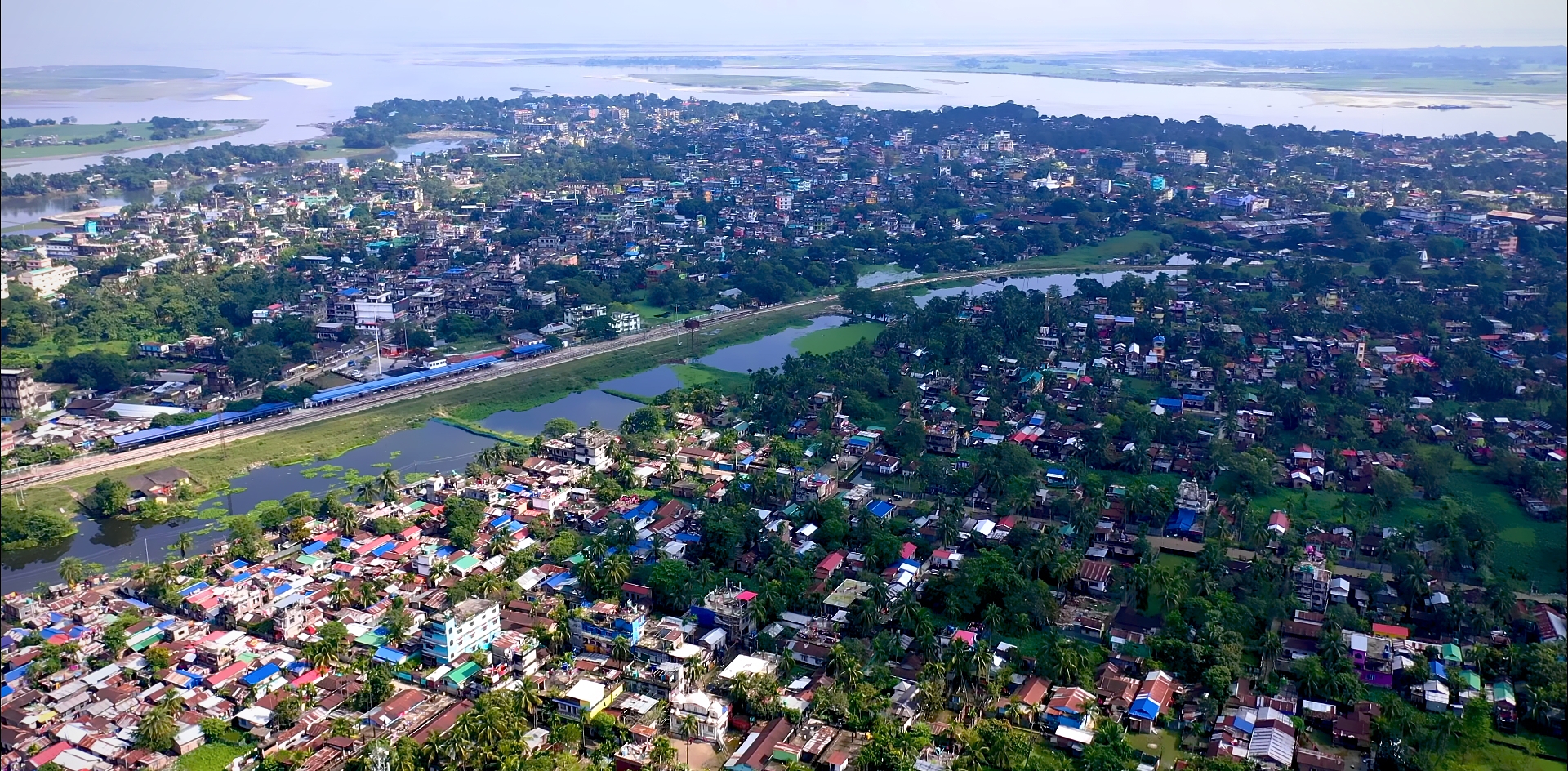
Dhubri: Assam's Historic Gateway of Rivers, Culture and Heritage
Located in the southwestern part of Assam, Dhubri is a historic riverfront city known for its cultural diversity, religious heritage, traditional crafts and close connection with the mighty Brahmaputra. Often described as the gateway of western Assam, Dhubri has historically been a meeting point of different communities, cultures and traditions.
The city stands on the bank of the Brahmaputra River and has played an important role in trade, transportation and cultural exchange. Its location close to West Bengal and Bangladesh has contributed to the development of a distinctive blended cultural identity reflected in its language, music, architecture, food and religious traditions.
From the sacred Gurudwara Sri Guru Tegh Bahadur Sahibji and historic Rangamati Mosque to Mahamaya Dham, Panchpeer Dargaha, Asharikandi Terracotta Village and Chakrasila Wildlife Sanctuary, Dhubri offers a fascinating combination of history, spirituality, handicrafts and nature.
History
Dhubri has a long and fascinating history. The present-day Dhubri region was historically connected with the wider Goalpara area and became an important administrative centre during the British period.
The Government of Assam records that Dhubri was one of the three civil subdivisions of the erstwhile Goalpara district, established in 1876 during British rule. In 1879, the district headquarters was shifted from Goalpara to Dhubri.
Dhubri town was first constituted as a Municipal Board in 1883, reflecting its growing importance as an administrative and commercial centre.
In 1983, the former Goalpara district was divided into four separate districts, with Dhubri becoming one of them. In 2016, South Salmara-Mankachar was separated from Dhubri district.
The city also developed as an important river port on the Brahmaputra. Its strategic position near the international border has historically supported trade and communication with neighbouring regions, including Bangladesh.
Origin of the Name Dhubri
There are different traditional explanations for the origin of the name Dhubri.
One popular legend is associated with the story of Chand Sadagar and Netai Dhubuni. According to the legend, Netai Dhubuni washed clothes on a large stone beside the Brahmaputra. The location became known as Netai Dhubunir Ghat, from which the name Dhubri is traditionally believed to have evolved.
Another explanation comes from the Bodo-Kachari tradition, which connects the name with Dubri, the name of a type of grass.
Geography
Dhubri is situated in the southwestern part of Assam. The district occupies an important geographical position along the Brahmaputra and shares both interstate and international boundaries.
The district is bounded by Kokrajhar in the north, Goalpara and Bongaigaon in the east, West Bengal and Bangladesh in the west, and South Salmara-Mankachar and Meghalaya in the south.
The landscape is predominantly plain, although several small hills and hillocks are scattered throughout the district. The Brahmaputra flows through the region from east to west, accompanied by several tributaries.
| Geographical Feature | Details |
|---|---|
| Region | Lower Assam |
| District Headquarters | Dhubri |
| Geographical Area | Approximately 2,176 sq. km |
| Major River | Brahmaputra |
| Important Tributaries | Gadadhar, Gourang, Champabati, Gangadhar, Tipkai, Sankosh, Silai and Jinjiram |
| North | Kokrajhar |
| East | Goalpara and Bongaigaon |
| West | West Bengal and Bangladesh |
| South | South Salmara-Mankachar and Meghalaya |
The river systems are an important part of Dhubri's identity. The Brahmaputra and its tributaries influence agriculture, transportation, fishing, settlement patterns and the local economy.
Culture and Traditions
Dhubri has one of the most distinctive multicultural environments in Assam. Its geographical position has historically brought together people from different ethnic, linguistic and religious backgrounds.
The Government of Assam describes the district as a place where different communities, castes and creeds have interacted over generations, creating a blended cultural heritage.
The main local language is Goalpariya, popularly known as Desi Bhasha. Assamese and Bengali are also widely spoken, particularly in urban areas.
Goalpariya folk music is one of the strongest expressions of the region's cultural identity. Traditional songs often explore themes of love, devotion, rural life and everyday human emotions.
- Goalpariya Culture: Known for its distinctive folk songs, dances and language.
- Assamese Culture: Reflected through Bihu, Assamese food, religious traditions and literature.
- Bengali Influence: Particularly visible in language, food and cultural practices.
- Muslim Heritage: Reflected through historic mosques, dargahs and traditional celebrations.
- Sikh Heritage: Represented prominently by Gurudwara Sri Guru Tegh Bahadur Sahibji.
- Indigenous Traditions: Preserved through local communities, crafts, music and festivals.
Architecture
Dhubri's architecture reflects its long history and cultural diversity. Historic temples, mosques, shrines, gurudwaras, royal structures and traditional houses can be found across the region.
The Rangamati Mosque is one of the most significant examples of historic Islamic architecture in the district. Built during the 17th century, its pre-Mughal architectural character makes it particularly important.
The Gurudwara Sri Guru Tegh Bahadur Sahibji represents the city's Sikh heritage and occupies a prominent position beside the Brahmaputra.
Traditional rural architecture can also be seen in villages and craft centres, where bamboo, wood, clay and other locally available materials have historically been used.
Famous Places
Gurudwara Sri Guru Tegh Bahadur Sahibji
Gurudwara Sri Guru Tegh Bahadur Sahibji is one of Dhubri's most important religious and historical landmarks. It is situated in the heart of Dhubri town on the bank of the Brahmaputra.
According to the district administration, Guru Nanak visited the region in 1505 AD. Later, the ninth Sikh Guru, Guru Tegh Bahadur, visited the area in the 17th century, and the historic gurudwara was established in his memory.
The site attracts Sikh devotees from across India and abroad. Every December, devotees gather here to commemorate the martyrdom of Guru Tegh Bahadur through the Sahidee-Guru-Parav.
Mahamaya Dham
Mahamaya Dham, located at Bogribari approximately 30–35 kilometres east of Dhubri town, is one of the most important pilgrimage destinations in the district.
The temple is dedicated to Goddess Mahamaya. The deity was historically worshipped by local Kachari, Koch and Nath communities and later became widely revered by Hindus across Assam.
The temple is considered one of the prominent Shakti-related pilgrimage destinations of western Assam and attracts devotees throughout the year.
Rangamati Mosque
Rangamati Mosque is a historic mosque located approximately 25 kilometres from Dhubri town.
The mosque was built during the 17th century by Hussain Shah, the Governor of Bengal, and is regarded as a pre-Mughal structure because of its distinctive architectural characteristics.
Rangamati was historically an important frontier settlement and military position. The mosque was associated with the Muslim soldiers stationed in the area during the Mughal period.
An Idgah and a deep well from the same historical period are also associated with the site.
Panchpeer Dargaha
Panchpeer Dargaha is a shrine associated with five Sufi saints. According to local historical tradition, the saints accompanied Raja Ram Singh during his invasion of Assam.
The dargaha is especially significant as an example of religious harmony. People from different religious communities visit the shrine and pay their respects.
Asharikandi Terracotta Village
Asharikandi is one of the most famous traditional craft villages of Assam and is particularly renowned for its terracotta and pottery.
The craft village is home to a cluster of families who continue to practice traditional pottery and terracotta-making techniques. The local artisans use a special type of clay known as Hiramati.
Asharikandi's terracotta tradition has developed a distinctive artistic identity. The famous Hatima doll, associated with artisan Sarala Bala Devi, has helped bring national and international recognition to the craft.
Visitors can explore the craft-making process and purchase handmade terracotta products directly from local artisans.
Chakrasila Wildlife Sanctuary
Chakrasila Wildlife Sanctuary is one of Dhubri's most important natural attractions.
The sanctuary is particularly significant for its biodiversity and is known as an important habitat for the Golden Langur, one of the most distinctive primates of the region.
The sanctuary's forested hills and surrounding landscape make it an attractive destination for wildlife enthusiasts, nature lovers and photographers.
Ramraikuti Satra
Ramraikuti Satra is an important Vaishnavite religious and cultural institution in the Dhubri region. It reflects Assam's rich tradition of Vaishnavite culture and satra institutions.
The site is particularly relevant for travelers interested in religious history, Assamese culture and traditional devotional practices.
Matiabagh Hawa Mahal
Matiabagh Hawa Mahal is associated with the royal heritage of Gauripur. The palace complex reflects the history and cultural influence of the Gauripur royal family.
The surrounding landscape and historic architecture make the area an interesting stop for visitors exploring the heritage of western Assam.
Chandardinga Hill
Chandardinga is one of the small hill areas of Dhubri district. The hillocks of the region provide a contrast to the surrounding plains and riverine landscape.
The area is particularly suitable for travelers interested in scenic landscapes, photography and exploring lesser-known destinations.
Famous Dishes
Dhubri's cuisine reflects the cultural diversity of western Assam. Assamese, Goalpariya and Bengali culinary traditions can all be experienced in the region.
Masor Tenga
Masor Tenga is a classic Assamese fish preparation with a light and tangy flavour. Fish is particularly important in the food culture of the Brahmaputra valley.
Pitika
Pitika refers to mashed vegetable, potato or fish preparations commonly served with rice. Mustard oil, onion and green chilli are often used to add flavour.
Khar
Khar is a distinctive Assamese preparation made using an alkaline ingredient. It is traditionally served as part of an Assamese meal.
Pitha
Pitha is a traditional rice-based Assamese delicacy commonly prepared during festivals and special occasions. Different varieties may be steamed, roasted or filled with coconut and jaggery.
Chira and Muri Preparations
Chira (flattened rice) and Muri (puffed rice) are commonly used in snacks and light meals throughout Assam. They may be combined with curd, jaggery, vegetables, onions or other local ingredients.
Goalpariya-Style Food
Traditional Goalpariya cuisine reflects the agricultural and riverine character of the region. Rice, fish, vegetables, mustard oil and seasonal ingredients form the foundation of many local meals.
Famous Personalities
Pratima Barua Pandey
Pratima Barua Pandey was one of the greatest voices of Goalpariya folk music and is popularly remembered as the Queen of Goalpariya Folk Music.
Born into the Gauripur royal family, she played an important role in taking Goalpariya folk songs to audiences across India. She received the Padma Shri and the Sangeet Natak Akademi Award for her contribution to music.
Pramathesh Barua
Pramathesh Barua was a pioneering figure in Indian cinema. Born at Gauripur, he became an actor, director and screenwriter during the pre-independence era.
His contribution to early Indian cinema makes Gauripur and the wider Dhubri region significant in the history of Indian filmmaking.
Priyadarshini Chatterjee
Priyadarshini Chatterjee is an Indian model and beauty pageant titleholder from Dhubri. She was crowned Femina Miss India World 2016 and represented India at the Miss World 2016 competition.
Javed Zaman
Javed Zaman is a cricketer associated with Dhubri and is noted by the district administration as the first cricketer from Assam to play for the India A team. He also represented Assam and Railways in domestic cricket.
Festivals
Bihu
Bihu is celebrated throughout Dhubri and forms an important part of Assamese cultural life. Rongali Bihu, Magh Bihu and Kati Bihu are associated with different stages of the agricultural calendar.
Durga Puja
Durga Puja is widely celebrated in Dhubri and surrounding areas, reflecting the region's Hindu and Bengali cultural influences.
Eid
Eid is an important festival for Dhubri's Muslim communities. Prayer, family gatherings and traditional food are central elements of the celebration.
Muharram
Muharram is observed by Muslim communities in the district and forms part of Dhubri's diverse religious calendar.
Sahidee-Guru-Parav
Sahidee-Guru-Parav is associated with Gurudwara Sri Guru Tegh Bahadur Sahibji. Sikh devotees gather in Dhubri during December to commemorate the martyrdom of Guru Tegh Bahadur.
Ambubachi and Other Religious Observances
Various Hindu religious festivals and observances are celebrated throughout the district, reflecting the diverse religious traditions of western Assam.
The cultural diversity of Dhubri is particularly visible during festivals, when communities come together through music, food, religious ceremonies and public celebrations.
Things to Do
Dhubri is ideal for travelers who enjoy history, spirituality, culture, handicrafts and river landscapes.
- Visit Gurudwara Sri Guru Tegh Bahadur Sahibji: Explore one of Assam's most important Sikh heritage sites.
- Explore Mahamaya Dham: Visit the famous pilgrimage centre at Bogribari.
- Discover Rangamati Mosque: Admire its historic pre-Mughal architecture.
- Visit Panchpeer Dargaha: Experience a site associated with religious harmony.
- Explore Asharikandi: Watch traditional terracotta and pottery being created.
- Buy local handicrafts: Take home terracotta, pottery and traditional craft products.
- Visit Chakrasila Wildlife Sanctuary: Explore the forest and look for wildlife and birds.
- Explore Gauripur heritage: Discover the region associated with the royal family and Pramathesh Barua.
- Visit Ramraikuti Satra: Learn about Assam's Vaishnavite traditions.
- Enjoy Brahmaputra views: Spend time along the river and experience Dhubri's riverfront landscape.
- Try Goalpariya cuisine: Explore local rice, fish and traditional Assamese dishes.
- Experience local music: Listen to traditional Goalpariya folk music.
- Visit during festivals: Plan your trip around Bihu, religious festivals or Sahidee-Guru-Parav.
- Go photography: Capture temples, mosques, river landscapes, craft villages and rural scenery.
Where to Eat, Shop, and Stay
Where to Eat
Dhubri town offers restaurants and local eateries serving Assamese, Bengali and North-Eastern food. For an authentic experience, visitors should look for traditional rice-based meals, fish preparations and local snacks.
| Food Experience | What to Try |
|---|---|
| Traditional Assamese Meal | Rice, dal, vegetables, fish and Pitika |
| Fish Dishes | Masor Tenga and local fish preparations |
| Traditional Snacks | Pitha, Muri and Chira-based preparations |
| Goalpariya Food | Local rice-based and seasonal preparations |
Where to Shop
Asharikandi is the standout shopping destination for visitors interested in traditional crafts. The village is particularly famous for terracotta and pottery.
- Traditional terracotta products
- Pottery
- Hatima-style terracotta dolls
- Bamboo and cane products
- Assamese handloom textiles
- Traditional household crafts
- Local food products
Where to Stay
Dhubri town provides the widest range of accommodation in the district, including hotels, guest houses and government accommodation options. The district administration maintains information about available private and government hotels.
| Stay Type | Best For |
|---|---|
| Budget Hotel | Backpackers and economical trips |
| Mid-Range Hotel | Families and couples |
| Guest House | Short stays |
| Government Accommodation | Official and practical stays |
| Homestay | Travelers seeking local experiences |
What is Dhubri Famous For?
Dhubri is famous for its Brahmaputra riverfront, multicultural heritage, religious landmarks, Goalpariya folk music and traditional terracotta crafts.
- Brahmaputra River: A defining geographical and cultural feature.
- Gurudwara Sri Guru Tegh Bahadur Sahibji: Major Sikh pilgrimage and heritage site.
- Mahamaya Dham: Important pilgrimage destination.
- Rangamati Mosque: Historic pre-Mughal architectural landmark.
- Asharikandi: Famous terracotta and pottery village.
- Chakrasila Wildlife Sanctuary: Important biodiversity destination and Golden Langur habitat.
- Goalpariya Folk Music: One of the defining cultural traditions of western Assam.
- Gauripur: Associated with the royal family and filmmaker Pramathesh Barua.
- Panchpeer Dargaha: Symbol of religious harmony.
- River Port: Historic commercial importance on the Brahmaputra.
Best Time to Visit
The official Dhubri district tourism information recommends November to February as the best winter period to visit. March and April can also be suitable for travel, although temperatures begin to rise.
| Season | Travel Experience | Recommendation |
|---|---|---|
| November–February | Cooler and generally comfortable weather | Best |
| March–April | Warmer weather and suitable for sightseeing | Good |
| May–September | Monsoon, high humidity and possible flooding | Use caution |
| October | Post-monsoon conditions and improving weather | Good |
Because Dhubri is a riverine district, travelers should check local weather and road conditions before visiting during periods of heavy rainfall.
How to Reach
By Air
Rupshi Airport is the nearest airport to Dhubri and is located approximately 15 kilometres from the district headquarters. The district administration identifies air connectivity with Guwahati and Kolkata.
Travelers may also consider larger airports in the wider region depending on flight availability and itinerary.
By Train
Dhubri is connected to the railway network. Trains connect the city with Guwahati and other parts of Assam, while rail connectivity also extends towards the Siliguri and Cooch Behar region.
By Road
Dhubri is well connected by road through the national highway network. Regular buses operate between Guwahati and Dhubri.
| Route | Approximate Distance | Mode |
|---|---|---|
| Guwahati → Dhubri | Approximately 290 km | Road / Train |
| Rupshi Airport → Dhubri | Approximately 15 km | Road |
| Cooch Behar → Dhubri | Approximately 85 km | Road / Rail |
| Siliguri → Dhubri | Approximately 240 km | Road / Rail |
By Water
Dhubri has historically been an important river port on the Brahmaputra. The river port has supported trade and communication with neighbouring Bangladesh and remains an important part of the district's geographical and economic identity.
Nearby Places
Gauripur
Gauripur is one of the most culturally significant nearby destinations. It is associated with the Gauripur royal family and is the birthplace of filmmaker and actor Pramathesh Barua.
The area is also strongly associated with the legacy of Pratima Barua Pandey and Goalpariya folk music.
Chakrasila Wildlife Sanctuary
Chakrasila Wildlife Sanctuary is an excellent choice for nature and wildlife enthusiasts. Its forests and hills provide habitat for the Golden Langur and other wildlife.
Asharikandi
Asharikandi is a must-visit destination for travelers interested in handicrafts. Visitors can see traditional terracotta and pottery production and purchase handmade products.
Mahamaya Dham
Mahamaya Dham is approximately 30–35 kilometres east of Dhubri and can be visited as part of a heritage and pilgrimage itinerary.
Rangamati
Rangamati is approximately 25 kilometres from Dhubri and is known for its historic mosque and archaeological heritage.
Panchpeer Dargaha
Panchpeer Dargaha is a culturally significant shrine that reflects the religious harmony of the region.
Goalpara
Goalpara is another important cultural destination in Lower Assam and can be combined with Dhubri for travelers interested in Goalpariya heritage and folk traditions.
South Salmara-Mankachar
South Salmara-Mankachar lies south of Dhubri and offers a distinct riverine landscape along the Brahmaputra. Its proximity makes it an interesting addition to a longer western Assam itinerary.
Best Duration for a Trip
Dhubri can be explored as a short heritage trip, but a longer itinerary allows visitors to discover its religious sites, craft villages, wildlife sanctuary and surrounding cultural destinations.
| Duration | Suggested Experience |
|---|---|
| 1 Day | Dhubri town, Gurudwara and Brahmaputra riverfront |
| 2 Days | Dhubri + Mahamaya Dham + Rangamati Mosque |
| 3 Days | Dhubri + Asharikandi + Chakrasila Wildlife Sanctuary |
| 4 Days | Dhubri + Gauripur + heritage and cultural attractions |
| 5 Days | Complete Dhubri exploration with nearby Lower Assam destinations |
Travel Tips
- Plan your main sightseeing between November and February for comfortable weather.
- Check rainfall and flood conditions before travelling during the monsoon.
- Carry comfortable footwear for heritage sites and outdoor attractions.
- Carry sufficient cash when visiting rural craft villages.
- Visit Asharikandi during working hours if you want to see artisans making terracotta products.
- Ask artisans before photographing people or private workshops.
- Respect religious customs when visiting temples, mosques, dargahs and the gurudwara.
- Dress modestly at religious sites.
- Remove footwear wherever local religious customs require it.
- Do not disturb wildlife at Chakrasila Wildlife Sanctuary.
- Avoid entering unfamiliar river waters, particularly during periods of strong current.
- Check local road conditions before travelling to remote attractions.
- Try traditional Goalpariya and Assamese food during your stay.
- Consider purchasing locally made terracotta products directly from Asharikandi artisans.
- Keep extra time in your itinerary because rural travel can take longer than expected.
Why Visit Dhubri?
Dhubri is one of Assam's most interesting destinations for travelers who want to experience the state's history, religious diversity, river culture and traditional arts in one place.
The city has a unique cultural character created by centuries of interaction between different communities. This blended identity can be seen in its languages, folk songs, religious landmarks, architecture and cuisine.
For history enthusiasts, Dhubri offers the Rangamati Mosque, Gurudwara Sri Guru Tegh Bahadur Sahibji, Mahamaya Dham and other heritage sites. For art lovers, Asharikandi provides an opportunity to see one of northeastern India's important terracotta traditions.
Nature lovers can explore Chakrasila Wildlife Sanctuary, while travelers interested in river landscapes can experience the Brahmaputra and the region's traditional river-based lifestyle.
Dhubri is also an excellent destination for anyone interested in Goalpariya folk music and the cultural heritage of western Assam.
Conclusion
Dhubri is much more than a town on the banks of the Brahmaputra. It is a place where history, spirituality, craftsmanship, music and nature meet.
From the sacred atmosphere of Gurudwara Sri Guru Tegh Bahadur Sahibji and Mahamaya Dham to the historic architecture of Rangamati Mosque, the religious harmony of Panchpeer Dargaha and the traditional artistry of Asharikandi, the district offers a remarkable variety of experiences.
Add to this the forests of Chakrasila Wildlife Sanctuary, the river landscapes of the Brahmaputra and the musical legacy of Goalpariya folk culture, and Dhubri becomes one of the most distinctive destinations in western Assam.
If you are looking for a destination that combines Assam's river heritage, multicultural traditions, historic monuments, traditional crafts and natural beauty, Dhubri deserves a place on your travel itinerary.
"Travel is the only thing you buy that makes you richer."