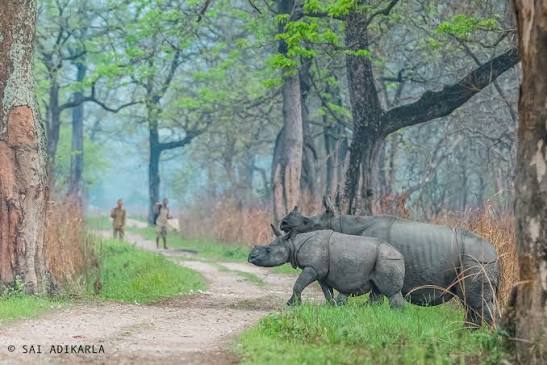
Golaghat, Assam: Where History, Wildlife and Assamese Culture Come Together
Golaghat, Assam, is a fascinating destination in Upper Assam where history, nature, wildlife and Assamese traditions come together. Located along the southern bank of the Brahmaputra, Golaghat is surrounded by rivers, forests, tea-growing landscapes and important historical sites.
The region is particularly known for its proximity to Kaziranga National Park, but there is much more to discover beyond wildlife. Ancient archaeological remains at Deopahar, the historic Negheriting Shiva Doul, the spiritual atmosphere of Athkhelia Namghar and the cultural significance of Birangana Sadhoni Kalakshetra give Golaghat its own distinctive identity.
Whether you are interested in wildlife safaris, heritage, spirituality, photography or simply exploring a quieter side of Assam, Golaghat offers a rewarding travel experience.
History of Golaghat
The history of Golaghat stretches back centuries, with archaeological remains in the Doyang-Dhansiri valley providing evidence of an ancient kingdom in the region.
Ancient History
Rock inscriptions at Nagajari Khanikar village of Sarupathar, along with remains of fortifications, brick structures, monuments, temples and tanks, provide evidence of a kingdom dating back to around the 9th century.
Before the Ahoms established their influence, parts of the Doyang-Dhansiri valley were ruled by the Kacharis.
The Ahom Period
During the 16th century, the Ahoms became the dominant rulers of the Doyang-Dhansiri valley. The Ahom administration appointed an official known as the Morongi-Khowa Gohain to govern the region.
Under this administration, people from different parts of the Ahom kingdom were settled in the region, contributing to its diverse social and cultural character.
British Period
After the British took control of Assam, the Doyang-Dhansiri valley became part of the newly created Golaghat subdivision of Sibsagar district in 1846.
Origin of the Name Golaghat
The name Golaghat is associated with markets that developed near the Dhansiri River during the middle of the 19th century.
The word "Gola" refers to a market, while "Ghat" refers to a river landing or port. Together, the name reflects Golaghat's historical importance as a market and river-transport centre.
Golaghat as a District
Golaghat became a separate district of Assam on 15 August 1987, after being carved out of the former Sibsagar district.
The district also played an important role in India's freedom movement, with several freedom fighters associated with the region. :contentReference[oaicite:3]{index=3}
Geography of Golaghat
Golaghat is located in Upper Assam, on the southern side of the Brahmaputra River. The district is bordered by the Brahmaputra to the north, Nagaland to the south, Jorhat to the east and Karbi Anglong and Nagaon towards the west.
The district covers approximately 3,502 square kilometres and has a landscape of plains, forests, rivers, agricultural land and gently undulating areas.
Major Rivers
The Dhansiri River is the principal river of Golaghat. It originates in Nagaland and flows northwards before joining the Brahmaputra.
Other important rivers and rivulets include:
- Doyang
- Kakodonga
- Doigrung
- Nambor
- Kalioni
The Kakodonga River forms part of the boundary between Golaghat and Jorhat districts.
Climate
Golaghat experiences a humid subtropical climate. Summers can be hot and humid, while monsoon brings substantial rainfall and winter is comparatively cooler.
| Geographical Feature | Details |
|---|---|
| Region | Upper Assam |
| Area | 3,502 sq. km |
| North | Brahmaputra River |
| South | Nagaland |
| East | Jorhat |
| West | Karbi Anglong and Nagaon |
| Principal River | Dhansiri |
Official district information records an average annual rainfall of around 1,300 mm, with June and July receiving particularly high precipitation. :contentReference[oaicite:4]{index=4}
Golaghat at a Glance
| Particular | Details |
|---|---|
| State | Assam |
| Region | Upper Assam |
| District Headquarters | Golaghat |
| District Formation | 15 August 1987 |
| Geographical Area | 3,502 sq. km |
| Population | 10,66,888 (2011 Census) |
| Literacy Rate | 77.43% |
| Revenue Circles | 6 |
| Development Blocks | 8 |
| Gaon Panchayats | 108 |
| Villages | 622 |
These administrative and demographic figures are based on the latest figures published by the Golaghat district administration, with population and literacy figures referring to the 2011 Census. :contentReference[oaicite:5]{index=5}
Culture and Traditions of Golaghat
Golaghat reflects the cultural richness of Assam, with Assamese traditions, Vaishnavite practices, tribal influences and rural lifestyles shaping everyday life.
Assamese Lifestyle
Traditional Assamese customs remain visible in village life, religious gatherings, festivals, food and community celebrations.
Language
Assamese is widely spoken in the region, while other languages are also used by different communities.
Traditional Dress
Traditional Assamese clothing such as the mekhela chador and dhoti-kurta remains an important part of cultural celebrations and festivals.
Music and Dance
Traditional Assamese music and dance forms, particularly those associated with Bihu, are an important part of the region's cultural identity.
Vaishnavite Culture
Namghars have an important place in Assamese society. Athkhelia Namghar is one of the prominent religious destinations in Golaghat and attracts devotees from Assam and the wider Northeast. :contentReference[oaicite:6]{index=6}
Architecture of Golaghat
Golaghat's architectural heritage includes historic temples, archaeological remains, cultural centres and religious structures.
Negheriting Shiva Doul
Negheriting Shiva Doul is one of the most important historic temples in the district. Located on a hillock near Dergaon along the National Highway, the temple has a long history associated with the Kacharis and later the Ahom rulers.
The original temple is believed to have been built in the 8th century AD. After natural calamities damaged the earlier structure, it was rebuilt during the reign of Ahom King Rajeswar Singha in 1765.
The temple complex follows a Panchayatana arrangement, with Shiva as the principal deity and shrines associated with Vishnu, Ganesha, Surya and Durga. :contentReference[oaicite:7]{index=7}
Deopahar Archaeological Site
Deopahar is an important archaeological site near Numaligarh. The site covers around 135 hectares and contains ancient sculptures, temple remains, bricks, monuments and other archaeological relics.
The site also has a protected archaeological park and site museum. :contentReference[oaicite:8]{index=8}
Birangana Sadhoni Kalakshetra
This cultural complex near Golaghat town is dedicated to Sati Sadhani, the last great Chutiya queen. It features a life-size statue, auditorium, open-air auditorium, children's park and boating lake. :contentReference[oaicite:9]{index=9}
Famous Places to Visit in Golaghat
1. Kaziranga National Park
Kaziranga National Park is the biggest tourism attraction associated with Golaghat. Famous for its one-horned rhinoceros, the UNESCO World Heritage Site stretches across parts of Golaghat, Nagaon and Sonitpur districts.
Visitors can experience the park through safari activities and explore its rich wildlife, grasslands, wetlands and forests.
Kaziranga is also home to elephants, wild water buffalo, swamp deer and many bird species. :contentReference[oaicite:10]{index=10}
2. Negheriting Shiva Doul
Negheriting Shiva Doul is a historic hilltop Shiva temple near Dergaon. Its religious importance, hilltop setting and long Ahom-era history make it an excellent stop for heritage and spiritual travellers. :contentReference[oaicite:11]{index=11}
3. Deopahar Archaeological Site
Deopahar Archaeological Site near Numaligarh is one of the most significant ancient heritage sites in the district.
Ancient sculptures, temple remains and archaeological relics make the site particularly interesting for history enthusiasts. :contentReference[oaicite:12]{index=12}
4. Athkhelia Namghar
Athkhelia Namghar is an important pilgrimage destination situated near the meeting point of the Ghiladhari, Matrang and Kakodonga rivers.
Located around 18 km from Golaghat town, the Namghar attracts large numbers of devotees, particularly during the Assamese month of Bhado. :contentReference[oaicite:13]{index=13}
5. Birangana Sadhoni Kalakshetra
Located around 3 km from Golaghat town, this cultural destination honours the legendary Chutiya queen Sati Sadhani.
Its statue, auditorium, open-air spaces, children's park and boating lake make it suitable for families and culture lovers. :contentReference[oaicite:14]{index=14}
6. Jugibari Beelpaar
Jugibari Beelpaar is among the places of interest highlighted by the Golaghat district administration. It offers visitors an opportunity to experience the region's quieter natural surroundings.
7. Deopani and Surrounding Forest Areas
The forested areas around Deopahar and Deopani provide a greener side of Golaghat, particularly for travellers interested in nature, landscapes and photography.
Famous Dishes to Try in Golaghat
Food in Golaghat reflects the broader culinary traditions of Assam. Rice, seasonal vegetables, fish, herbs and locally available ingredients are central to many traditional meals.
Masor Tenga
Masor Tenga is a light and tangy Assamese fish curry. Its refreshing sour flavour makes it one of the most popular dishes to try in Assam.
Khar
Khar is a traditional Assamese preparation made using an alkaline ingredient and vegetables or other seasonal components. It is an important part of traditional Assamese meals.
Duck with Kumura
Duck with ash gourd is a classic Assamese combination, particularly enjoyed during special meals and celebrations.
Xaak Bhaji
Xaak Bhaji refers to preparations made with seasonal leafy greens. The dish is simple, healthy and closely connected with Assamese home cooking.
Pitha
Assamese pitha is a traditional rice-based delicacy prepared in several forms. It is especially popular during festivals such as Bihu.
Assamese Thali
A traditional Assamese thali is one of the best ways to experience multiple local flavours in one meal, often combining rice, dal, vegetables, fish and traditional side dishes.
Famous Personalities Connected with Golaghat
Aideu Handique
Aideu Nilambar Handique holds an important place in Assamese cinema history. Born in Golaghat in 1920, she acted in Joymoti, the landmark 1935 Assamese film directed by Jyoti Prasad Agarwala.
She is widely remembered as the first film actress of Assamese cinema. :contentReference[oaicite:15]{index=15}
Kushal Konwar
Kushal Konwar was a prominent freedom fighter associated with Assam's independence movement. His name is remembered among the freedom fighters connected with the Golaghat region. :contentReference[oaicite:16]{index=16}
Kamala Miri
Kamala Miri was another freedom fighter associated with the region and is remembered for his contribution to India's freedom struggle. :contentReference[oaicite:17]{index=17}
Sati Sadhani
Sati Sadhani, the last great Chutiya queen, is an important historical figure associated with the cultural heritage celebrated in Golaghat through Birangana Sadhoni Kalakshetra. :contentReference[oaicite:18]{index=18}
Festivals Celebrated in Golaghat
Bihu
Bihu is one of the most important festivals of Assam. Rongali Bihu in particular brings music, dance, traditional dress and community celebrations to life.
Durga Puja
Durga Puja is celebrated with religious ceremonies, decorated pandals and community gatherings.
Diwali
Diwali is celebrated with lamps, prayers and family gatherings across Golaghat.
Janmashtami
Janmashtami is observed at temples and religious institutions with prayers and devotional programmes.
Mahashivratri
Mahashivratri holds special significance at Shiva temples such as Negheriting Shiva Doul.
Bhado Festival at Athkhelia Namghar
The Assamese month of Bhado, generally falling around August–September, is particularly important at Athkhelia Namghar. Large numbers of devotees visit the site during this period for religious observances and devotional programmes. :contentReference[oaicite:19]{index=19}
Sati Sadhani Divas
21 April is observed in Assam as Sati Sadhani Divas to honour the courage and sacrifice associated with Chutiya queen Sati Sadhani. :contentReference[oaicite:20]{index=20}
Things to Do in Golaghat
- Go on a wildlife safari in Kaziranga National Park.
- Visit Negheriting Shiva Doul and explore its historic temple complex.
- Explore Deopahar Archaeological Site and learn about the region's ancient heritage.
- Visit Athkhelia Namghar for a peaceful spiritual experience.
- Explore Birangana Sadhoni Kalakshetra and learn about Sati Sadhani.
- Enjoy Assamese cuisine at local restaurants and eateries.
- Explore local markets for traditional Assamese products.
- Take photographs of Golaghat's rivers, forests and cultural landmarks.
- Explore tea-growing landscapes around Upper Assam.
- Plan a road trip connecting Golaghat with Kaziranga, Jorhat and nearby destinations.
- Experience Assamese festivals if your trip coincides with Bihu or another local celebration.
- Spend time around nature and enjoy the quieter side of Upper Assam.
Where to Eat, Shop, and Stay in Golaghat
Where to Eat
Golaghat town is the most practical base for finding everyday restaurants, local eateries and Assamese food.
Travellers should look for local preparations such as:
- Assamese thali
- Masor Tenga
- Khar
- Xaak Bhaji
- Pitha
- Rice and traditional fish preparations
Where to Shop
Local markets are useful for experiencing everyday Assamese life and purchasing regional products.
- Assamese handloom products
- Mekhela chador
- Traditional textiles
- Bamboo and cane products
- Local tea
- Traditional handicrafts
Where to Stay
For general sightseeing, Golaghat town is a convenient base. Travellers visiting Kaziranga may prefer accommodation closer to the park and its safari zones.
| Accommodation Type | Best For |
|---|---|
| Budget Hotels | Short stays and backpackers |
| Mid-range Hotels | Families and couples |
| Tourist Lodges | Nature and wildlife trips |
| Resorts near Kaziranga | Wildlife-focused holidays |
What is Golaghat Famous For?
Golaghat is famous for wildlife, history, archaeology, temples and Assamese culture.
- Kaziranga National Park
- One-horned rhinoceros
- Negheriting Shiva Doul
- Deopahar Archaeological Site
- Athkhelia Namghar
- Birangana Sadhoni Kalakshetra
- Dhansiri River
- Assamese cuisine
- Tea-growing landscapes
- Assamese festivals and traditions
Its strongest appeal is the combination of wildlife tourism and cultural heritage. Visitors can move from a wildlife safari to an ancient temple or archaeological site within the same broader region.
Best Time to Visit Golaghat
The official Golaghat district administration recommends mid-October to mid-April as the best overall period to visit.
| Season | Months | Travel Experience |
|---|---|---|
| Winter | November–February | Comfortable for sightseeing and wildlife trips |
| Spring | March–April | Good for outdoor activities and sightseeing |
| Summer | May–June | Hot and increasingly humid |
| Monsoon | June–September | Heavy rain and lush green landscapes |
| Post-Monsoon | October | Greener landscapes and improving travel conditions |
Best overall period: Mid-October to mid-April.
Best for wildlife: The cooler, drier months generally provide more comfortable conditions for outdoor exploration.
Best for greenery: The post-monsoon landscape can be especially attractive, although rainfall and local conditions should always be considered.
The district administration specifically lists mid-October to mid-April as the preferred visiting period. :contentReference[oaicite:21]{index=21}
How to Reach Golaghat
By Air
Golaghat does not have its own commercial airport. The nearest airport identified by the district administration is Jorhat Airport (Rowriah Airport), approximately 55 km from Golaghat town.
Another option is Dimapur Airport, particularly useful for travellers approaching from Nagaland and nearby regions.
By Train
The district has important railway stations including Furkating and Sarupathar. Golaghat town also has a railway station with train services connecting it with major destinations in Assam.
By Road
Road travel is one of the easiest ways to explore Golaghat and the surrounding tourist destinations.
The district is connected through major routes including NH-37, NH-39 and Dhodar Ali.
| Mode | Best Option |
|---|---|
| Air | Jorhat Airport – approximately 55 km |
| Train | Golaghat / Furkating / Sarupathar |
| Road | NH-37, NH-39 and Dhodar Ali |
The district administration reports that Golaghat town is approximately 50 km from Jorhat and 286 km from Guwahati. :contentReference[oaicite:22]{index=22}
Nearby Places to Visit from Golaghat
Kaziranga National Park
The most important nearby attraction is Kaziranga National Park, a UNESCO World Heritage Site famous for its one-horned rhinoceros and extraordinary biodiversity. :contentReference[oaicite:23]{index=23}
Jorhat
Jorhat is an important cultural and commercial centre of Upper Assam and makes a convenient addition to a Golaghat itinerary.
Numaligarh
Numaligarh is especially important for history lovers because of the Deopahar Archaeological Site.
Bokakhat
Bokakhat is a useful base for exploring the Kaziranga area and surrounding attractions.
Dergaon
Dergaon is home to the historic Negheriting Shiva Doul and is an excellent stop for travellers interested in Assam's religious heritage.
Sarupathar
Sarupathar is located in the southern part of the district and has historical importance because of archaeological evidence found around Nagajari Khanikar.
Best Duration for a Golaghat Trip
A 2-day trip is enough to explore Golaghat's major heritage and cultural attractions.
A 3-day itinerary is better if you want to combine Golaghat sightseeing with Kaziranga.
For wildlife enthusiasts and travellers who want to explore the region without rushing, 4 days or more is ideal.
| Duration | Suggested Experience |
|---|---|
| 1 Day | Golaghat town + nearby attractions |
| 2 Days | Heritage + temples + cultural attractions |
| 3 Days | Golaghat + Kaziranga |
| 4 Days | Golaghat + Kaziranga + nearby destinations |
| 5 Days | Relaxed Upper Assam road trip |
Travel Tips for Golaghat
- Plan your season carefully: Mid-October to mid-April is generally the most convenient period.
- Carry rain protection: Assam can receive substantial rainfall, especially during the monsoon.
- Book Kaziranga accommodation early: This is particularly important during the popular travel season.
- Start wildlife activities early: Morning is often a comfortable time for outdoor exploration.
- Wear comfortable footwear: Useful for archaeological sites, temples and nature areas.
- Carry mosquito protection: Useful when spending time around forests and wetlands.
- Respect religious places: Dress appropriately and follow local customs at temples and Namghars.
- Do not disturb wildlife: Follow all safari and protected-area regulations.
- Carry drinking water: Particularly during longer road journeys.
- Keep cash available: Smaller towns and remote locations may have limited digital payment options.
- Try local food: Assamese cuisine is an important part of the travel experience.
- Respect local communities: Ask permission before photographing people or private cultural activities.
- Keep natural areas clean: Carry waste with you and avoid single-use plastic wherever possible.
Why Visit Golaghat?
Golaghat is worth visiting because it offers several different travel experiences within one region.
- Wildlife: Easy access to the Kaziranga landscape.
- History: Ancient archaeological remains and historical sites.
- Spirituality: Historic temples and important Namghars.
- Culture: Traditional Assamese lifestyle, festivals and cuisine.
- Nature: Rivers, forests, wetlands and green landscapes.
- Photography: Excellent opportunities for wildlife, landscapes and heritage photography.
- Road Trips: A convenient base for exploring Upper Assam.
What makes Golaghat particularly interesting is that a visitor does not have to choose between wildlife, history and culture. The region brings all three together.
From the rhinoceros-filled landscapes of Kaziranga to the ancient stones of Deopahar and the spiritual atmosphere of Athkhelia Namghar, Golaghat offers a travel experience that feels distinctly Assamese.
Conclusion
Golaghat, Assam, is more than a gateway to Kaziranga. It is a destination with its own fascinating history, cultural traditions, archaeological heritage and natural landscapes.
The historic Negheriting Shiva Doul, ancient Deopahar Archaeological Site, peaceful Athkhelia Namghar and culturally significant Birangana Sadhoni Kalakshetra reveal different sides of the region.
Add the extraordinary wildlife of Kaziranga National Park, Assamese food, tea landscapes and welcoming local culture, and Golaghat becomes an excellent destination for an Upper Assam itinerary.
If you want to experience Assam beyond the usual tourist routes, Golaghat is a place where wildlife, heritage and everyday Assamese life come together naturally.
"Travel is the only thing you buy that makes you richer."