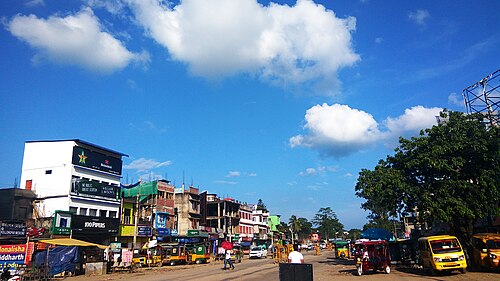
Nagaon, Assam: Where Sankardeva's Legacy Meets Wildlife, Wetlands and the Brahmaputra
Nagaon is one of Assam's most culturally rich destinations, bringing together Vaishnavite heritage, wildlife, rivers, wetlands, traditional crafts and rural landscapes. Located in central Assam, the district offers travelers an interesting mix of spiritual landmarks, historic sites and access to some of the state's most important wildlife habitats.
The birthplace of Mahapurush Srimanta Sankardeva at Batadrava, the wildlife landscapes of Kaziranga and Laokhowa–Burhachapori, the bird-rich Samaguri Beel, the traditional jewellery village of Ranthali and the Brahmaputra-side landscapes of Silghat and Hatimura make Nagaon an excellent destination for culture, nature and slow travel.
Nagaon at a Glance
| Travel Detail | Information |
|---|---|
| State | Assam |
| Region | Central Assam |
| District Headquarters | Nagaon |
| Geographical Area | 2,287 sq. km |
| Population | 1,892,550 (2011 Census, present district area) |
| Literacy | About 71% |
| Subdivisions | 2 – Nagaon and Kaliabor |
| Revenue Circles | 7 |
| Development Blocks | 13 |
| Revenue Villages | 960 |
| Major River | Brahmaputra |
| Important Rivers | Kolong, Kopili and other tributaries |
| Famous For | Batadrava Than, Sankardeva, Kaziranga, Laokhowa–Burhachapori, Samaguri Beel and Ranthali |
Note: Older sources may show larger area and population figures because they refer to Nagaon before the creation of Hojai district. The figures above follow the present district profile.
History of Nagaon
Nagaon's history stretches across several political and cultural periods of Assam. Before the British period, different parts of the region were influenced by local chiefs, Bhuyans and the Ahom administration.
Until 1826, Nagaon was under Burmese rule. Following the Treaty of Yandabo, the area came under British administration. Nagaon was organized as a separate administrative district in 1832, while the present town was selected as the district headquarters in 1839 on the banks of the Kolong River.
The town was earlier known as Khagorijan and later developed as Nowgong/Nagaon. It became a municipality in 1893. The name Nagaon is traditionally connected with the idea of a newly organized village settlement.
Ahom Influence
During the Ahom period, the region's plains, rivers and strategic location made it important for administration and settlement. The work of Momai Tamuli Barbarooah, an officer under Ahom King Pratap Singha, is also associated with the organization of village systems in the area.
Colonial Development
Under British rule, Nagaon developed as an administrative centre. Roads, markets, educational institutions and communication networks gradually transformed the town into an important centre of central Assam.
Geography of Nagaon
Nagaon occupies a central position in Assam on the southern bank of the Brahmaputra. The district combines broad plains with rivers, wetlands, forests, low hills and fertile agricultural areas.
The Kolong River flows through Nagaon town and divides the urban area into the Nagaon and Haibargaon sides. Several wetlands in the district were formed from older channels of the Kolong and Kopili river systems.
| Geographical Feature | Importance |
|---|---|
| Brahmaputra River | Forms the northern boundary of the district |
| Kolong River | Major river flowing through Nagaon town |
| Kopili River | Important river system of the region |
| Wetlands and Beels | Important habitats for resident and migratory birds |
| Plains | Support agriculture and rural settlements |
| Hills and Forests | Provide opportunities for nature tourism and photography |
Culture and Traditions of Nagaon
Nagaon's cultural identity is closely connected with Assamese Vaishnavism, Bihu traditions, folk culture, agriculture and diverse communities. The district is particularly important in the history of Assam's neo-Vaishnavite movement because it is the birthplace of Srimanta Sankardeva.
Vaishnavite Heritage
Batadrava Than is the cultural heart of Sankardeva's birthplace. The religious complex preserves traditions of Ek Sarana Naam Dharma and the Namghar institution associated with Sankardeva's religious and cultural movement.
Bihu Culture
Bihu is celebrated throughout the district with music, dance, traditional food and community gatherings. Bohag Bihu in particular brings villages and towns alive with performances and festive activities.
Traditional Jewellery
Ranthali is known for traditional Assamese jewellery making. Visitors interested in local crafts can explore the village and learn about the techniques behind traditional ornaments.
Mask and Performing Arts
Nagaon's cultural landscape is also connected with Assamese theatrical and devotional traditions. The wider Samaguri area is particularly associated with the traditional mask-making culture of Assam.
Architecture of Nagaon
Nagaon's architectural heritage is primarily represented by Than, Namghar, temples, old religious structures and colonial-era civic buildings. The architecture often combines religious symbolism with traditional Assamese construction practices.
Batadrava Than
The Batadrava Than complex contains a Kirtan Ghar, Namghar, Monikut and other religious structures associated with Srimanta Sankardeva's legacy.
Hatimura Temple
The Hatimura Temple is a historic Shakti shrine associated with the reign of Ahom king Pramatta Singha. The temple's riverside hill setting makes the architecture and landscape equally interesting.
Silghat Trishuldhari Temple
The Trishuldhari Temple at Silghat is traditionally regarded as an ancient Shiva shrine. Its location beside the Brahmaputra provides an especially scenic setting for visitors.
Famous Places to Visit in Nagaon
Batadrava Than
Batadrava Than, also known as Bordowa Than, is the birthplace of Mahapurush Srimanta Sankardeva. Sankardeva founded the Than in 1494 and established an early Kirtan Ghar here as part of his neo-Vaishnavite movement. The complex includes the Kirtan Ghar, Namghar, Monikut and sacred ponds such as Akashiganga and Santijan.
Kaziranga National Park – Nagaon Side
A part of Kaziranga National Park falls within Nagaon district. The UNESCO World Heritage Site is internationally known for the Indian one-horned rhinoceros and its rich grassland and wetland ecosystem. The Burapahar and Bagori areas provide important access points from the Nagaon side.
Laokhowa Wildlife Sanctuary
Laokhowa Wildlife Sanctuary forms part of the larger Laokhowa–Burhachapori ecosystem. Its grasslands, wetlands and riverine habitats support species including rhinoceros, wild buffalo, deer and numerous birds.
Burhachapori Wildlife Sanctuary
Burhachapori Wildlife Sanctuary covers about 44.06 sq. km and consists of wet alluvial grasslands, riparian forests and wetlands. The sanctuary supports wildlife such as one-horned rhinoceros, wild buffalo, elephants, hog deer and several bird species.
Samaguri Beel
Samaguri Beel, also known as Pokhi Tirtha, is a wetland formed by changes in the course of the Kolong River. During winter, migratory birds arrive here, making it an attractive destination for birdwatching and nature photography.
Silghat Trishuldhari Temple
Located on the southern bank of the Brahmaputra, Silghat Trishuldhari combines religious importance with river scenery. The surrounding Silghat landscape is also popular for photography and picnics.
Hatimura Temple
Hatimura is a scenic hill destination beside the Brahmaputra. Its Mahishamardini temple is associated with the Ahom period and was built during the reign of King Pramatta Singha in 1745.
Baduli Khurung
Baduli Khurung is a natural cave associated with local legends and is inhabited by thousands of bats. The site becomes particularly interesting during the annual Baduli Mela held after Maha Shivaratri.
Chapanala
Chapanala is a natural picnic and waterfall destination surrounded by greenery. It is suited to travelers looking for a relaxed nature excursion away from the busy town.
Ranthali
Ranthali is famous for traditional Assamese jewellery. The village provides an opportunity to see the craft tradition behind ornaments that are an important part of Assamese cultural identity.
Jungal Balahu Garh
Jungal Balahu Garh is associated with the legendary Tiwa ruler Jungal Balahu. The site includes a large embankment traditionally linked with his temporary capital and reflects the region's Tiwa historical traditions.
Bharali Naamghar
Bharali Naamghar is a traditional religious site at Hatbar. Local history records that the Namghar was rebuilt after being destroyed during the Burmese invasions of Assam. Its tulsi-wood laikhuta is a distinctive feature.
Famous Dishes to Try in Nagaon
Masor Tenga
Masor Tenga is one of Assam's best-known fish preparations. The light, tangy curry pairs particularly well with steamed rice and reflects the state's strong river-and-fish food culture.
Khar
Khar is a traditional Assamese preparation with a distinctive alkaline flavour. It is commonly served as part of a traditional Assamese meal.
Aloo Pitika
Aloo Pitika is a simple mashed-potato preparation mixed with onion, mustard oil and green chilli. Its simplicity makes it a familiar part of everyday Assamese meals.
Duck Curry
Duck curry is enjoyed in many parts of Assam and is often prepared with locally used spices and vegetables. It is a good choice for travelers wanting to explore traditional non-vegetarian Assamese cuisine.
Fish Pitika
Fish Pitika combines cooked fish with onion, chilli and mustard oil. It is a rustic Assamese preparation that pairs naturally with rice.
Pitha
Pitha includes a variety of traditional rice-based preparations, especially popular during Bihu and other festive occasions.
Assamese Tea
A trip through Nagaon is incomplete without trying Assam tea. Tea is deeply embedded in Assam's agricultural and cultural identity and is commonly enjoyed throughout the district.
Famous Personalities Associated with Nagaon
Srimanta Sankardeva
Mahapurush Srimanta Sankardeva was a 15th–16th century saint, scholar, poet, playwright and social reformer who transformed Assam's religious and cultural life. He was born at Batadrava in present-day Nagaon district, making the district one of the most important pilgrimage destinations associated with his legacy.
Lakshminath Bezbaroa
Lakshminath Bezbaroa, one of the leading figures of modern Assamese literature and a major member of the Jonaki era, was born at Ahatguri in the Nagaon region. His literary contribution played a major role in shaping modern Assamese identity.
Jnanadabhiram Barua
Jnanadabhiram Barua was a Nagaon-born writer, administrator and intellectual. The Nagaon district administration notes his connection with the district and also records that he was the maternal grandfather of actress Sharmila Tagore.
Festivals of Nagaon
Doul Mohotsava at Batadrava Than
Doul Mohotsava is one of the most important annual celebrations at Batadrava Than. The festival is associated with Holi and attracts large numbers of devotees from Assam and other parts of Northeast India.
Bohag Bihu
Bohag Bihu marks the Assamese New Year and the arrival of spring. Traditional songs, Bihu dance, feasting and community gatherings make this one of the most vibrant periods in Nagaon.
Magh Bihu
Magh Bihu is the harvest festival of Assam. Community feasts, traditional foods and village celebrations are important parts of the festival.
Ashok Ashtami Mela
Ashok Ashtami Mela is associated with the Silghat area and is held near the Kamakhya temple during the first part of April. The festival brings together religious activity, local traditions and visitors to the Brahmaputra-side landscape.
Baduli Mela
Baduli Mela takes place around Baduli Khurung after Maha Shivaratri. The opening of the cave to visitors during the festival adds a distinctive local character to the celebration.
Durga Puja
Durga Puja is celebrated across Nagaon with decorated puja pandals, cultural programs, rituals and community gatherings.
Things to Do in Nagaon
- Visit Batadrava Than and explore Sankardeva's birthplace.
- Experience Doul Mohotsava if visiting during the festival.
- Go on a wildlife safari in the Kaziranga ecosystem.
- Explore Laokhowa–Burhachapori for wildlife and birdwatching.
- Watch migratory birds at Samaguri Beel.
- Visit Ranthali to discover Assamese traditional jewellery.
- Explore Silghat and enjoy views of the Brahmaputra.
- Visit Hatimura Temple for history and scenic landscapes.
- Explore Baduli Khurung and its unusual cave environment.
- Visit Chapanala for a nature-focused day trip.
- Explore Jungal Balahu Garh and its Tiwa heritage.
- Try authentic Assamese food in local restaurants and traditional eateries.
Where to Eat, Shop, and Stay in Nagaon
Where to Eat
Nagaon town has restaurants and local eateries serving Assamese, Indian and regional food. For a more traditional experience, travelers can look for local Assamese meals featuring rice, fish, dal, vegetables and pitika.
Where to Shop
Nagaon town markets are useful for everyday shopping, local food products and regional goods. For a more distinctive souvenir, explore Ranthali for traditional Assamese jewellery.
Where to Stay
Nagaon town offers hotels and guesthouses suitable for short stays. Travelers visiting wildlife areas can also consider accommodation around the Kaziranga and Laokhowa region, depending on the itinerary.
| Accommodation Type | Best For |
|---|---|
| Budget Hotels | Short city stays and road travelers |
| Mid-range Hotels | Families and couples |
| Wildlife Lodges | Kaziranga and wildlife-focused trips |
| Homestays | Travelers seeking local experiences |
What is Nagaon Famous For?
Nagaon is particularly famous for:
- Batadrava Than, the birthplace of Srimanta Sankardeva
- Vaishnavite heritage and Assamese spiritual traditions
- Kaziranga National Park and its Nagaon-side landscapes
- Laokhowa–Burhachapori wildlife ecosystem
- Samaguri Beel and migratory birds
- Ranthali traditional Assamese jewellery
- Silghat and the Brahmaputra
- Hatimura Temple
- Baduli Khurung
- Assamese literature and cultural heritage
Best Time to Visit Nagaon
The best general period to explore Nagaon is November to February, when temperatures are relatively comfortable for sightseeing, wildlife activities and outdoor exploration. The Nagaon district administration specifically identifies winter as the preferred travel season.
| Season | What to Expect |
|---|---|
| November–February | Cooler weather; excellent for wildlife, sightseeing and birdwatching |
| March–April | Warmer weather with festivals such as Doul Mohotsava and Ashok Ashtami |
| May–June | Hot and humid conditions; occasional rain |
| July–September | Monsoon season with heavy rainfall and wet landscapes |
| October | Weather gradually becomes more comfortable after the monsoon |
How to Reach Nagaon
By Air
Lokpriya Gopinath Bordoloi International Airport, Guwahati is the nearest major commercial airport. Nagaon is approximately 120 km by road from Guwahati, according to the district administration.
By Train
Nagaon is connected to the Indian railway network. Important railway points in and around the district include Nagaon, Haibargaon, Dhing, Silghat and Kampur, while Chaparmukh and Lumding are important railway junctions for regional connections.
By Road
Nagaon is well connected by road with Guwahati, Kaziranga, Morigaon, Hojai and other parts of Assam. National and state highways provide access to the town and surrounding tourist areas.
| Starting Point | Approximate Road Connection |
|---|---|
| Guwahati | About 120 km |
| Morigaon | Short regional road journey |
| Kaziranga | Convenient road access through the Kaliabor/Kaziranga side |
Nearby Places to Visit from Nagaon
Kaziranga National Park
Kaziranga is the major wildlife destination that can be combined with a Nagaon itinerary. Its grasslands, wetlands and rhinoceros population make it one of Assam's signature travel experiences.
Morigaon
Morigaon lies west of Nagaon and offers attractions such as Pobitora Wildlife Sanctuary, Mayong and Jonbeel Mela.
Mayong
Mayong is known for its folklore, archaeological heritage and stories surrounding traditional magic. It can be combined with Pobitora for a wildlife-and-culture day trip.
Hojai
Hojai offers a different cultural landscape and can be included in a broader central Assam road itinerary.
Karbi Anglong
Parts of Karbi Anglong lie to the south and east of Nagaon. The hill district offers forests, waterfalls and opportunities for nature-focused travel.
Silghat
Silghat is worth visiting for its Brahmaputra river scenery, Trishuldhari Temple and nearby cultural attractions.
Best Duration for a Nagaon Trip
A 2–3 day trip is suitable for experiencing the major attractions around Nagaon. Wildlife travelers who want to combine Nagaon with Kaziranga should consider extending the itinerary.
| Duration | Suggested Itinerary |
|---|---|
| 1 Day | Batadrava Than + Nagaon town + local food |
| 2 Days | Batadrava + Samaguri Beel + Ranthali/Silghat |
| 3 Days | Batadrava + wildlife + Silghat/Hatimura + local attractions |
| 4–5 Days | Nagaon + Kaziranga + wildlife and cultural excursions |
Travel Tips for Nagaon
- Visit Batadrava respectfully: Wear appropriate clothing and follow the rules of the religious complex.
- Carry binoculars: They are useful for Samaguri Beel and other wetland areas.
- Plan wildlife trips early: Morning is generally a productive time for wildlife and birdwatching.
- Check sanctuary conditions: Safari routes and opening arrangements can change seasonally.
- Keep some cash: Smaller rural markets and craft villages may not always accept digital payments.
- Buy local jewellery carefully: When shopping in Ranthali, ask about materials, craftsmanship and pricing.
- Respect photography restrictions: Especially at religious sites and during community events.
- Carry rain protection: Assam can experience sudden showers outside the dry winter months.
- Plan wildlife accommodation early: Peak Kaziranga season can be busy.
- Combine nearby destinations: Batadrava, Samaguri, Silghat and wildlife areas can be planned into a multi-day route.
Why Visit Nagaon?
Nagaon offers a rare combination of spiritual heritage, Assamese literature, wildlife, wetlands, rivers and traditional crafts. It is not simply a stopover between Guwahati and Kaziranga; the district itself has enough cultural and natural attractions to justify exploration.
Top Reasons to Visit
- Explore the birthplace of Srimanta Sankardeva.
- Experience Assam's neo-Vaishnavite heritage.
- Explore the Nagaon side of Kaziranga.
- Discover the Laokhowa–Burhachapori ecosystem.
- Watch migratory birds at Samaguri Beel.
- Explore traditional Assamese jewellery at Ranthali.
- Enjoy Brahmaputra landscapes around Silghat and Hatimura.
- Discover lesser-known natural attractions such as Baduli Khurung and Chapanala.
- Experience Assamese food, festivals and rural life.
Conclusion
Nagaon is a destination where the cultural soul of Assam meets its wildlife and river landscapes. From the sacred surroundings of Batadrava Than to the wetlands of Samaguri, the forests of the Kaziranga ecosystem and the Brahmaputra-side scenery of Silghat, the district offers a diverse travel experience.
For travelers looking to explore Assam beyond its major cities, Nagaon provides an excellent combination of history, spirituality, wildlife, nature, crafts and local culture. A carefully planned 2–3 day itinerary can reveal a very different and deeply rooted side of Assam.
"Travel is the only thing you buy that makes you richer."